The 3rd Mobile Brigade Combat Team has ingrained AI into its core staff operations, identifying where the emerging technology excels and where human expertise remains the ultimate authority on the battlefield.
Speed as a tactical weapon: How units outpaced the enemy by 72 hours through digital planning
Under the command of Col. Ryan Bell, the brigade has spent the past year training large language models on specific Army and division doctrines. This integration proved its worth during high-intensity simulations at the Joint Readiness Training Center. By leveraging these bots, the brigade was able to push out critical warning orders in less than half an hour. At the battalion level, the results were even more dramatic, with planning cycles completed 72 hours ahead of schedule. This gained time allowed units to fully rehearse their maneuvers and perfect their defensive obstacles, ensuring the lines held even under complex simulated chemical attacks and robotic breaches.
The art of war vs. algorithms: Why AI fails to master three-dimensional strategic planning
Despite the significant gains in efficiency, the brigade discovered clear boundaries that technology cannot yet cross. Col. Bell noted that AI is not being used to develop courses of action, as large language models struggle to grasp the nuances of three-dimensional space. The „art of warfighting” still requires a skilled staff to understand the shifting dynamics of a physical environment. While AI is an excellent tool for mission analysis and speeding up the orders process, it cannot replace the strategic intuition of human commanders when it comes to planning complex combat operations.
Managing the data flood: Processing 25,000 spot reports to maintain operational tempo
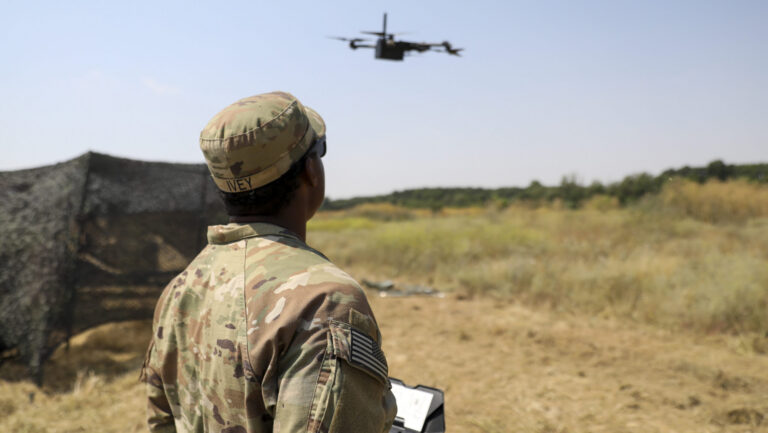
The integration of AI proved most effective in handling the massive influx of information generated by modern battlefield sensors. During a ten-day operational window, the brigade’s intelligence section processed over 25,000 spot reports using AI tools. This capability allowed the unit to make sense of the battlefield and respond to threats faster than their adversaries. As the tempo of warfare continues to accelerate, these tools are becoming vital for staff planning and sustainment, enabling drones to sense and strike while the staff maintains the organizational momentum required to win.