














Despite relying on its own air defenses to counter rockets, missiles, and drones from regional adversaries — with an anticipated new threat from Iran — Israel announced its preparations to send one of its key air defense systems, the Arrow 3, to Germany, as previously agreed.
Israeli and German government and industry officials held a two-day meeting at Israel Aerospace Industries (IAI) last week to begin coordinating “joint preparations for the initial deployment of Arrow 3 on German soil in 2025,” according to a statement from the Israeli Ministry of Defense on November 10.
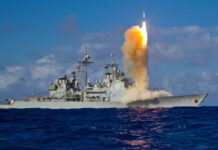
The Arrow 3 system, developed as a collaborative project between Israel and the U.S., serves as the top layer of Israel’s three-tiered air defense network, designed primarily to intercept ballistic missiles. The system is complemented by David’s Sling in the middle layer and Iron Dome at the bottom, which targets short-range, low-flying threats. In addition to IAI, the meeting involved representatives from Israeli firm Elbit Systems and Germany’s MBDA Deutschland GmbH.
According to Jeremy Issacharoff, former Israeli ambassador to Germany, Israel’s decision to continue exporting an advanced air defense system while simultaneously using it for its own defense demonstrates its commitment to its relationship with Berlin.
Issacharoff characterized the Arrow deal as a “significant development and progression in the strategic partnership between the two countries.” Historically, many large defense contracts involved Israel purchasing military products from Germany, rather than the reverse. However, this trend is shifting.
“Germany’s national security mindset changed following Russia’s aggression in Ukraine, necessitating a response to a dramatically altered security environment impacting Germany and Europe as a whole,” Issacharoff noted. He emphasized that Israel communicated its commitment to German national security and its willingness to supply necessary defensive weapon systems in light of the new challenges.
Yaakov Katz, author of the book Shadow Strike and a fellow at the Jewish People Policy Institute (JPPI), acknowledged a growing global acknowledgment of the need for enhanced missile defense systems in the wake of increasing threats. “Europe is concerned about Russian aggression and the potential dangers it faces. Countries are recognizing the importance of bolstering missile defense systems, especially after recent events in Israel involving threats from Iran, Hezbollah, and Hamas,” Katz stated.
The formal commitment to the Arrow 3 deal was signed on September 26, 2023, for $3.5 billion, just days before Hamas launched an unprecedented attack on Israel on October 7, significantly altering the Middle Eastern security landscape. Following the attack, Israel conducted a powerful counteroffensive in Gaza, resulting in significant casualties.
On November 9, 2023, the Arrow 3 achieved its first successful wartime interception by targeting a missile launched from Yemen. Despite the ongoing conflict, the deal with Germany was finalized two weeks later, with the expected delivery date set for late 2025. IAI’s CEO Boaz Levy reassured that Israel is committed to ensuring timely delivery.
The Arrow deal is part of a broader trend of increasing interest in Israeli air defense systems across Europe. Finland is acquiring the David’s Sling system, while Slovakia is set to acquire the IAI Barak MX system. Additionally, the U.S. Marines recently completed a live-fire drill with the Iron Dome. Reports on November 14 indicated that Greece is also interested in developing an air defense system similar to Israel’s multi-layered approach.
Issacharoff concluded, “The strong bilateral relationship between the defense and intelligence establishments of Israel and Germany has been reinforced by this agreement for Israel to supply the Arrow 3 missile defense system, ensuring that it will remain robust in the future.”