Air Combat: A Critical Information Deficit
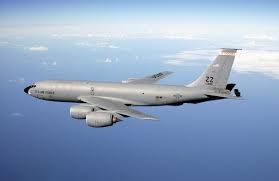
In the modern battlefield, where the speed of information can dictate victory, aircrews face a significant challenge: a lack of adequate situational awareness. Many large mobility jets, decades old, are equipped with outdated avionics and limited communications systems, incapable of fusing disparate data feeds into a coherent, real-time picture. This technological gap leaves crews heavily reliant on pre-mission planning and vulnerable to adversaries. The Defense Innovation Unit (DIU) is now stepping in with a public solicitation, seeking new hardware and software solutions to remedy this critical situation.
OMEN: The Modular Open Mission Engine for Agility and Adaptability
The DIU is specifically seeking vendors capable of building a prototype Modular, Open Mission Engine (OMEN) – an essential platform designed to rapidly integrate new data feeds and applications. This initiative aims to „enable rapid development, deployment, and sustainment of mission applications,” promising an open software development kit, published application interfaces, a commercial-grade user interface, and cross-platform compatibility. OMEN is envisioned as a flexible solution that allows for the continuous evolution of operational capabilities.
The Tactical Moving Map: OMEN’s First Glimpse of the Future
The first planned application for the OMEN platform will be a „Tactical Moving Map.” This aircrew display will provide real-time visualizations of airspace activity, including allied forces, threats, and mission updates. The goal is for this map to be capable of fusing legacy tools while also being „future-proofed” with an open software architecture. A strong focus will be placed on the performance of the map’s user interface, and the map itself will „serve as a baseline for future capabilities.”
Data Integration: An Essential Pillar for Awareness
The DIU solicitation also includes a third crucial line of effort: data integration and interoperability, to ensure information is properly fused together. DIU lists relevant data feeds the government seeks to ingest, such as the Department of the Air Force’s Battle Network, the Space Force’s Unified Data Library, and other „common aviation sources” like Notice to Airmen (NOTAM) alerts. Vendors are encouraged to describe how their architecture „ingests, normalizes, exposes, and sustains these data flows in a standards-based, extensible way.”
Collaboration and Opportunity: Building the Aerial Future
Interested vendors can offer components of this complex puzzle, including „enabling capabilities” like cloud-hosted services for processing, synchronization services, fleet management, and cybersecurity. These efforts must be „clearly tied to the effective fielding, operation, and lifecycle management of mission applications within contested and DDIL [degraded, disrupted, intermittent, or limited] environments.” The DIU emphasizes that its initiatives will dovetail with Pentagon-wide efforts to modernize aircraft, leveraging a slew of new initiatives acquiring software-defined radios, commercial off-the-shelf (COTS) displays, and sensor/data integration. While the Air Force is pushing to modernize its mobility aircraft with updated communications links, progress has been slow.
A Unique Opportunity for Innovators
This solicitation opens a gateway to strategic collaboration. In the event a prototype is successfully fielded, a follow-on production contract could be awarded „without the use of competitive procedures.” This represents a significant opportunity for innovative companies to contribute to the modernization of defense capabilities. Bids for the prototype contract are due by April 15.