MLR’s Strategic Dilemma
The year is 2027, and a Marine Littoral Regiment (MLR) is strategically positioned within the First Island Chain, prepared to bolster Joint Force operations in the highly contested Indo-Pacific region. Yet, despite this strategic placement, an unsettling reality emerges: ships from the People’s Liberation Army (PLA), alongside unmanned vessels and a maritime militia, navigate with ease through critical chokepoints, revealing significant vulnerabilities in our defensive posture. The MLR finds itself immobilized, shackled by its terrain, critically lacking mobility and unable to assert dominance over the maritime territories it was meant to secure.
The Root of the Problem
This predicament does not reflect a strategic failure but rather a crisis of mobility and imagination. More crucially, it underscores a fundamental oversight in not investing in small boats. As the Marine Corps evolves to meet the demands of global power competition, there remains a glaring omission of one of the most economical and adaptable assets in naval warfare: small boats measuring 65 feet or less. These agile vessels, both manned and unmanned, embody the practical bridge between the theoretical blueprints of Expeditionary Advanced Base Operations (EABO) and their execution on the ground. Without them, the operational efficacy and strategic completeness of the MLR are severely compromised.
Modernization Efforts vs. Tactical Shortcomings
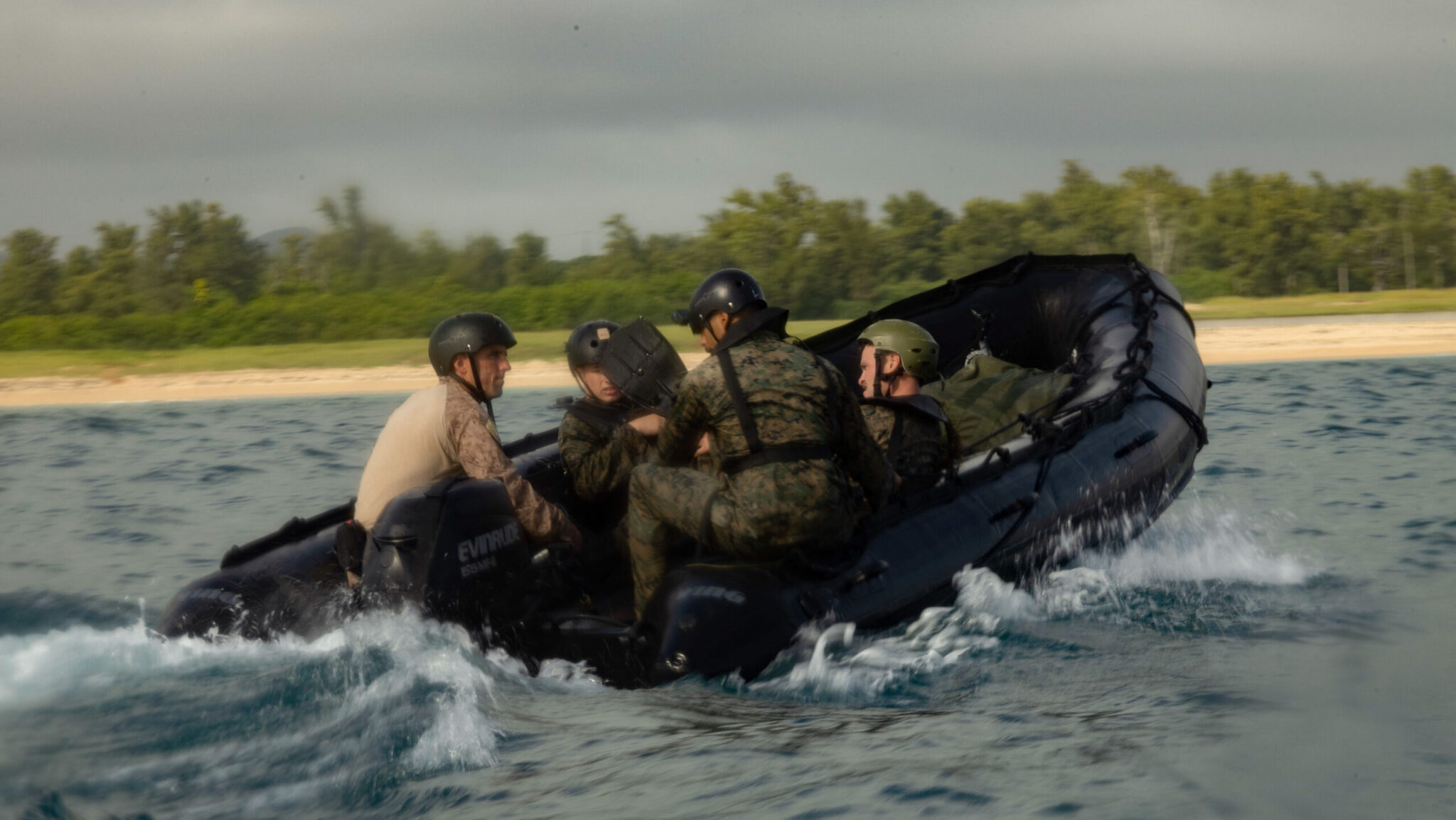
The Marine Corps has undertaken significant strides in modernizing its forces, integrating distributed operations, augmenting long-range fire capabilities, and deploying MLRs in forward areas. Though it has invested in platforms like the Medium Landing Ship (LSM), Multi-Mission Reconnaissance Craft (MMRC), and Long-Range Unmanned Surface Vessel (LRUSV), these assets, substantial though they are, do not suffice. The current small boat capability, limited to around 300 Enhanced Combat Rubber Raiding Craft (E-CRRC), Rigid Hulled Inflatable Boats (RHIB), and Open Water Safety Craft (OWSC), highlights a lack of broad institutional knowledge in small boat operations. Training remains sparse, and with only one experimental Maritime Reconnaissance Company (MRC), this is not merely a gap—it is a significant liability.
Lessons from History and Modern Conflict
Historical precedents validate the strategic role of small boats in maritime conflicts. From the Patrol Torpedo (PT) boats of World War II disrupting Japanese supply lines to the effective use of swift boats and PBRs in Vietnam, small boats have proven their merit. Recently, Ukraine’s use of low-cost, unmanned surface vessels against a peer adversary has further emphasized the creativity and effectiveness of small boat strategies in altering the maritime balance.
The Path Forward: Embracing a Small Boat Strategy
To address these strategic challenges, a practical and scalable solution is imperative. Expanding Maritime Reconnaissance Companies (MRCs) to ensure each MLR is equipped for comprehensive reconnaissance, surveillance, and target acquisition operations is crucial. Furthermore, employing a high-low procurement strategy, balancing exquisite systems with rugged, versatile crafts like RHIBs, can facilitate swift deployment and enhance operational reach. Prepositioning these vessels and conducting bilateral exercises can effectively reinforce American commitment in contested regions.
Concluding with Urgency and Necessity
As the Marine Corps pivots toward the Indo-Pacific to counter the PLA’s strategic challenge, investing in small boats becomes an urgent necessity. These versatile and cost-effective tools will not replace larger naval assets but will crucially complement them, filling operational gaps often inaccessible to larger vessels. The window to act is narrowing, and failing to implement and scale a small boat strategy now endangers the future effectiveness of MLRs, potentially signaling to adversaries and allies alike a diminished U.S. commitment to dominating the littorals. Small boats, while not glamorous, offer outsized returns through their versatility and indispensability, underscoring the essential nature of these assets in our modern maritime strategy.