Doubling Defense Budget to Address Growing Security Challenges
New Zealand, the small island nation located south of Australia, has announced a plan to double its defense spending over the next eight years, committing $9 billion NZD ($5 billion USD) in new expenditures over the first four years. Prime Minister Christopher Luxon unveiled this strategy as part of a new defense plan aimed at addressing increasing global tensions, stating, “Global tensions are increasing rapidly, and New Zealand has stepped up on the world stage, but our current Defense spending is simply too low.” The plan aims to raise defense spending from just over 1% to more than 2% of GDP by 2030.
Reevaluation of Defense Strategy in Light of Threats
The accompanying defense documents explicitly cite China as a principal threat, highlighting its assertive actions in the Indo-Pacific region. “China’s assertive pursuit of its strategic objectives is the principal driver for strategic competition in the Indo-Pacific,” the statement elaborated. Notably, China’s recent launch of an intercontinental ballistic missile (ICBM) into the Pacific, the first of its kind in 44 years, prompted a significant reevaluation of New Zealand’s defense posture. “Distance certainly is no longer any protection for New Zealand,” remarked Defense Minister Judith Collins at the press conference announcing the funding commitment.
Climate Change: An Existential Threat
In addition to military concerns, climate change ranks high on New Zealand’s list of threats, with the nation committed to supporting the Cook Islands, which share a close relationship with New Zealand for matters of foreign policy and security. This existential threat is a critical consideration for the Pacific Island nations.
Pledges Subject to Political Changes
Despite the government’s commitment to increased spending, Malcolm Davis, a defense expert at the Australian Strategic Policy Institute, cautioned that such pledges can be unreliable in a parliamentary democracy. “It’s one thing to have a plan; it’s another to properly fund it and see it enacted,” he noted. However, the current government clearly perceives a worsening threat environment, pushing for a reassessment of their defense strategy that goes beyond traditional disaster relief operations.
Focus on Modernizing the Naval Fleet
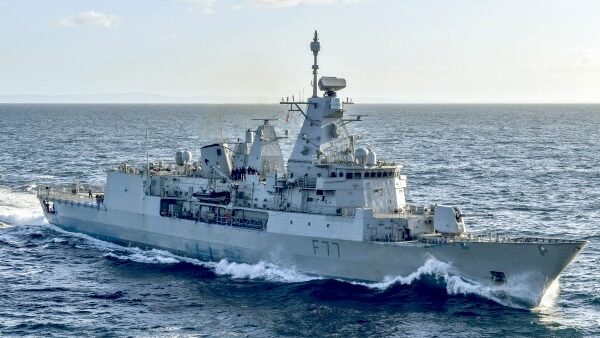
With these funds, New Zealand aims to modernize and simplify its naval fleet. The Defense Capability Plan 2025, revealed simultaneously, indicates that most ships in the Royal New Zealand Navy will reach the end of their operational lives by the mid-2030s. The strategy seeks to standardize the fleet, which currently comprises eight ships across five different classes. Plans involve developing a common hull design for future frigate and patrol vessel replacements in cooperation with Australia.
Urgent Need for Enhanced Naval Capabilities
The future fleet is expected to provide a range of capabilities, including maritime combat, security, and support for humanitarian missions. The government intends to extend the service life of the Anzac frigates HMNZS Te Kaha and Te Mana until the early 2030s, with anticipated maintenance costs between $300 million NZD and $600 million NZD. Davis emphasized the urgency of replacing aging vessels as they approach obsolescence.
Investment in Surveillance and Advanced Technologies
Plans also include acquiring uncrewed surface vessels for surveillance operations, estimated to cost between $50 million and $100 million NZD. These vessels are intended to complement crewed platforms and enhance maritime situational awareness, supporting national resource protection and countering criminal activities.
Additionally, the government plans to invest in long-range remotely piloted aircraft, with a budget of $100 million to $300 million NZD, potentially including systems like the MQ-9B Sea Guardian from General Atomics.
Strengthening Communication and Cybersecurity
New Zealand will also enhance the Army’s network capabilities with an investment of $300 million to $600 million NZD for upgraded radios and infrastructure to connect individual soldiers to headquarters. Furthermore, cybersecurity improvements are planned, budgeted at $100 million to $300 million NZD, ensuring the New Zealand Defense Force remains a reliable and capable partner in the Five Eyes alliance.
Through these comprehensive measures, New Zealand aims to adapt to a changing security landscape and reinforce its defense capabilities to face emerging threats.