Against a backdrop of shifting geopolitical dynamics and a persistent Russian presence in the Arctic and North Atlantic, Norway and Denmark are significantly strengthening their defense capabilities. The Norwegian government has proposed expanding its submarine fleet and equipping its army with long-range precision strike systems, while Denmark is investing in a vessel dedicated to monitoring critical underwater infrastructure. These strategic moves underscore the Nordic nations’ efforts to fortify NATO’s northern flank.
Norway’s Submarine Fleet Expansion: Six Strategic Boats for Deterrence
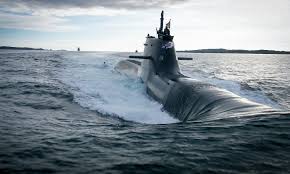
The Norwegian parliament has received a new bill proposing to add two more boats to the submarine program, confirming an earlier parliamentary decision that the country should eventually operate six new vessels in total. This expansion will have a „strong deterrent effect on any potential adversary” and will „significantly strengthen NATO’s overall ability to maintain control and defence in the North Atlantic and the High North,” Defense Minister Tore O. Sandvik stated when presenting the bill.
The two additional Type 212CD submarines from Germany’s ThyssenKrupp Marine Systems (TKMS) will bring the overall program cost to 98 billion kroner ($9.69 billion USD). The two new submarines alone – including weapons and integration – are estimated at approximately 46 billion kroner ($4.54 billion USD). The Defense Ministry explained that this significant increase from the initial estimates for the original four submarines is due to overall inflation in the defense sector, sharply increased raw material costs, and „necessary adjustments to the original contract” for the first four boats (mainly additional weapons and spares), as well as Norway’s share of funding for a second production line in Germany.
Together with TKMS, Kongsberg Defence & Aerospace (KDA) formed the joint-venture KTA, which is responsible for developing and supplying the complete combat system for the Type 212CD submarines. The first two Norwegian submarines are already under construction in Germany, with the first expected to be delivered to the Norwegian Navy in 2029. The remaining four submarines will be delivered progressively, with the final boat scheduled for 2038. The program aims to replace current Ula-class submarines, commissioned in 1989 and 1992 and nearing the end of their operational service life.
A New Precision Strike Force: Up to 500 km Missiles for the Norwegian Army
Also on Friday, the Norwegian government proposed allocating 19 billion kroner ($1.87 billion USD) to equip the army with long-range precision strike systems. This new weapon system will represent an unprecedented capability for the army and will be organized into a new Rocket Artillery Battalion established specifically for this purpose. The battalion is planned to be stationed in Inner Troms in northern Norway. Sandvik emphasized that long-range precision fires will give the army the ability to strike targets „with high accuracy at distances of up to 500 kilometres,” calling it a „strategically vital investment.” The proposal follows a previous parliamentary decision, thus fulfilling the government’s commitment.
Denmark Invests in Subsea Security: A Dedicated Surveillance Vessel for Critical Infrastructure
Meanwhile in Denmark, the Danish Ministry of Defense and a broad parliamentary majority confirmed on Friday that funds have been allocated for the purchase of a dedicated surveillance ship focused on monitoring critical undersea infrastructure. This vessel will be used to detect and respond to activity near subsea power cables, data cables, and gas pipelines in Danish waters and adjacent sea areas. Specific technical details and delivery timelines for the ship have not yet been released.
Copenhagen described the decision as part of ongoing efforts for surveillance under water and on the seabed. „This is an area where threats are constantly evolving, and where we must be able to react quickly and independently,” Danish Defence Minister Troels Lund Poulsen said. „That is why we are following the Defence Command’s recommendation to own a dedicated capability, so that we maintain the necessary freedom of action and operational control, thereby strengthening the Armed Forces’ combat power as much as possible.”