A new Global Surveillance Strategy: Three companies selected to revolutionize Space Monitoring
The United States Space Force is accelerating efforts to monitor hypersonic threats and fast-moving aerial targets, awarding task orders totaling $615 million. The contracts focus on developing next-generation satellites capable of detecting objects in flight beyond the limits of conventional radar. The recipients of these funds are Rocket Lab, STR, and a third player whose identity remains protected under the cloak of „operational security.”
This funding round represents a vital stage in the SB-AMTI (Space-Based Airborne Moving Target Indicator) program, a flexible contract vehicle launched in April this year. The initiative is managed by the space-based sensing and targeting portfolio office, with the ultimate goal of creating an orbital sensor network to eliminate „blind spots” in the face of new adversary flight technologies.
Beyond the SpaceX Hegemony: Technological Diversification becomes a National Priority
The decision to distribute these funds among multiple aerospace industry players marks a paradigm shift. Although SpaceX dominated the program’s first phase with a massive $4.6 billion contract, as well as an additional $1.6 billion agreement for future launches, American officials emphasize the importance of not relying on a single technical solution.
Col. Ryan Frazier explained that the core of this new stage is the diversification of capabilities. By exploring unique innovations and technologies, the Space Force aims to achieve distinct performance advantages, ensuring the military has the absolute best technology available on the market. This multi-vector approach is seen as a strategic safety net against unpredictable developments in operational theaters.
The „Flatellites” Revolution: Rocket Lab proposes an innovative architecture for Neutron
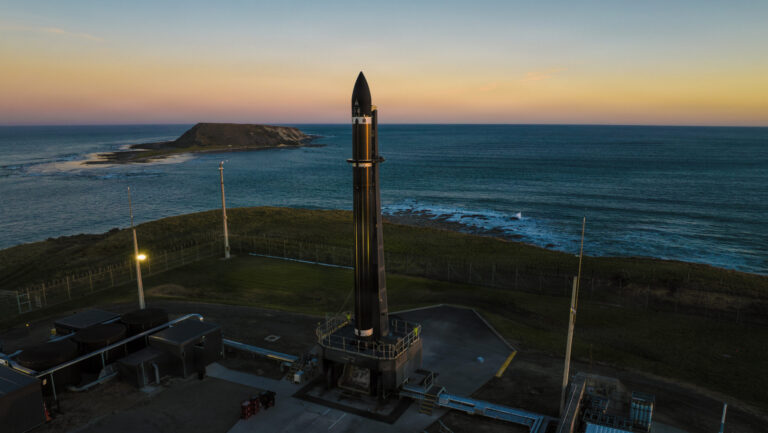
Among the announced contractors, Rocket Lab stands out with a $397 million share. The California-based company will develop and operate a constellation of „Flatellites”—a revolutionary flat satellite design optimized for high-bandwidth, low-latency communication.
These orbital platforms will be carried into space by the new Neutron rocket, a heavy-lift launcher scheduled for its first flight toward the end of this year from the Wallops Island complex in Virginia. The flat design allows for space optimization inside the rocket, facilitating the rapid deployment of vast sensor networks essential for detecting mobile targets in real-time.
The Mystery of the third Player: Operational Security hides the identity of key Contractors
An unusual aspect of this announcement is keeping the third contract beneficiary anonymous. Command spokespersons stated that the decision is strictly dictated by operational security (OPSEC) protocols, designed to protect sensitive mission profiles and specific capabilities developed.
This Pentagon practice of withholding details about contractors and exact award values is becoming increasingly frequent. The official justification is the need to prevent the transfer of strategic information to rival powers like China. The use of non-traditional contract vehicles allows for bypassing standard public reporting requirements, offering the military greater freedom of movement and a heightened degree of discretion in the race for technological supremacy in outer space.