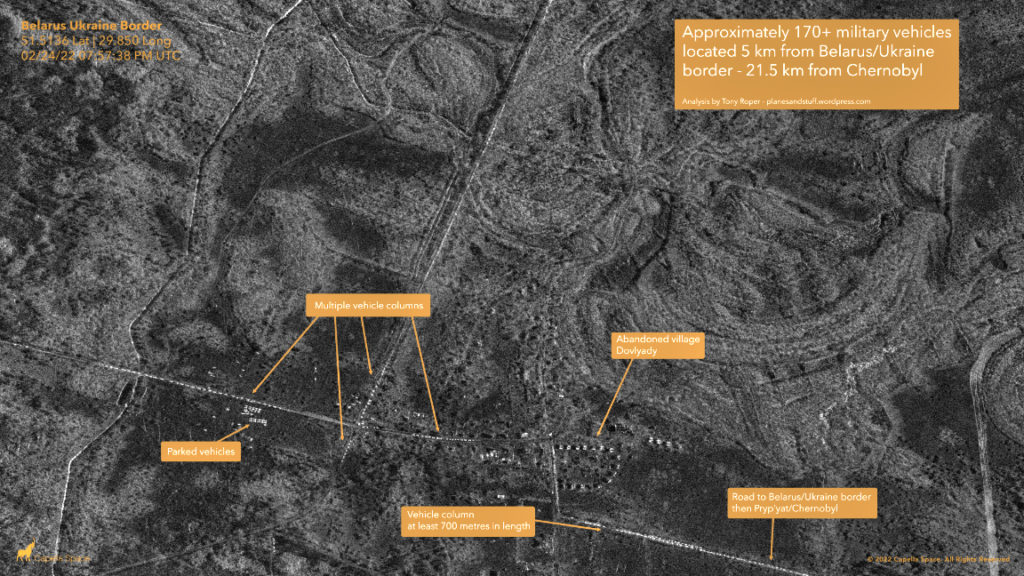
As the U.S. State Department awaits industry feedback on new space export regulations, major American synthetic aperture radar (SAR) companies are voicing strong concerns that the proposed rules will not level the competitive landscape against foreign counterparts. Jason Mallare, vice president and general manager at Umbra Space’s Mission Solutions group, indicated that the regulations would hinder the ability to market premium SAR technology, potentially leading to increased competition from firms like Finland’s ICEYE.
Similarly, Frank Backes, CEO of Capella Space, remarked that while the proposed changes signify some improvement, they would still subject top-tier American imaging systems—including those intended for space deployment—to the stringent International Traffic in Arms Regulations (ITAR). This contrasts with competing foreign systems that are available in the commercial market. He cited not just ICEYE, but also competitors from Italy, France, Germany, and China.
Both Umbra and Capella, along with ICEYE’s U.S. division, have been supplying SAR data to the National Reconnaissance Office (NRO) since 2022 under study contracts. Intelligence Community officials have acknowledged the critical nature of this commercial SAR imagery in supporting U.S. efforts in Ukraine amidst its ongoing conflict with Russia, with ICEYE now providing direct support to Kyiv as well.
SAR satellites are particularly valuable for Ukraine due to their capability to see through challenging weather conditions like clouds, rain, and fog.
The proposed changes by the State Department are part of a broader initiative led by the National Space Council, chaired by Vice President Kamala Harris, aimed at space-related export reforms, which also includes adjustments to the Commerce Department’s Export Administration Regulations (EAR).
The State Department’s proposal, issued on October 23, seeks to modify the export threshold for SAR-satellite systems based on the radio frequency bandwidth utilized, which directly influences image resolution quality. Currently, ITAR restricts the sale of SAR payloads using a bandwidth exceeding 300 megahertz (MHz), but the new proposal would raise this limit to 500 MHz.
While officials from Umbra and Capella acknowledge this adjustment as a positive step toward enhancing U.S. competitiveness, they argue that it remains significantly below the industry standard, which currently operates around 1,200 MHz. “The reality is that the industry international standard right now for what’s currently being deployed is 1,200 MHz,” Backes noted.
Mallare explained, “For SAR systems, bandwidth is resolution. Resolution is quality. Quality is, in many regards, the value of the data.” A SAR satellite sensor operating at 1,200 MHz can produce imagery with a resolution similar to that of a space-based electro-optical camera capturing images at 0.25 to 0.30 meters.
Complicating matters further, the Commerce Department’s licensing regulations currently prohibit the export of SAR data derived from systems operating at a bandwidth of 1,200 MHz. This creates a paradox, as Backes pointed out: “Under NOAA, I am licensed to do higher-resolution SAR; I just can’t sell it as a system.”
Todd Master, Umbra’s chief operating officer, expressed frustration over this incongruence between different branches of the U.S. government, saying, “It’s frustrating that you have one part of the US government assessing [1,200 MHz/0.25 meters] as the state of foreign technology and availability. … Then you have a separate entity saying [500 MHz/0.50 meters] is the standard of relevant military equipment available.”
Capella’s team is currently developing a comparative analysis to accurately map the equivalency between electro-optical and SAR recommendations under the proposed rules.
Interestingly, the State Department also proposes to change the ITAR threshold for export of electro-optical imagery from 0.30 meters to 0.20 meters, indicating a relaxation of regulations.
Both Umbra and Capella are preparing formal responses to the State Department’s proposal, which has set November 22 as the deadline for comments. They recognize that the proposal seeks input on the current state of the art in SAR systems and that U.S. officials have indicated the 500 MHz limit is essentially a temporary marker, inviting technical data to support arguments for further adjustments.