The Joint Fires Network (JFN), a key component of the Pentagon’s initiative to leverage AI in future command systems, is set to transition from a research and development (R&D) project to a formal acquisition program office on October 1.
From Experiment to Acquisition
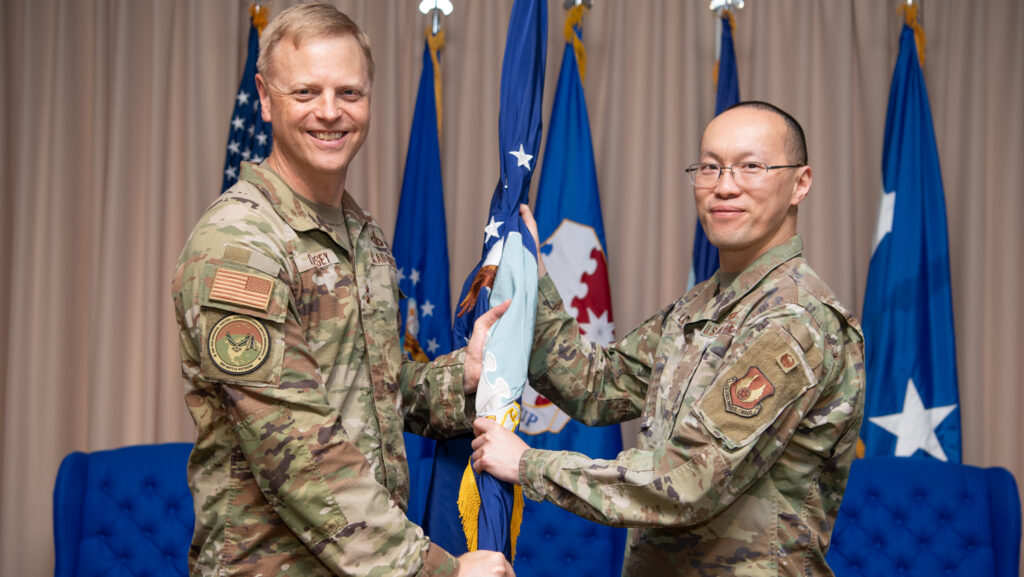
Maj. Gen. Luke Cropsey, head of the Air Force’s Program Executive Office for Command, Control, Communications, and Battle Management (PEO-C3BM), announced the transition at the annual Air Force Association conference. The move signifies a major step in the evolution of JFN, an interservice effort designed to enhance target management and weapon selection in future conflicts.
PEO-C3BM’s Expanding Role
PEO-C3BM, established three years ago, has already taken over 50 programs aimed at creating a unified Department of the Air Force Battle Network. Chief of Architecture and Engineering, Bryan Tipton, is working to consolidate disparate systems into modern, end-to-end capabilities. Cropsey expects to have a draft of enterprise-wide convergence strategies within three months.
Connecting the Services
The PEO’s role extends beyond the Air and Space Forces, as it manages systems that carry vital data for the Army, Navy, and Marines. This has positioned the PEO as a central player in connecting all services into the worldwide meta-network known as CJADC2. The takeover of the Joint Fires Network project further expands this role.
Joint Fires Network: AI for Battle Planning
Joint Fires Network, initiated in 2019 by US Indo-Pacific Command, aims to apply AI to the complex task of battle planning, specifically „who should shoot who?” The project, previously supervised by the Pentagon’s undersecretary of research and engineering (R&E), will now fall under the undersecretary of acquisition and sustainment (A&S).
Integrated Program Office
Cropsey is establishing an „integrated program office” to manage JFN, combining personnel from the Air Force, Navy, Defense Information Systems Agency, and the Army. A senior colonel has been stationed in San Diego to represent Cropsey at the JFN office.
Maintaining Collaboration
Cropsey emphasized that the transition will not disrupt the interservice collaboration on Joint Fires Network. The existing governance process, which ensures that commands, OSD offices, and services have a voice in the program, will remain unchanged.
Continuity for Contractors
The current contractors working on JFN tech will continue their work. The new structure aims to augment their efforts with additional personnel and address integration aspects beyond their current capabilities.
Reinforcing Success
The goal of the new structure is to enhance the program’s capabilities by adding personnel and expanding the program office’s capacity to address integration aspects. The Integrated Program Office will still fall under an interservice Executive Steering Group of senior officers and civilians.