The United States Army is accelerating the modernization of its ground forces, recently awarding contracts to develop prototypes for the „heavy” variant of the Infantry Squad Vehicle (ISV-Heavy). The competition, lining up industry heavyweights such as GM Defense, Ford, and BC Customs, marks a paradigm shift in tactical mobility, focusing not only on troop transport but also on providing massive power directly to the battlefield.
Clash of the Titans: From Civilian Trucks to Next-Gen Combat Platforms
Each of the three selected vendors will deliver three prototypes by March 30, 2027. These vehicles will undergo rigorous operational assessments and developmental testing under the Army Test and Evaluation Command. The stakes are high, as the project directly aims to enhance lethality and operational flexibility in a modern, increasingly tech-dependent warfare landscape.
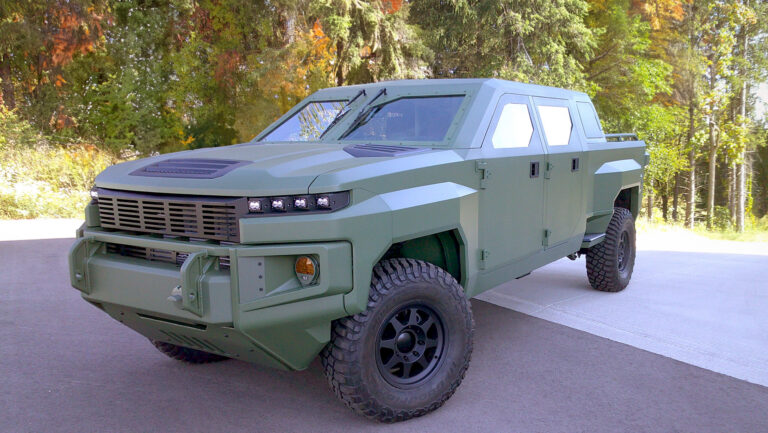
While GM Defense is betting on a militarized version of the robust Chevrolet Silverado HD 3500, Ford enters the arena with a specially adapted variant of its renowned F-Series. This transition from civilian utility vehicles to combat platforms underscores the Army’s desire to leverage industrial innovation already proven in the commercial market.
A Battlefield Power Plant: Solving a „Critical Capability Gap”
What sets the „heavy” variant apart from the standard model already in service is its electro-energetic capacity. The Army currently faces a major shortfall in mobile electrical power, which is essential for the operation of advanced command posts. The new vehicle must be capable of carrying six soldiers while generating high-voltage power (up to 60 kW) to fuel sophisticated communication equipment and radars in the field.
In practice, the ISV-Heavy will be more than just an agile transport vehicle; it will be a giant battery on wheels, capable of sustaining complex operations in isolated areas where traditional power grids are non-existent or destroyed.
Accelerated Tempo: The Pentagon Beats Its Own Deadlines
The announcement of these contracts indicates that the US Army is ahead of its original schedule, as prototype proposals were expected much later this year. This haste highlights the urgency with which military leaders view the need to provide soldiers with increased energetic autonomy.
While the original version of the vehicle, based on the Chevrolet Colorado, has already provided infantry with necessary speed and agility, the new heavy variant promises to transform how combat units manage their technological resources on the front line, ensuring a decisive advantage against any adversary.