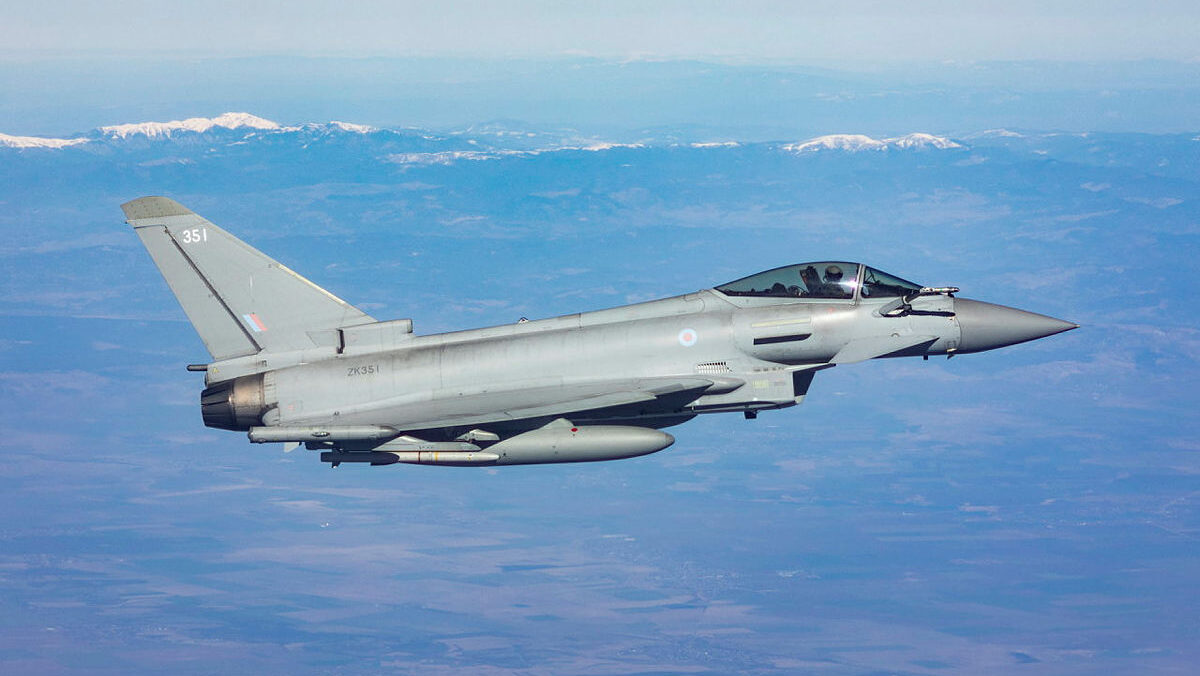
When the emir of Qatar visits the UK this week, his trip will be closely monitored in Preston, located about 250 miles northwest of London. This region is home to BAE Systems’ Warton facility, where the final assembly of the Eurofighter Typhoon takes place. There is anticipation that Sheikh Tamim bin Hamad Al Thani may announce a new order for the fourth-generation jets, a vital development that could help sustain production.
Future Uncertainty for Typhoon Manufacture
The Warton facility is set to produce two final Typhoon airframes by the end of 2025, fulfilling a previous order from Qatar for 24 jets. However, beyond this, the future of the UK-made Typhoon remains uncertain. A BAE Systems spokesperson emphasized that the company has no plans to close the Warton facility, stating, “There is absolutely no suggestion of this,” while mentioning possible international orders. Analysts and BAE executives have flagged Qatar, Saudi Arabia, and Turkey as potential markets for future sales.
Concerns from Union Leaders
Despite the optimistic outlook, union representative Steve McGuinness raised alarms in a letter to lawmakers, urging the British government to support the Warton line not only for the Typhoon program’s future but also for British advanced fighter production overall. “We have serious concerns that without a domestic order for Typhoon, there will be no GCAP [Global Combat Air Programme] due to the loss of the skills necessary to build and fly aircraft,” he stated.
BAE may maintain some operations at Warton through research and development for future projects and redeploy existing staff to other areas of their business. Nonetheless, to keep the Typhoon production line operational and its workforce engaged leading up to GCAP, securing more Typhoon orders is essential, although the jet faces significant market challenges.
Market Dynamics and Competition
“The world is moving towards new generations” of aircraft, explained JJ Gertler, a senior analyst at the Teal Group. He pointed out that the Typhoon has recently been marketed more for diplomatic purposes than performance, which has contributed to its difficulties in securing new sales.
Following McGuinness’s letter, the Spectator published an article labeled “The sad death of the Eurofighter Typhoon,” amplifying concerns about the aircraft’s future prospects.
BAE’s Position and Future Prospects
Gary Waterfall, a former UK Royal Air Force air vice-marshal, remarked that BAE Systems would likely not have welcomed such critical reports from the unions, suggesting that the outlook for production might be overly pessimistic. The company has reiterated its commitment to pursuing orders in both the Middle East and Europe, with hopes that additional contracts could extend production beyond the end of the decade.
Analysts have noted that the potential for further sales is limited, particularly as the defense market increasingly favors more advanced systems over the “4.5 generation” Typhoon. Gertler highlighted that stealth capabilities have become essential for entering the fighter market, with platforms like the F-35 overshadowing traditional fighters.
Concerns over Domestic Procurement and F-35 Competition
The UK government’s failure to place a new order for 24 Eurofighter Typhoons has raised concerns, especially since plans suggest replacing older Typhoon Tranche 1 jets with more Lockheed Martin F-35 aircraft. McGuinness’s letter warned that prioritizing F-35 acquisitions could devastate the British aircraft industry, possibly ending the domestic design, manufacture, and assembly of fast jets, which would severely undermine national capabilities.
Potential for New Orders in the Middle East
Despite the challenges, optimism remains for potential sales in the Middle East. Turkey is reportedly interested in acquiring 40 Eurofighters, and recent developments indicate that Germany may be more amenable to the deal. Additionally, Germany lifted its embargo on selling to Saudi Arabia, paving the way for a long-awaited second tranche order.
Looking Forward: Production and Technological Development
Richard Aboulafia, managing director at AeroDynamic Advisory, expressed confidence in the prospects for the Turkey campaign and the Saudi agreement, noting that the UK’s Typhoon production line is likely among the best positioned to survive beyond this decade.
There are also indications that Typhoon production may continue into the early to mid-2030s, contingent on ongoing export campaigns. The UK has invested significantly in enhancing Typhoon capabilities, such as the £2.4 billion ($3 billion) capability development package, which includes new radar systems.
A Bridging Strategy for Future Aircraft Development
GCAP is a crucial program not only for BAE but for the UK’s geopolitical strategy. Cooperating with Italy and Japan, this next-generation fighter program could become the preferred option for Western nations, particularly if the competing Franco-German-Spanish FCAS/SCAF program falters.
Production planning at Warton may include developments that bridge existing technologies with future requirements. This connection underscores the importance of Typhoon upgrades in maintaining relevance until GCAP is realized.
Conclusion: Future Innovations and Strategic Collaborations
As the UK navigates the complexities of its defense landscape, the future of the Eurofighter Typhoon and its production line at Warton is intricately tied to strategic decisions regarding domestic orders and international collaborations. The upcoming potential order from Qatar could be pivotal in sustaining the Typhoon production and providing the necessary momentum for BAE Systems and the UK defense industry.
Efforts to develop advanced capabilities under GCAP, alongside the push for international sales, highlight the importance of maintaining and enhancing the UK’s aerospace and defense manufacturing expertise. By focusing on technological advancements and fostering international partnerships, the UK can position itself as a leader in the next generation of combat aircraft, ensuring both the longevity of programs like the Typhoon and the development of future defense platforms. As these dynamics evolve, the collaboration between government, industry, and union stakeholders will play a crucial role in shaping the trajectory of the UK’s defense capabilities.