Earlier this month, General Charles Flynn, head of U.S. Army Pacific, addressed the Center for a New American Security with a stark warning: China’s rapid enhancement of its land, air, and naval forces has placed it on an accelerated trajectory towards military dominance in the region.
While concerns regarding China’s military expansion are commonplace in national security discussions, Flynn’s candid remarks underscore the reality that the growth of the People’s Liberation Army (PLA) is not merely theoretical; the U.S. military is witnessing these developments unfold in real-time.
Despite the prevailing narrative that highlights China as the “pacing challenge” demanding Washington’s primary attention, the U.S. finds itself overstretched at this critical juncture. The troubling truth is that in order to adequately address the threat posed by China, American commitments abroad must be reevaluated.
A brief examination of America’s global military engagements illustrates this predicament.
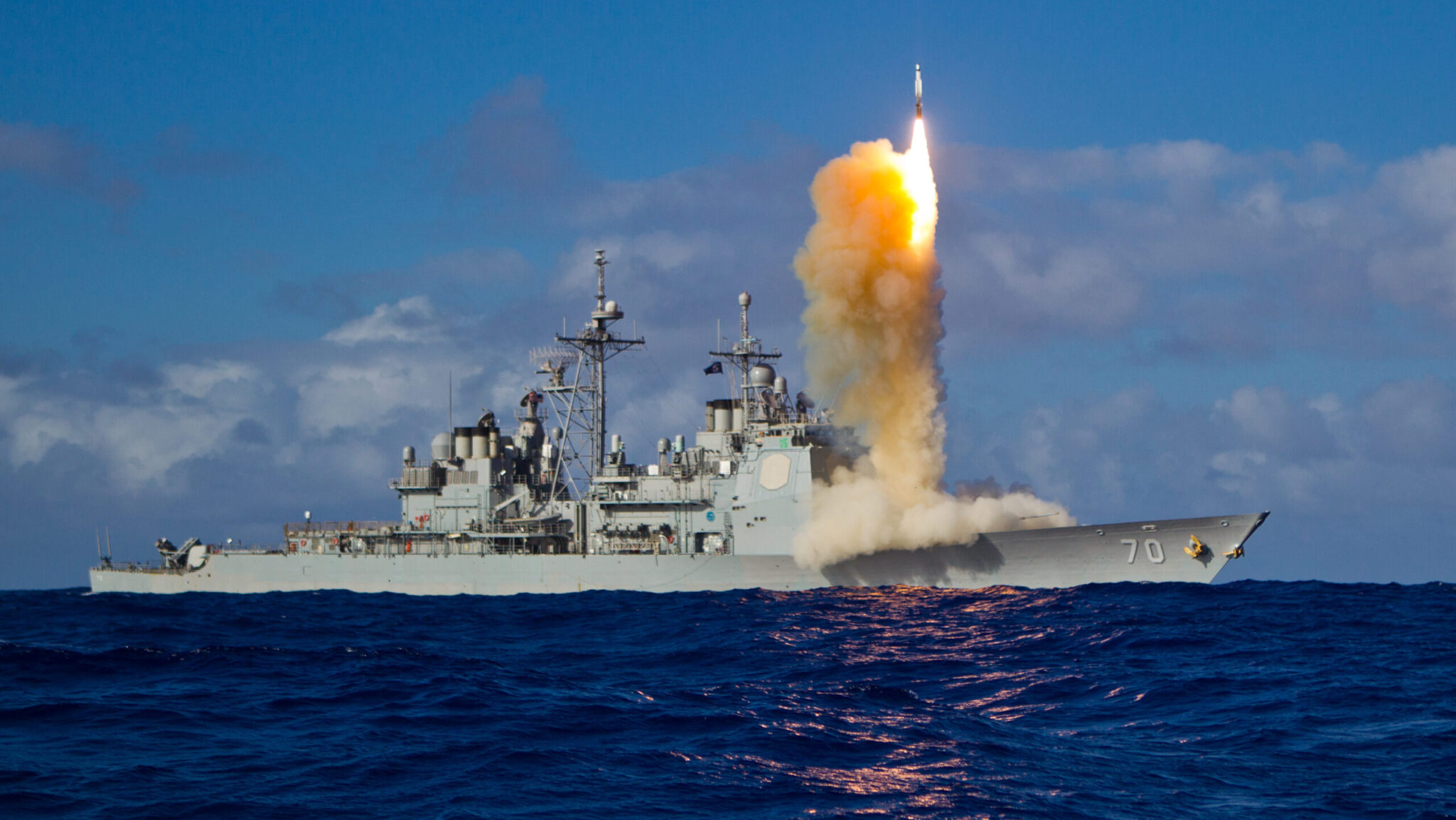
In the Middle East, the U.S. Navy has steadily reduced its already limited stockpile of missiles crucial for protecting its vessels in potential conflicts with China. Secretary of the Navy Carlos Del Toro revealed in May 2024 that over $1 billion in missiles had been expended in operations against the Houthis, involving nearly 100 SM-2 and SM-6 surface-to-air missiles. In October 2024, U.S. Navy destroyers deployed about a dozen advanced SM-3 surface-to-air missiles in a single night to intercept Iranian ballistic missiles aimed at Israel, depleting an entire year’s worth of production of the Navy’s premier missile defense interceptor. Experts have long warned that the U.S. Navy is not procuring the necessary missiles quickly enough to defend itself in the Indo-Pacific, and now it is rapidly depleting them in a secondary theater of operations.
In Europe, Russia’s full-scale invasion of Ukraine has dominated U.S. attention for nearly three years, diverting focus from China at a pivotal moment. As American military deployments to Europe increase in response to Russian aggression, the challenge posed by China to U.S. interests in the Indo-Pacific has become more pronounced. This distraction raises critical questions about whether U.S. support for Ukraine undermines support for Taiwan and broader efforts to maintain a free and open Indo-Pacific.
If the United States remains overstretched, it risks emboldening the so-called “Axis of Upheaval”—a term my colleagues at CNAS have used to describe the loose alliance of Russia, China, Iran, and North Korea, all seeking to disrupt the American-led international order that has provided economic, political, and security stability since World War II.
However, the situation is not beyond remedy. Several viable options can avert this outcome if political leaders in Washington are willing to make difficult choices.
In Europe, while U.S. military presence and nuclear deterrent must remain foundational to European security, Washington should encourage NATO allies to enhance collective defense investments. All NATO members should strive to meet—and ideally exceed—the 2 percent defense spending target established by the alliance. Following Russia’s invasion, long-time NATO partners Sweden and Finland joined the alliance, prompting significantly increased military investment and planning in Poland and among the Baltic states, strengthening NATO’s northeastern flank.
The U.S. should urge NATO to leverage these developments by expanding its Enhanced Forward Presence mission, ensuring it can adequately support frontline battlegroups with necessary reinforcements during crises, and continue fostering defense innovation among member states. Such actions would enable the U.S. to reduce its European footprint while reallocating resources to the Pacific—a strategic shift that was underway prior to Russia’s invasion of Ukraine.
In the Middle East, the U.S. should reassess its commitment of high-end military capabilities in the region and redeploy them to the Indo-Pacific. The rapid consumption of advanced munitions in the Middle East is unsustainable. The U.S. should lead efforts to form a multinational coalition to safeguard commercial shipping, thereby allowing American forces to take a less prominent role in missile interceptions. This initiative could draw inspiration from the successful EU-led counter-piracy operations conducted off the Horn of Africa.
Simultaneously, the U.S. should encourage Israel to seek a resolution to the ongoing crisis in the Middle East, enabling a reduction of U.S. forces in the region. The diversion of thousands of U.S. servicemembers and critical missile and air defense assets to the region detracts from the ability to quickly deploy forces to the Indo-Pacific in response to a crisis with China.
In conjunction with enhancing its posture in the Indo-Pacific, the U.S. must strengthen the capacity of regional partners and allies to support U.S. operations during peacetime and wartime. This necessitates an increase in the production of essential munitions anticipated to be relied upon in a conflict with China. While U.S. production lines are nearing full capacity, fostering investment from allies in their own domestic production, as Australia is currently doing, can help address any shortfalls.