








Just a day after Lebanese Prime Minister Najib Mikati hinted at political support for deploying additional troops to secure Lebanon’s southern border, the Lebanese Armed Forces (LAF) declared it was “repositioning” its existing forces in response to Israel’s ground invasion.
This repositioning, which involves moving to larger barracks and posts slightly further north, is a strategic attempt by the LAF to counter reports suggesting a withdrawal from the southern region. In doing so, the LAF is attempting to clarify its stance amidst rising tensions, particularly given the challenges it faces being caught between Israeli military operations and Hezbollah, the Iran-backed group that has exercised significant control over southern Lebanon for years.
Aram Nerguizian, an analyst at the Center for Strategic and International Studies, commented that the LAF is consolidating its troops at company and battalion headquarters. This move north, approximately five to six kilometers, is framed as a tactical necessity to avoid exposing its forces. Currently, the LAF maintains a concentrated force with the Litani River as a supportive rear.
However, what the military will ultimately do as Israeli forces penetrate Lebanese territory remains uncertain. Nerguizian pointed out that while the LAF has aspirations for national security focused on protecting Lebanon’s territorial integrity, any defensive actions against the Israel Defense Forces (IDF) would likely come with significant costs, especially considering Hezbollah’s struggles against Israel.
Elie Elias, Director of the Middle East Institute for Research and Strategic Studies, echoed this, stating that although deploying more forces along the border is technically possible, the LAF lacks the advanced military capabilities required for effective area protection against a well-equipped adversary like Israel. The LAF would need substantial enhancements in air defense, advanced radar technology, armored vehicles, and intelligence support to effectively secure its southern borders.
The LAF is expected to avoid direct confrontation with Israel. Retired Brig. Gen. Andre Bou Maachar suggested that the U.S. has likely pressured Israel to avoid engaging the LAF as it focuses on countering Hezbollah. Despite instances of LAF troops being killed in Israeli strikes, they are generally not perceived as primary targets.
In the current climate, the LAF aims to stabilize the situation amid ongoing conflict and protect local communities caught in the crossfire. Nerguizian indicated that ongoing conflict would likely displace a significant number of Shia internally displaced persons (IDPs), exacerbating existing demographic and sectarian tensions with the potential for open armed conflict. The LAF will endeavor to mitigate these risks.
Moving forward, Bou Maachar stated that the LAF may play a crucial role after hostilities cease, particularly in implementing United Nations Security Council Resolution 1701, which called for Israel to withdraw its forces from southern Lebanon and for the LAF alongside multinational peacekeepers to maintain stability—a resolution that has yet to be fully realized as Hezbollah remains entrenched in the south.
Recently, however, some Lebanese officials have expressed renewed interest in enforcing Resolution 1701. Prime Minister Mikati’s announcement of Lebanon’s readiness to “implement Resolution 1701, establish a ceasefire, and deploy the army in the south” reflects this sentiment. France has indicated support for this position, even proposing to help modernize the LAF’s capabilities, contingent on political willingness.
As of now, how Hezbollah would respond to increased LAF presence in its controlled territory remains ambiguous, and it is uncertain whether Mikati will still back adding more troops following Israel’s recent troop movements. Elias noted that Hezbollah is unlikely to relinquish its control over southern Lebanon to the LAF, meaning that any deployment would need to navigate the complexities of Hezbollah’s military dominance in that area.
Looking ahead, Bou Maachar suggested that should the conflict continue and Hezbollah be sufficiently weakened, the LAF might finally fulfill its role under Resolution 1701 after a ceasefire. Nerguizian concluded that, in the long run, the Lebanese government will need a capable LAF to restore order and address any security vacuum in the South Litani Sector when the opportunity arises.
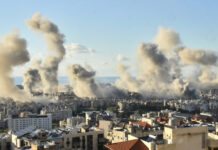
The core question remains: what political and geopolitical conditions will evolve to enable the LAF to extend the sovereignty of the Lebanese government to this region? The answer will dictate the extent of capability development required in the future. Meanwhile, residents of South Lebanon report experiencing unprecedented levels of military activity as the IDF advances northward, marking a tense and uncertain period for the region.