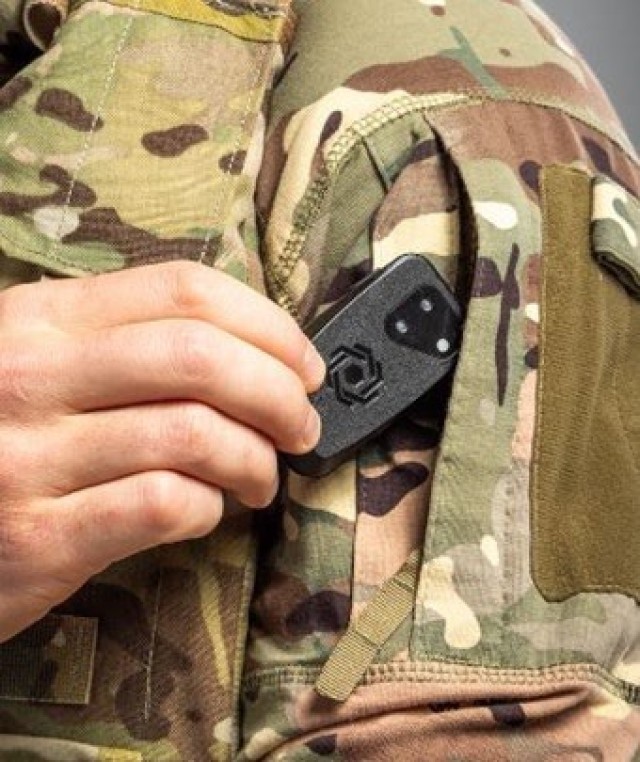
By year’s end, select American special operations forces (SOF) will begin using new wearable technology designed to provide real-time monitoring of vital signs and integrate with systems that alert command posts to potential hazardous gas or chemical exposures.
Combining Physiological and Environmental Data
„We’ve been able to integrate with some of those sensors that warfighters are able to carry around and do that chemical sensing,” Steve Carrig, product lead for strategic acquisitions at the Joint Program Executive Office for Chemical, Biological, Radiological and Nuclear Defense’s (JPEO-CBRND) SOF office, told Breaking Defense. The technology combines physiological data such as heat, stress, and fatigue with environmental monitoring, providing tactical experts with a comprehensive view. „I’ve got this sensor over here going off with this individual, and their heart rates spiked. We’ve got to pay attention,” Carrig explained, describing the potential for enhanced situational awareness.
WARP Aims to Protect Warfighters
The device, developed by LifeLens Technologies, is part of the Army’s Wearable All-hazard Remote-monitoring Program (WARP), led by JPEO-CBRND. It’s the „first DOD-led physiological monitoring device to be fielded to the joint force,” according to the Army. The system consists of a small node containing 25 monitors, attached to the body with an adhesive, and a „gateway” device that generates „distributed sensor fusion.”
Tactical Awareness Kit Integrates Data Streams
Data from the LifeLens device connects with MRI Global’s data visualization tools, forming a tactical awareness kit. This software provides end-users and subject matter experts with a holistic view of the data, enabling more efficient operations.
Pandemic Accelerated Development
The need for such a product became apparent after a DoD pilot program on wearables and was further highlighted by the Covid-19 pandemic, Carrig said. SOCOM subsequently issued a requirement to better understand warfighter health in tactical environments, collating that information with environmental sensor data.
Comfort and Convenience Drive Form Factor Choice
Experimentation with various wearables, from rings to watches, led to the selection of LifeLens due to its comfort and convenience. „You may have the most amount of information you could ever possibly have on a wearable, but if an individual is not going to wear it for comfort reasons, then then you’re kind of at a loss,” Carrig stated. The LifeLens device proved so comfortable that users „would put it on and forget they were wearing it.” Rings were deemed impractical due to concerns about entanglement, and watches/bands interfered with protective gear.
Deployment on the Horizon
Fielding of the LifeLens device is scheduled to begin by the end of the year, although the deployment scale remains undisclosed. The „Rapid Acquisition Effort” initiated in January 2024 has allowed for rapid progress. Carrig emphasized a „fail early, fail fast” mentality to enable rapid iteration and learning.