Recent successes in air and missile defense (AMD) across Middle Eastern conflicts have laid bare a stark reality: while the technology is proven, the industrial capacity to sustain prolonged warfare is nearing its breaking point. Intercepting waves of missiles and drones has validated American systems, yet the cost—measured in depleted munition stocks and the loss of critical TPY-2 radars—raises urgent questions about long-term sustainability.
Cost versus value: The economic trap of drone warfare
A persistent debate surrounds the use of multi-million dollar interceptors, such as the PAC-3, to neutralize cheap drones. However, operational reality dictates a different logic: a commander does not weigh the cost of the interceptor against the drone, but rather against the value of the asset being defended—be it a ship, an airbase, or human lives. The current challenge is not merely technological but one of capacity. While destroying drones is not „rocket surgery,” the difficulty lies in detecting, tracking, and classifying targets in saturated environments, requiring a „high-low” mix of defensive capabilities.
The solid rocket motor crisis: Industrial bottlenecks and regulatory overlap
Critical components, such as solid rocket motors (SRMs), have become the ultimate chokepoint in the supply chain. Today’s industrial base is a product of decades of government procurement signals, built for peacetime volumes that are now insufficient. Furthermore, production is hampered by redundant regulations across different agencies. While safety remains paramount, the overlap between Department of Defense standards and civilian regulatory bodies creates inefficiencies that slow manufacturing, even in facilities currently operating well below their maximum capacity.
Redefining the threat: When a drone is actually a cruise missile
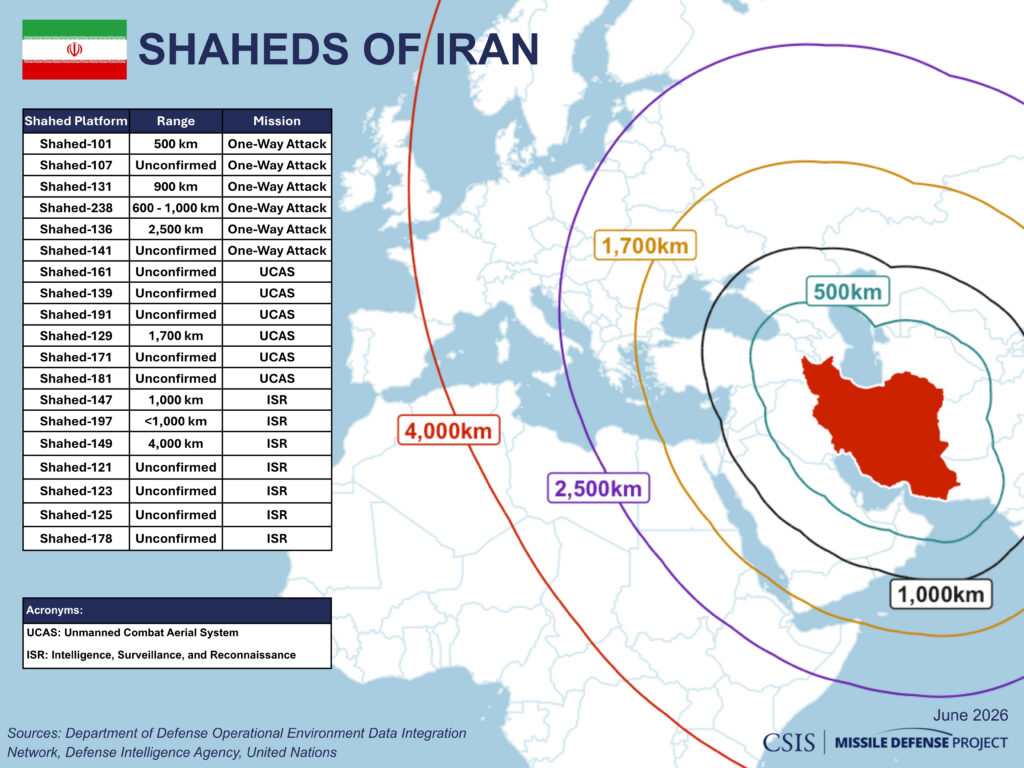
A shift in military taxonomy is complicating defense strategies: modern drones, such as the Shahed family, have evolved to the point where the distinction from cruise missiles is purely academic. Platforms capable of traveling 2,000 kilometers with complex flight paths require highly precise point defense. This blurring of the threat spectrum places immense pressure on radar networks, which have become primary targets for adversaries looking to blind defensive umbrellas.
Strategic risks: Pacific vulnerabilities amidst regional crises
The relocation of strategic assets, particularly TPY-2 radars, from the Pacific or Europe to the Middle East poses a significant risk to global deterrence. Every radar lost or reassigned weakens the defensive posture against near-peer adversaries. Without a clear, sustained demand signal from the government to allow industry to ramp up to maximum production, the air defense system faces the risk of running out of „anti-bullet bullets” at the very moment they are needed most.