The recent escalation in the Middle East has evolved into a high-stakes proving ground for cutting-edge military hardware, witnessing the combat debut of missiles and drones that had never before been fired in anger. This technological arms race features everything from „super-heavy” ballistic missiles to autonomous systems inspired by the adversary’s own designs, fundamentally altering the nature of modern warfare.
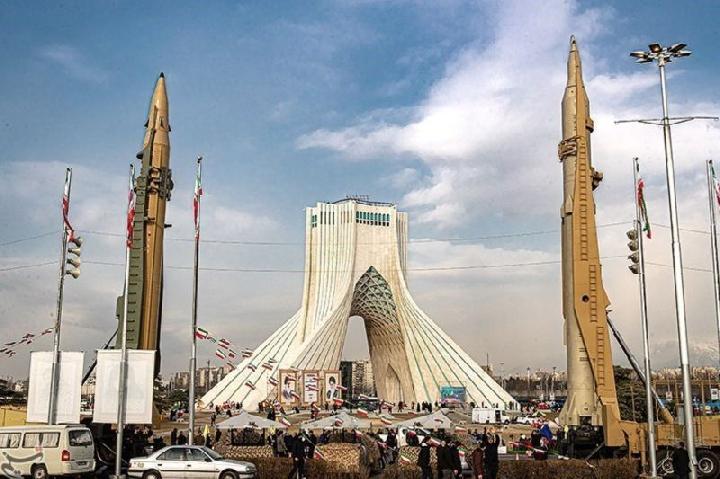
Tehran’s Strategic Leap: Super-Heavy Payloads and Long-Range Enigmas Iran has unveiled its advanced ballistic capabilities, deploying the Sejjil missile for the first time. This two-stage, solid-fuel weapon is capable of delivering a 700 kg warhead over 2,000 kilometers. Adding to the tension is the debut of the Khorramshahr-4, a „super-heavy” projectile reportedly carrying a two-ton payload at speeds exceeding Mach 14. Furthermore, the upgraded Haj Qassem missile has entered the fray, featuring advanced navigation systems specifically designed to bypass electronic warfare and penetrate sophisticated air defense shields.
Perhaps the most significant development is the reported strike on the distant Diego Garcia military hub. While Iran denies the operation, the sheer distance—roughly 2,500 miles—suggests a massive leap in operational reach, possibly achieved through modified space launch technology. This strike has served as a stark warning that regional boundaries are blurring, potentially placing previously „safe” international capitals within range.
The U.S. Response: Precision Strikes and „Captured” Innovation The United States has countered with its own array of next-generation systems, most notably the Precision Strike Missile (PrSM). Designed to replace the aging ATACMS, the PrSM offers an unrivaled deep-strike capability, hitting targets at ranges exceeding 500 kilometers with extreme accuracy. Launched from HIMARS or MLRS platforms, it provides a critical edge in neutralizing high-value assets deep within enemy territory.
In a tactical irony, U.S. forces have also embraced a page from the Iranian playbook with the introduction of the LUCAS drone. This one-way attack munition is a reverse-engineered version of the Iranian Shahed 136. By „pulling the guts out” of captured designs and integrating American technology, the U.S. has deployed a cost-effective, $35,000 loitering munition that turns the enemy’s own concepts against them.
Naval Autonomy: The Rise of Uncrewed Combatants The maritime domain has not been left behind, seeing the combat deployment of the Global Autonomous Reconnaissance Craft (GARC). Used during Operation Epic Fury, this 16-foot uncrewed surface vessel represents the future of naval reconnaissance and strike operations. Despite past testing hurdles, its active presence in the Gulf underscores a decisive shift toward autonomous systems capable of operating in high-threat environments, minimizing the risk to human personnel while maintaining persistent pressure on the adversary.