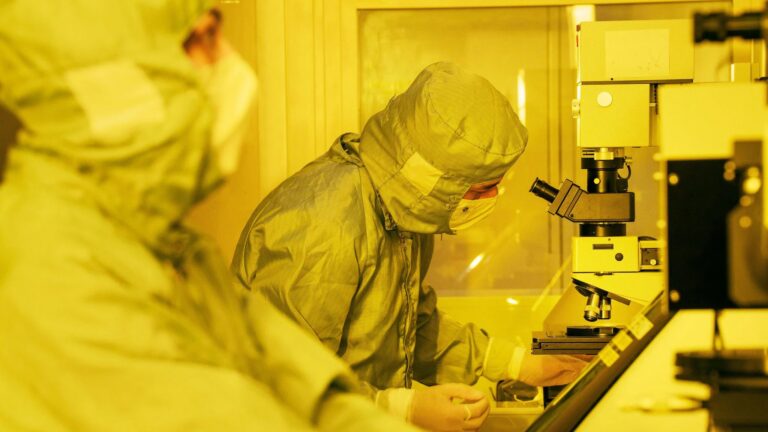
In an era of global uncertainty, the European Union is pushing a decisive shift: resilience is built with concrete, steel, and silicon, not just through white papers and strategy documents.
Beyond Vocabulary: Europe’s New Power Paradigm
Across EU policy circles, a tectonic shift in vision is underway. The language of economic efficiency and „frictionless” global supply chains has been replaced by a new vocabulary of survival: resilience, sovereignty, and strategic autonomy.
This is not a retreat from international cooperation, but a pragmatic realization: Europe’s strength depends on its ability to operate independently during times of crisis. Technological sovereignty is no longer an abstract concept; it has become a force multiplier for European defense.
The “Vibecoding” Trap and the Harsh Reality of Infrastructure
Recently, the rise of low-code tools and the „vibecoding” phenomenon have created the illusion that innovation can be scaled instantly. While the democratization of technology is a giant leap forward, defense and mission-critical systems cannot be built on „vibes” alone.
Europe cannot „vibecode” semiconductor fabrication plants, sovereign satellite constellations, or autonomous defense systems. These require advanced laboratories, secure testing environments, and redundant manufacturing capacities. Resilience is built of concrete, steel, and silicon. Without this physical backbone, Europe risks designing systems it cannot sustain when it matters most.
The Missing Link: National Fragmentation and Funding Bottlenecks
Although the EU possesses instruments such as the European Innovation Council (EIC) and the European Defence Fund (EDF), their effectiveness is often undermined by diverging national priorities and administrative bottlenecks.
The current challenge is not to create new financial instruments, but to integrate existing ones. The risk is not just inefficiency, but the possibility that Europe invests significant sums without achieving an integrated capacity at a continental scale. To close this gap, a full-spectrum flow is needed: from simulation and design to production, deployment, and maintenance under pressure.
Engines of Innovation: Defense Hubs and the Triple Helix Model
Regional innovation ecosystems are the key to this transformation. Centers like Kista (Sweden), Stuttgart (Germany), and Toulouse (France) demonstrate how civilian technologies—sensors, data infrastructure, and mobile communications—can be pivoted toward defense applications.
These clusters, based on the „Triple Helix” collaboration (academia, industry, and government), must become the anchors of EU industrial strategy. Instead of developing isolated national hubs, Europe must connect these ecosystems into a pan-European resilience architecture capable of responding rapidly to emerging threats.
More Than Money: The Need for Talent and Operational Clarity
Europe does not lack ambition or funding; what it often lacks is operational clarity. Initiatives like the European Chips Act depend directly on the ability to build end-to-end industrial capacity. Furthermore, the talent gap in the semiconductor sector represents a major vulnerability; without a reskilled workforce and new pipelines of specialists, autonomy remains a theoretical goal.
Sovereignty is not achieved through political declarations, but through long-term commitment. The resilience of Europe’s defense, space, and technological systems cannot be improvised or „vibecoded.” It must be built, protected, and mobilized.