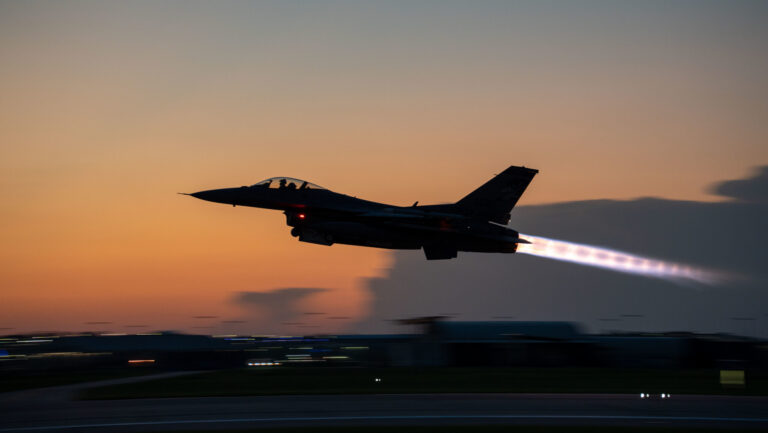
A Disputed Triumph for the Aerospace Giant Lockheed Martin has officially declared victory in the long-standing competition to modernize Peru’s fighter fleet, announcing the sale of 12 F-16 Block 70 aircraft. While the American giant hails the selection as a testament to the jet’s unmatched combat record and operational prowess, the atmosphere in Lima remains chaotic. The deal, intended to replace aging Mirage 2000 and MiG-29 fighters, has sparked a high-stakes power struggle within the Peruvian government, leaving the future of the nation’s defense capabilities hanging in the balance.
Resignations and Rhetoric: The Internal Split What was expected to be a landmark defense upgrade has devolved into a political crisis after interim President José María Balcázar Zelada questioned the deal’s timing. Citing the need to address social gaps and the risks of a transitional government committing massive funds, Balcázar’s hesitation prompted the immediate resignation of both the Defense and Foreign Ministers. Despite the President’s public reluctance, the Ministry of Economy has reportedly processed an initial payment of $462 million, highlighting a profound disconnect between the executive branch and military procurement offices.
Diplomatic Friction and the „Technical” Signature The lack of clarity has drawn a sharp rebuke from diplomatic circles, with warnings of „bad faith” negotiations. Evidence suggests that a formal technical signing between authorized parties occurred on April 20, 2026, with the full knowledge of senior government officials. International observers have issued a stark ultimatum: the current pricing and delivery window are closing. Increased global demand and rising supplier costs mean that if Peru does not honor its commitment now, the same strategic package may no longer be available in the coming weeks.
Security at the Ballot Box: A Precarious Future As Peru approaches a decisive run-off election in June, the F-16 deal has become a lightning rod for the nation’s systemic instability. With the country currently on its tenth president since 2016, the contract’s execution depends entirely on the political will of the incoming administration. While Lockheed Martin maintains that the agreement is finalized, the revolving door of Peruvian leadership keeps the defense industry and regional allies on edge. The choice remains: secure the nation’s airspace with a premier fighter fleet or risk strategic isolation in an increasingly volatile global landscape.