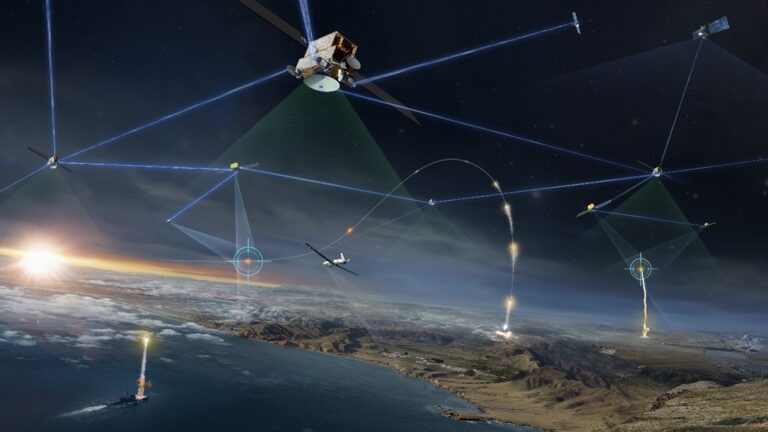
Following a „strategic pause” necessitated by design flaws and technical glitches, the Space Development Agency (SDA) is firing up its engines once again. A new fleet of cutting-edge satellites is ready for deployment, marking a critical turning point in the construction of low-Earth orbit defense infrastructure.
The United States is officially resuming the deployment of its first-generation space transport network after technical issues grounded the program. Defense leaders confirmed that the downtime was vital for addressing critical vulnerabilities discovered in the initial units launched last year. The current roadmap aims to rapidly place over 20 new space vehicles into orbit, part of a massive push to reach a functional threshold of 158 satellites in this segment.
Overcoming design flaws and propulsion malfunctions
The path to an infallible orbital network has been fraught with obstacles. Defense officials frankly admitted that the first batches of satellites suffered from faulty thermal modeling and malfunctions in their electric propulsion systems. These issues prevented the satellites from reaching their ideal orbital planes, forcing engineers to implement thermal mitigation solutions and last-minute software patches for the remainder of the fleet.
This reboot of the launch schedule is met with cautious optimism. While technical checkouts are not yet fully complete for all units currently in orbit, experts are confident that the experience gained over the past six months will accelerate the integration of the new satellites poised to leave the launch pad.
The laser technology challenge and bureaucratic red tape
Beyond hardware, the Pentagon faces a major challenge in establishing its envisioned „mesh network.” Difficulties in the production of optical inter-satellite links—essential for instantaneous communication in space—remain a sore point. These laser connections serve as the backbone of the entire defense architecture and are vital to the success of the „Golden Dome” initiative.
Furthermore, testing data transmission technologies to military platforms on the ground is hitting a wall regarding radio spectrum authorizations. While testing in open waters and with international partners has been greenlit, utilizing these frequencies over U.S. territory remains stalled in an arduous administrative process that has lasted several years.
Strengthening tactical capabilities for the modern warfighter
The ultimate goal of these launches is to translate a theoretical concept into actual combat capability. Once the network reaches a critical density across multiple orbital planes, armed forces will benefit from a real-time data stream, connecting detection sensors with interceptor systems in an unprecedented manner.
Integration into the Space Force’s emerging Space Data Network will allow tactical information to flow globally with minimal latency. For military strategists, this moment marks the dawn of a new era where space is no longer just a domain for observation, but an active, resilient nerve center for national security.