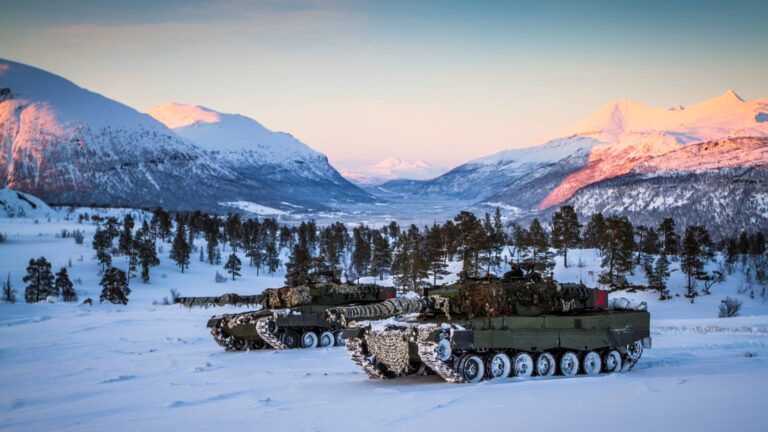
As NATO allies gear up for the Ankara Summit, a central message dominates the halls of power: burden-shifting is no longer just a political slogan, but an operational necessity. A recent expert delegation to Oslo and Bergen evaluated Norway’s defense preparations, leading to a paradoxical conclusion. While Norway stands as a gold standard for commitment and investment, its success sharply highlights the chasm of instability and underfunding threatening the rest of the Alliance.
Political Unity: A Luxury Few Can Afford
Norway enjoys a rare advantage in today’s geopolitical landscape: political unanimity. In a nation of fewer than six million people, support for increased defense spending and aid to Ukraine is a given across the political spectrum. The contrast with major European powers is stark. While Oslo projects stability, the UK grapples with a chronic leadership crisis, France looks warily toward 2027 as euroskeptic currents gain ground, and Germany faces the rise of political forces challenging NATO’s very foundations. Without internal unity, the target of 5% of GDP for defense remains an unrealistic dream for Paris or Berlin.
Fiscal Might: A Trillion-Dollar Shield vs. National Debt
The defining difference between Norway and the rest of the North Atlantic bloc is its financial „shield.” Backed by a sovereign wealth fund exceeding two trillion dollars, Oslo possesses unique fiscal flexibility, allowing it to allocate over 3.5% of GDP to defense by 2035 without sacrificing social welfare. Meanwhile, major European economies are reeling: France fragments its investments across too many domains, and London struggles with massive public debt and skyrocketing social spending. Norway is not just a loyal ally; it is the only one that can afford its security without facing bankruptcy.
Interoperability: Breaking Down Technical and Language Barriers
A critical point identified is the fragmentation of the defense industrial base. Norway is taking massive strides toward standardization, purchasing German submarines and British frigates where crews will be cross-trained using English as the common operating language. However, elsewhere in NATO, the situation is alarming: nearly 30 different variants of main battle tanks exist, and 155mm ammunition is often incompatible across various platforms. Without real standardization, NATO remains a collection of 32 different armies rather than a unified force capable of a rapid and coherent response.
The Fragile Balance on the Russian Border
Located just 10 kilometers from Russian nuclear bases on the Kola Peninsula, Norway has mastered the art of balancing deterrence with strategic stability. Although Russia has shifted most of its ground troops to the Ukrainian front, Moscow is already constructing facilities for a massive repositioning to the High North post-conflict. The challenge for NATO is three-fold and simultaneous: supporting Ukraine, rearming itself, and managing the risk of escalation. If NATO had 32 „Norways,” the future would be secure. The reality, however, is that the Alliance only has one, and the rest of the members must quickly learn how to turn the „Oslo model” from an exception into a standard.