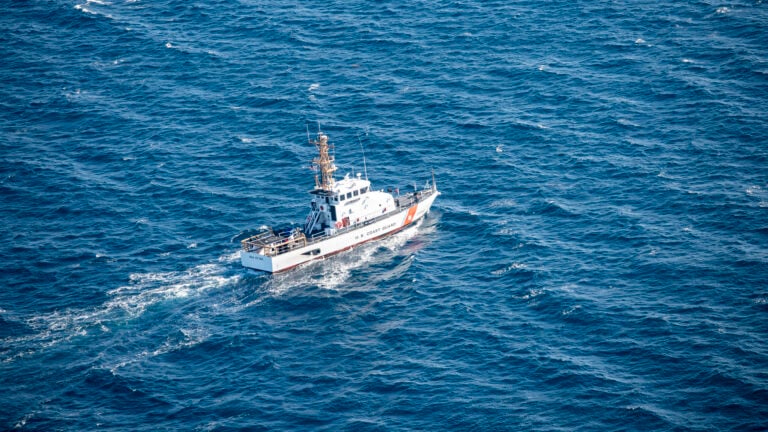
A crucial question posed by the National Commission on the Future of the Navy illuminates a strategic crack in America’s approach to global maritime dominance. In an era where the United States faces a peer rival capable of contesting sea control and undermining the post-World War II maritime order, a fundamental reassessment of fleet architecture and naval strategy is both necessary and overdue. Yet, a critical omission persists: the vital role of the U.S. Coast Guard is, alarmingly, being overlooked.
America’s Strategic Blind Spot: Critical Questions, Incomplete Answers
Maritime dominance extends beyond high-end naval warfare; it encompasses the control, security, and governance of maritime space across the full spectrum of competition – from day-to-day law enforcement and presence to deterrence operations. This capability is intrinsically tied not only to the U.S. Navy but also to the U.S. Coast Guard. Any effort to rebuild American maritime dominance that fails to fully integrate the Coast Guard risks creating a fleet designed for war but poorly structured for the hybrid strategic competition already underway.
China’s Blueprint: Winning the Seas Without Firing a Shot
Beijing has grasped this nuance perfectly. Over the past two decades, China has not only built the world’s largest navy but also the world’s most extensive coast guard. The latter routinely patrols contested waters, enforces Beijing’s territorial claims, and challenges foreign ships throughout the South China Sea and beyond. These operations advance China’s strategic objectives without crossing the threshold of armed conflict, allowing it to compete continuously and shape conditions in its favor without firing a shot. The United States possesses a similar layered maritime capability in its Navy and Coast Guard. Unlike China, however, Washington has not fully integrated Coast Guard forces into its maritime strategy, fleet architecture, and shipbuilding plans.
Beyond Military Might: The Coast Guard’s Unique Power Below the Threshold
Herein lies a significant strategic gap. The Coast Guard provides authorities and capabilities the Navy does not possess. Under Title 14 of the U.S. Code, the Coast Guard is both a military service and a federal law enforcement agency. Its personnel have the authority to stop, board, search, and seize vessels on the high seas. These authorities enable the United States to enforce sovereignty, counter illicit activity, and uphold international norms without escalating to direct military confrontation.
Strategic competition at sea rarely takes the form of fleet engagements. It occurs through persistent presence, enforcement of sovereignty, and the ability to deny adversaries and illicit actors freedom of maneuver. Coast Guard cutters perform these missions globally, strengthening maritime governance and reinforcing stability.
From the Caribbean to the Arctic: Quiet Operations, Profound Impact
Coast Guard operations consistently demonstrate how persistent maritime presence advances national strategy. Its boarding teams conduct enforcement operations that uphold U.S. sovereignty and deny illicit actors freedom of maneuver. Simultaneously, Coast Guard cutters engage in naval diplomacy missions with partner nations throughout the Caribbean and Central America, significantly enhancing their maritime security capabilities.
In a very recent example, a Coast Guard cutter pursued and boarded a Russian-flagged oil tanker in the North Atlantic near Iceland, an operation supported by Department of Defense personnel. Such a mission enforces international norms, demonstrates U.S. resolve, and maintains maritime order without escalating to overt military confrontation. The Coast Guard’s role is equally critical in emerging theaters such as the Arctic. As melting ice opens new shipping routes and access to natural resources, Russia and China are expanding their polar presence. The Coast Guard operates the United States’ only icebreakers, providing essential access, sovereignty operations, and sustained presence in polar regions. Without these capabilities, the United States cannot effectively compete in the Arctic.
Alleviating Naval Strain: How the Coast Guard Optimizes the Fleet
Fully integrating Coast Guard capabilities would also significantly help alleviate the operational strain on naval forces. The Navy is routinely tasked with maritime security, presence operations, and partnership missions that Coast Guard forces are uniquely suited to perform. Greater reliance on Coast Guard cutters for these missions would free up naval combatants to focus on deterrence and high-end warfighting.
The National Fleet Vision: Full Integration for True Dominance
This integration reflects the long-standing „National Fleet” concept, which recognizes that Navy and Coast Guard forces together constitute the nation’s maritime power. The Commission should treat Coast Guard cutters, icebreakers, and deployable forces as integral components of the nation’s fleet architecture, rather than as separate or merely supporting assets. Only then will the National Fleet concept be fully implemented, integrating both forces into a unified maritime force capable of competing across the full spectrum of conflict.
Incomplete Maritime Dominance: A Strategic Vulnerability
Maritime dominance is not solely a naval function. It is a national maritime function requiring integrated naval and Coast Guard capabilities. Naval combat power is essential to deterring and defeating adversaries in war, but maritime dominance also depends on persistent presence, law enforcement authority, and the ability to compete below the threshold of armed conflict. The Coast Guard provides these capabilities every day. If the United States is serious about restoring maritime dominance, it must fully integrate the Coast Guard into its maritime strategy, fleet architecture, and shipbuilding plans.