



















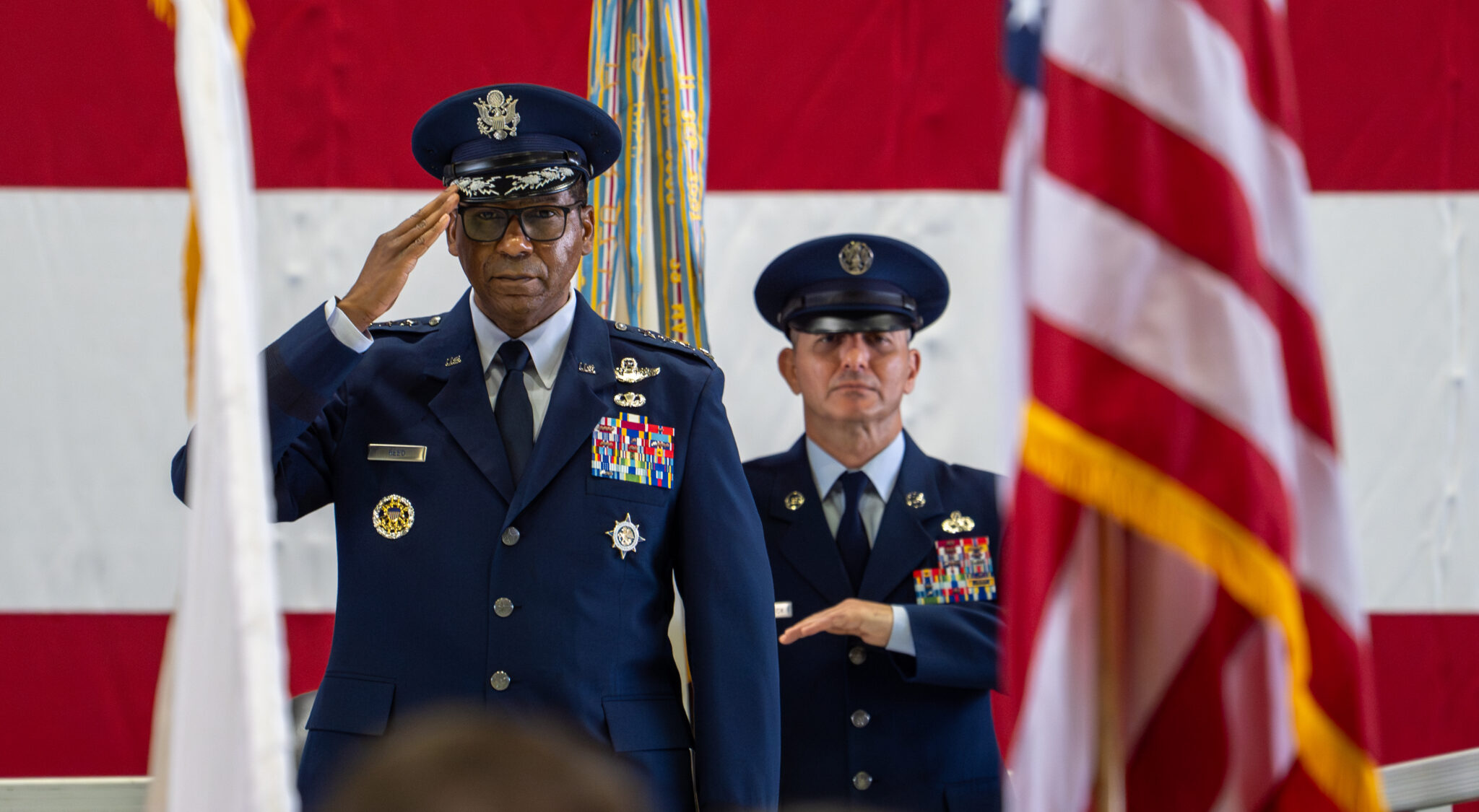
In a stark warning regarding the evolving landscape of global power dynamics, General Randall Reed, the new head of U.S. Transportation Command (TRANSCOM), emphasized today that American soil is increasingly at risk due to rising great power competition. Speaking at a National Defense Transportation Association meeting in St. Louis, Reed called for a refreshed mindset and improved defenses against “non-kinetic” threats, particularly in what he termed the “gray zone” of operations.
Reawakening National Urgency
Reflecting on the nuclear drills of the Cold War—a period marked by acute awareness of potential threats—Gen. Reed expressed concern that the nation has lost that sense of urgency. “There was a national consciousness that somebody could do something to us. We’ve lost that,” he remarked, underscoring the need for Americans to recognize the potential dangers posed not only by adversaries but also through unconventional means.
While Reed did not explicitly name adversaries, he used Pentagon terminology to refer to Russia as an “acute” threat and China as a “pacing” threat. He argued that understanding these nations’ capabilities to threaten the continental U.S. should spur innovative thinking aimed at bolstering domestic operations.
“The homeland is no longer a sanctuary,” Reed stated, stressing the importance of enhancing U.S. capabilities beyond traditional kinetic responses. “We have great, great power to deter in the kinetic realm. The question will be, how do we continue to get stronger in the non-kinetic and the gray zone realm? There’s a lot of work to be done there.” The „gray zone” refers to activities that occur between peace and war, including cyber operations and other forms of hybrid warfare.
Challenges and Conflicts Ahead
Taking command from Gen. Jacqueline Van Ovost on October 4, Reed now oversees TRANSCOM during a time of heightened logistical demands stemming from ongoing global conflicts. TRANSCOM has played a crucial role in delivering aid to Ukraine, supplying weapons to Israel, and providing humanitarian assistance to civilians in Gaza.
Furthermore, amid rising tensions in the Indo-Pacific region, TRANSCOM faces increased operational challenges, particularly as China develops sophisticated defense systems that threaten key logistical assets such as shipping vessels and aircraft. This vulnerability has led to a concept known as “contested logistics,” where the ability to transport troops and supplies can be significantly hindered by adversarial actions.
The Necessity for Decision Advantage
Reed emphasized that achieving a “decision advantage”—the ability to make quick and correct choices in various situations—is imperative for TRANSCOM. He challenged the perception that logistical operations are not contested, stating, “Logistics is always contested. If nothing else, it is the perfect home for Murphy’s Law. The mechanical nature of things has a vote. The level of training of our people has a vote. Things are going to go wrong.”
This acknowledgment of the inherent unpredictability in logistics operations highlights the critical need for preparedness and adaptability, ensuring that TRANSCOM can respond effectively to any challenges that arise.
Conclusion
As General Randall Reed steps into his role as head of TRANSCOM, his insights reflect the complexities and evolving threats that the U.S. faces in the current global environment. His call for enhanced defenses against both kinetic and non-kinetic threats underscores a growing recognition that American security requires a holistic approach—one that addresses traditional warfare as well as the subtler tactics employed in the gray zone. As the dynamics of great power competition intensify, the United States must adapt its strategies to safeguard its interests both at home and abroad.


