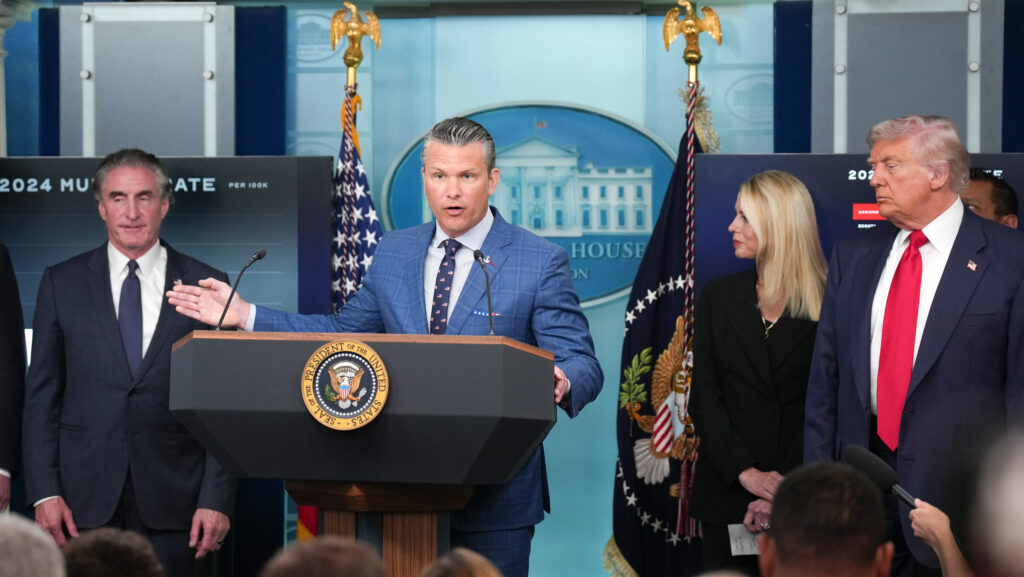
In a move that evokes a bygone era, the Pentagon will now be known as the „Department of War” as a secondary title, marking the first time since 1947 the moniker will be officially associated with the US military’s headquarters.
Executive Order Sparks Debate
President Donald Trump signed an executive order authorizing the Department of Defense (DoD) to use „Department of War” as a secondary name. Trump has long advocated for this change, stating that „Defense is too defensive,” and that he wants the military to project a more „offensive” image.
Official Name Change Requires Congressional Approval
While the executive order does not change the DoD’s official title, it allows the Secretary of Defense and other officials to use titles like „Secretary of War” in official correspondence and public communications. Any formal name change would require Congressional approval, but Trump has indicated he intends to pursue this path.
Republican Support, Democratic Skepticism
Republican lawmakers, including Sens. Mike Lee and Rick Scott, have voiced support for officially reverting the department’s name. Scott tweeted that restoring the „Department of War” name reflects the military’s „true capabilities to win wars.” However, Democrats like Rep. Darren Soto have mocked the move, questioning its impact on global perceptions.
Secretary Hegseth Embraces Change
Secretary of Defense Pete Hegseth is embracing the change, with the website Defense.gov redirecting to War.gov (though it briefly crashed) and his social media profiles updating to describe him as „Secretary of War.” Hegseth stated that the move is part of a broader effort to restore a „warrior ethos” and a focus on „victory” within the military.
Historical Context
The DoD was originally called the Department of War from 1789 until 1947, when the National Security Act of 1947 created the Department of Defense and separated the Army and Air Force.
Cost Concerns and Expert Opinions
The potential cost of rebranding the department has raised concerns, although Trump has suggested a phased approach to minimize expenses. Experts like Kori Schake criticize the move as a „circus trick” and argue that the department should focus on more pressing issues like budget stability and acquisition reform. Michael O’Hanlon of Brookings Institute says this move will reinforce the overseas narrative that the U.S. is a bellicose nation.