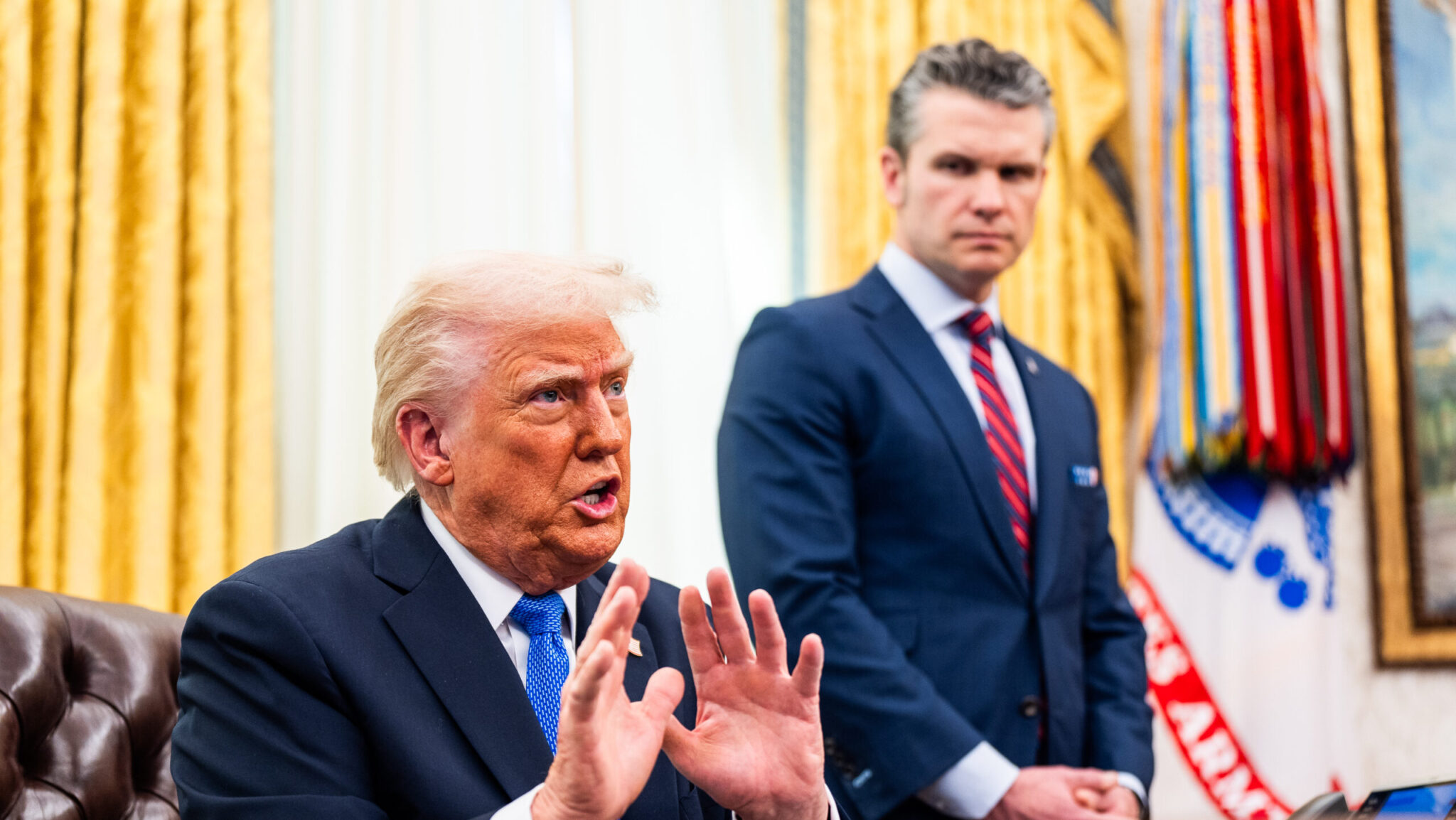
Surprise Announcement Signals Major Military Investment
In a surprising declaration during a meeting at the White House with Israeli Prime Minister Benjamin Netanyahu on Monday evening, President Donald Trump revealed that the United States is on the brink of unveiling its first-ever $1 trillion defense budget request.
“We also essentially approved a budget, which is in the [vicinity], you’ll like to hear this, of a trillion dollars,” Trump announced. “$1 trillion, and nobody’s seen anything like it. We have to build our military, and we’re very cost conscious, but the military is something that we have to build, and we have to be strong, because you got a lot of bad forces out there now. So we’re going to be approving a budget, and I’m proud to say, actually, the biggest one we’ve ever done for the military.”
Confirmation from Defense Secretary
Following the president’s announcement, Defense Secretary Pete Hegseth appeared to corroborate Trump’s remarks about the impending fiscal year 2026 budget, posting on X: “COMING SOON: the first TRILLION dollar @DeptofDefense budget.” However, specifics regarding the timeline for the FY26 budget release or its final structure remained ambiguous.
Speculations and Implications
There is speculation about an initial „skinny budget” that may provide limited details, with reports suggesting that official budget documents might be released in May. These timelines, however, have yet to be confirmed by the White House or the Pentagon.
In a note to investors, TD Cowen analyst Roman Schweizer commented, “Based on last year’s Green Book, we assume this means a $50 billion increase for 050 National Defense, which was projected at $951 billion for the FY26 request.” He indicated that while the bulk of this funding is likely intended for the Department of Defense, some portions may also be allocated to the Department of Energy’s nuclear weapons programs.
Schweizer also pointed out potential divisions within the administration and Congress, where advocates for increased defense spending appear to be clashing with those seeking to limit such financial growth. “It seems — at least for now — the defense hawks have won,” he concluded.