New Competition for Integrated Visual Augmentation System
By August, the U.S. Army plans to select at least one company to move forward with the design and prototyping of a revamped version of its mixed-reality heads-up display, following a new competition schedule. The Army’s Integrated Visual Augmentation System (IVAS) recompete, known as the Soldier Borne Mission Command, has been anticipated by industry stakeholders, culminating in a tentative roadmap released online on Monday.
To expedite the process, the Army will utilize an Other Transaction Authority (OTA) pathway, allowing interested companies until mid-May to submit white papers before demonstrating their hardware later that month.
Upcoming Timeline and Evaluation Criteria
Based on the feedback received, the Army intends to officially issue a request for prototype proposals by mid-June, with plans to award at least one OTA contract by the end of August. According to the Army’s notice, while the evaluation criteria are still being developed, technical merit will be the primary factor during evaluations at each stage of the process.
The Army emphasized that agreements will be awarded to prime contractors who can provide comprehensive solutions, with the number of awards to depend on available funding and potential vendor cost-sharing.
Winning contractors will have approximately seven months, or until around March 2026, to deliver their prototypes.
Continuing Efforts After Previous Program Struggles
The Soldier Borne Mission Command competition, formerly known as IVAS Next, has been in the works for some time and comes in response to significant challenges faced by the original IVAS program. This project, which originated from Microsoft’s HoloLens 2 display, aimed to offer soldiers both combat and virtual training capabilities, including functionality in low-visibility conditions.
Despite Microsoft securing a 10-year production contract valued at up to $22 billion, the program encountered numerous issues shortly after its 2021 award. Soldiers reported discomfort, dizziness, nausea, and system reliability concerns.
Following these setbacks, Army leaders opted to revise the program by establishing three initial versions of the goggles: 1.0, 1.1, and 1.2. The Army acquired 5,000 units of the 1.0 version and is exploring the possibility of adding another 5,000 units of the 1.1 version for limited use.
Key Upgrades to Version 1.2
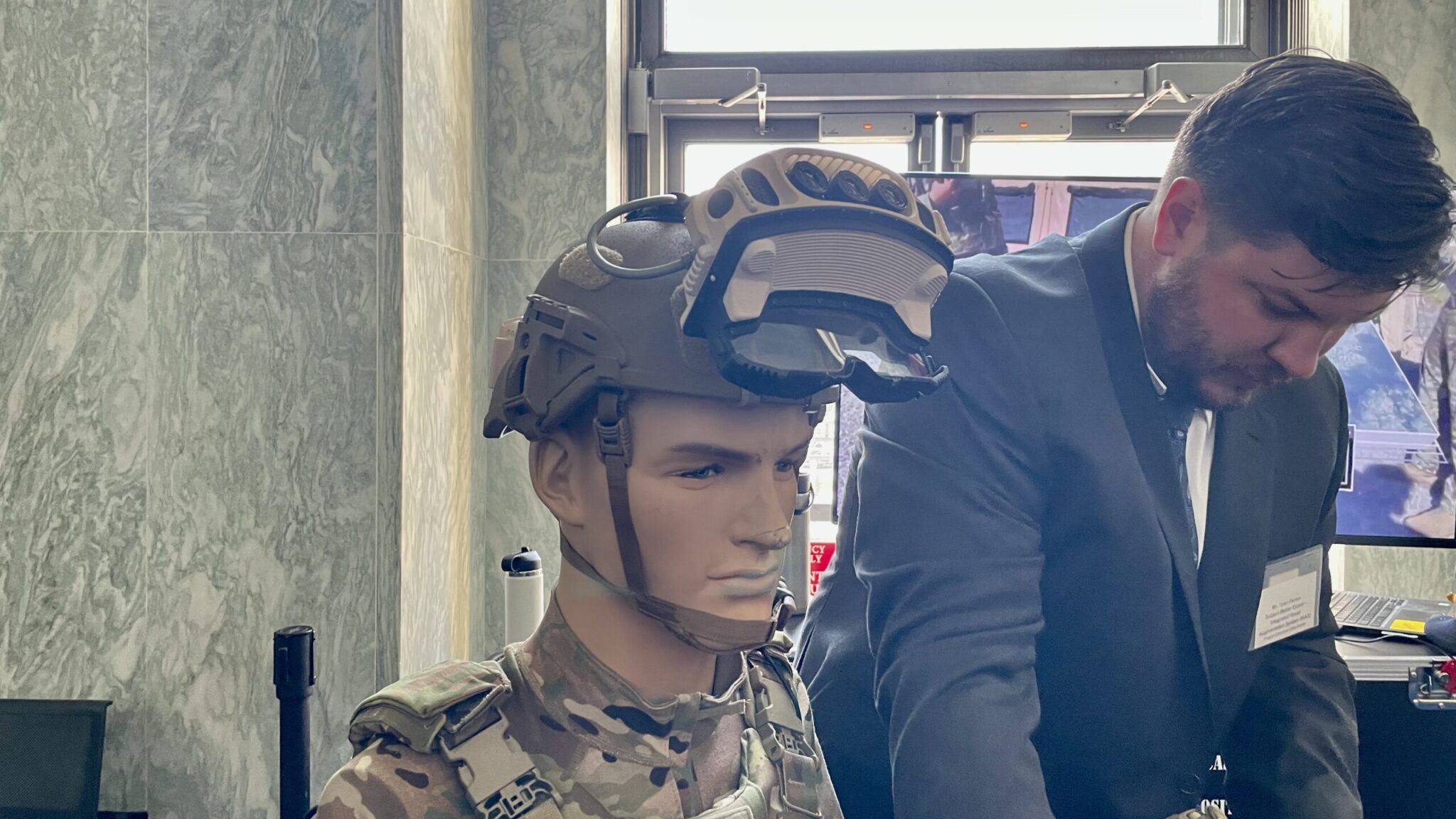
Version 1.2 has been labeled a critical upgrade aimed at resolving past issues by transforming the device from a helmet-like display (with a 70-degree field of view) to a hinged flat design (with a 60-degree field of view) that soldiers can easily flip up. As the Army pursues the Soldier Borne Mission Command competition, it is currently testing the 1.2 design, although specific insights have yet to be disclosed.
Maj. Gen. Christopher Schneider, head of Program Executive Office Soldier, recently reported receiving „really great feedback” from soldiers using IVAS 1.2. He noted that key decisions regarding the program are forthcoming. “We have some decisions that we have to make, and I think we’re going to be pretty close to having those resolved,” Schneider stated. “In the next month or so, we’ll be able to talk on the way ahead.”
Uncertainties Surrounding Future Acquisitions
While this week’s competition timeline signifies a step forward, additional questions loom, particularly regarding Microsoft’s request to transfer its entire IVAS contract to Anduril. This proposal, still pending approval, has been described by Schneider as presenting “some huge opportunities” for the service, though he did not elaborate on its implications.
Moreover, it remains uncertain whether the Army will procure any IVAS 1.2 devices beyond the testing phase. However, Lt. Gen. Robert Collins, the Army’s leading acquisition official, clarified that the service is “not currently” planning to purchase a significant quantity of IVAS 1.2 devices. “We are committed to IVAS and continue to improve that system,” he affirmed. “We’re continuing in the prototype [phase], and we’re learning to iterate … to make sure that we’ve got the requirements right.”