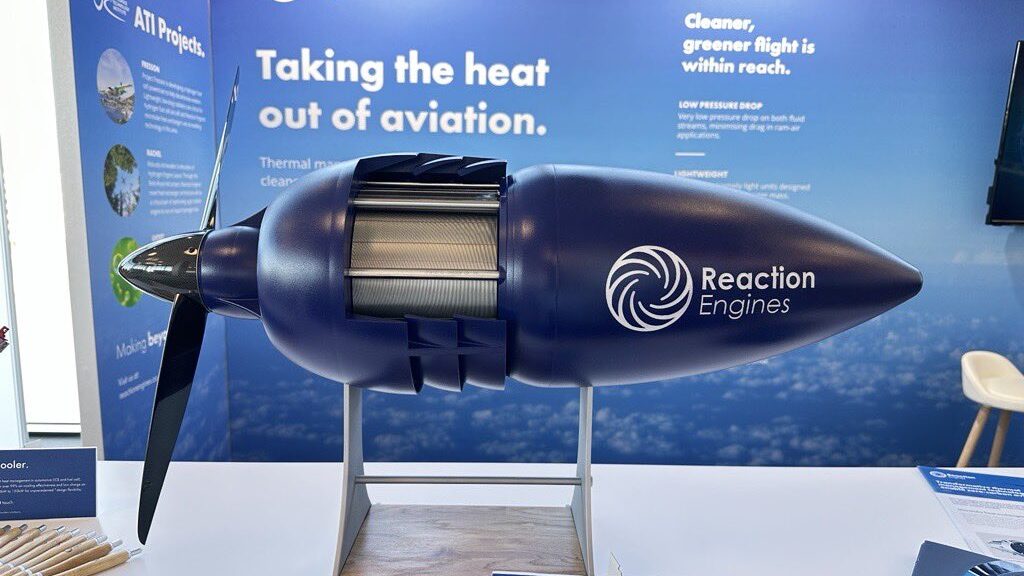
The UK Ministry of Defence (MoD) has stated it will „closely monitor all our supply chains” following the collapse of Reaction Engines, a key player in the development of high-speed propulsion technologies and the leader in the UK’s efforts to create a reusable Mach 5 aircraft under the Hypersonic Air Vehicle Experimental (HVX) program.
Reaction Engines, renowned for its innovative cooling technology and Synergetic Air Breathing Rocket Engine (SABRE), was also involved in the £1 billion ($1.3 billion) Hypersonic Technologies & Capability Development Framework (HTCDF), aimed at delivering the UK’s first hypersonic missile. However, the company has gone into administration after failing to secure a financial rescue, despite weeks of negotiations with potential investors, including a bid for over £20 million from the UAE’s Strategic Development Fund.
The accountancy firm PricewaterhouseCoopers (PwC) has taken on administrative responsibilities for Reaction Engines. While PwC and the UAE’s SDF did not immediately respond to inquiries, a spokesperson for Reaction declined to comment on the situation.
Analysts have expressed uncertainty about the implications of Reaction’s difficulties on the UK’s hypersonic programs, noting that few companies possess the expertise to replace Reaction’s contributions. Prior to the news of the company’s administration, the MoD reaffirmed its ongoing partnership with Reaction and its commitment to closely monitor supply chains to ensure the delivery of key capabilities, including research and development.
Reaction Engines has partnered with notable organizations such as Rolls-Royce and the UK’s Defence Science and Technology Laboratory (Dstl) under the HVX initiative, which aims to rapidly advance critical hypersonic technologies. The SABRE engine and its cooling technologies are integral to HVX’s progress, which includes conducting full-scale experimental engine tests and advancing hypersonic vehicle designs.
In May, Reaction was selected as one of 90 organizations eligible to bid for contracts in the HTCDF program, which encompasses eight distinct hypersonic technology areas, focusing on aspects ranging from design and integration to propulsion and onboard computing.
The UK government has adopted a three-pronged strategy to develop hypersonic capabilities, which includes acquiring a Hypersonic Glide Vehicle (HGV) as part of the AUKUS partnership. However, the long-term prospects for both the HVX and HTCDF projects may be uncertain until the UK’s Strategic Defence Review (SDR) reports in mid-2025, a timeline made precarious by Reaction’s recent collapse.
William Freer, a research fellow at the Council on Geostrategy, noted that while entering administration could pose challenges for the HVX program, the specific consequences depend on the administration’s leadership and management approach. Christie Maddock, an associate professor with the Aerospace Centre of Excellence at the University of Strathclyde, raised concerns about the UK’s potential loss of leadership in cooling technology, suggesting that current investment levels may not suffice to maintain momentum in this critical field.
Mark Thomas, CEO of Reaction Engines, previously highlighted that the company had faced ongoing financial challenges, primarily related to fundraising and market penetration to ensure long-term sustainability.