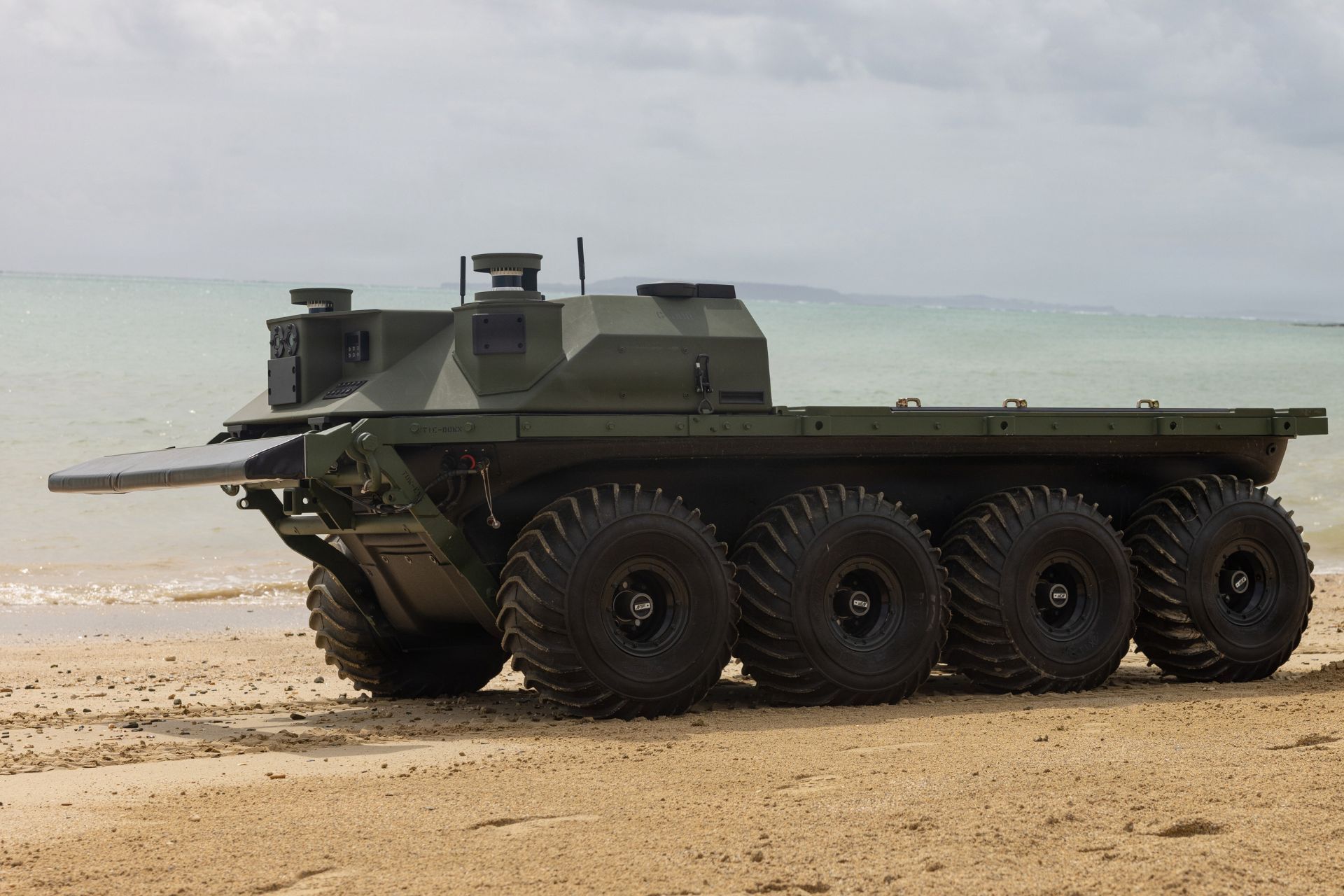
Managing logistics in contested environments presents a myriad of complex challenges, and increasingly, unmanned systems are emerging as the pivotal solution. These advanced technologies not only dramatically reduce the inherent risks faced by human operators but also extend critical communication chains, facilitating the delivery of essential materials. Their deployment allows for the bypass of hostile forces and access to locations that would otherwise be insurmountable for manned platforms.
Minimizing Risk, Maximizing Reach
The fundamental appeal of unmanned systems lies in their capacity to significantly expand operational reach, mitigate personnel risk, and enable more distributed, resilient operations. This enhanced reach and tempo ensure a persistent presence and rapid cycle of desired outcomes, allowing objectives to be achieved repeatedly with available resources, thereby guaranteeing mission success. Specifically, these systems can extend logistical lines of communication into previously denied areas, support Intelligence, Surveillance, and Reconnaissance (ISR) operations, and provide broader coverage with reduced exposure for both personnel and mission integrity.
The Pentagon’s Strategic Pivot to Autonomy
Unmanned systems are rapidly becoming central to the Pentagon’s contested logistics initiatives. They are instrumental in establishing resilient, distributed resupply networks both within and around denied environments, achieved through the deployment of autonomous multi-domain systems. Effective logistics in such volatile settings demands precise and integrated air, land, and sea operations. By adeptly employing integrated aircraft, ground, and sea-based systems aligned with broader campaign objectives, warfighters can meet critical logistical requirements in areas where manned platforms would face unacceptable risks or prohibitive costs. Current initiatives are sharply focused on integrating these multi-domain systems, leveraging technologies like artificial intelligence (AI) alongside existing intelligence and logistics enterprise systems to ensure real-time logistics, enhanced situational awareness, predictive supply chain resilience, and robust redundancy across the entire joint logistical framework.
Navigating the Chaos: Autonomous Resilience
Autonomous and semi-autonomous systems are proving invaluable in mitigating risks to crewed assets by sustaining logistics in zones rife with significant vulnerabilities. These platforms utilize onboard sensing capabilities and pre-planned behaviors to maintain operations even when communications are degraded. Autonomous convoys and robotic cargo vehicles can navigate internal lines of communication effectively, even when GPS signals and long-range communications are disrupted. Similarly, maritime unmanned surface and undersea connectors are designed to follow low-observable routes, operating with minimal emissions, relying on inertial navigation and pre-programmed waypoints to overcome potential disruptions. Semi-autonomous cargo Unmanned Aircraft Systems (UAS) can execute pre-planned routes at low altitudes, utilizing terrain-following profiles if necessary, possessing sufficient autonomy to complete missions even with intermittent data links. In essence, autonomous systems facilitate resilient, low-signature resupply, drastically reducing human exposure and the need for direct human operators. The ultimate objective is sustained logistics, ensuring prolonged operations in contested theaters.
Seamless Integration: Bridging Old and New
Integration stands as the paramount factor for success. Autonomy and AI significantly enhance mission planning, optimize routes, and empower local decision-making, thereby reducing reliance on continuous communication. This allows unmanned assets to dynamically react to emerging threats and failures. Furthermore, these technologies bolster demand forecasting, leading to a more accurate alignment of payloads with operational requirements. Beyond these functionalities, the efficacy of autonomy stacks – such as sensor fusion for GPS-denied navigation and blockchain for tamper-proof tracking – must be considered. These innovations sustain operations across diverse theaters, offering planners and warfighters crucial flexibility in the face of daunting challenges in contested logistical environments. For effective integration with existing (legacy) systems, communications and networking must exhibit robust resilience. Multipath nodes and secure data links enable unmanned platforms to share status updates, leverage data, and seamlessly integrate into current operational frameworks. Precision, Navigation, and Timing (PNT) capabilities, alongside advanced power systems, are critical, while sensing and survivability remain essential considerations for low-observable designs. Ultimately, success hinges on how autonomously and unmanned systems are integrated into a multi-domain environment, allowing operators to effectively deploy them across air, land, and sea operations, whether remotely or autonomously.
Digital Engineering: Accelerating Development Cycles
High-fidelity digital models, sophisticated simulations, and virtual integration are dramatically accelerating the testing, iteration, and deployment of unmanned systems. This approach enables the early detection of design and integration flaws. In the context of logistics, these digital tools facilitate the rapid exploration of novel concepts, such as unmanned convoy behaviors, optimal maritime connector routes, or multi-platform swarming tactics involving air vehicles. Model-based systems engineering offers virtual prototyping, effectively reducing the need for extensive physical tests while still providing invaluable insights into how autonomous and unmanned systems will perform in various contested scenarios. This is achieved through advanced software and hardware integration labs, simulation environments, software-in-the-loop, hardware-in-the-loop testing, and comprehensive contested scenario evaluations – all of which are actively being developed and refined today.