The United States Army is grappling with an unsatisfactory readiness rate, a candid admission from senior service officials. This challenging reality necessitates an increasing reliance on the industrial sector to fill critical capability gaps and rectify issues plaguing major weapon systems, encompassing both aircraft and ground platforms.
Key Equipment Under Scrutiny
Army Undersecretary Michael Obadal recently stated at an annual defense programs conference that it would be „disingenuous” to claim satisfaction with current readiness rates. „We have real problems with our major weapons systems, both aircraft and ground, and we have to address those things,” he emphasized. Obadal’s metrics for measuring readiness—the Army’s ability to respond tonight, within the next month, and sustain combat for a year—not only point to deficiencies in weapon systems but also highlight „absolute” pressure on „magazine depth,” a concern exacerbated by ongoing conflicts.
Innovative Partnerships to Bridge Deficiencies
To address these systemic issues, the Army is proposing a fundamentally different approach: public-private partnerships within its Organic Industrial Base (OIB) and direct collaboration with original equipment manufacturers (OEMs). The latter would involve OEMs working alongside soldiers and engineers in the field to repair vehicles and aircraft „in a more rapid manner.”
The ‘Right to Repair’ Battle: Army Seeks IP Control
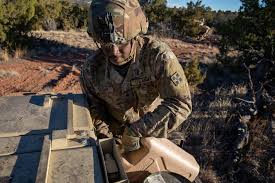
Another crucial initiative focuses on securing a „right to repair.” The Army is actively pursuing legislation that would allow the service to own portions of a vendor’s intellectual property. This would empower soldiers to fix equipment on hand rather than sending it back to the manufacturer. While a legislative proposal was scrapped from the 2026 National Defense Authorization Act (NDAA), the Army is now working with lawmakers and industry to develop a „more refined” provision for next year’s NDAA. Obadal clarified that the Army’s request for intellectual property needs to be „very narrow,” specifying the number of repetitions, units, or years before acquiring IP. Conversely, certain IP, such as commercial software, should remain with companies to ensure their responsibility for updates and security patches. The overarching goal is a „comprehensive approach” to IP acquisition that enables soldiers to „know how to fix things and can fix [them] without having to send an entire system back to the United States.”
Industry’s Crucial Role in Innovation and Production
To close capability gaps, the Army is looking to industry to provide systems that have reached a high technology readiness level (TRL) and are backed by private capital before entering into business with the service. Obadal encouraged vendors to present systems they have already begun to develop and demonstrate how they integrate into the Army’s existing ecosystem, including kill chain webs and open systems architectures with other hardware and software platforms. Regarding magazine depth, the Army’s new modernization effort invites private industry to directly co-invest in its OIB installations, providing a strong demand signal to vendors and helping to fill gaps. An example is the collaboration at the Letterkenny Army Depot, where private industry and the Army are working on „essential” air and missile defense systems, including munitions. This blend „combines the unique skills of our depot workforce with the agility and the capital of industry. That’s how we’re going to build, sustain [the] Army of 2030, and build a resilient industrial base,” Obadal concluded, emphasizing it as a shared responsibility and shared success.