Lockheed Martin and the Boeing–Anduril team advance to the next phase
The United States Army has selected Lockheed Martin and the Boeing–Anduril team to advance to the second phase of the prototype development program for a second interceptor under the Indirect Fire Protection Capability Increment 2 initiative, known as IFPC Increment 2.
The decision removes the US subsidiary of Israeli defense company Rafael from the competition. The two remaining competitors will now move into the demonstration phase, while the Army is expected to release additional details about the competitive process when appropriate.
A capability positioned between short- and long-range air defense
The IFPC Increment 2 program is intended to fill the operational gap between short-range air defense systems and longer-range platforms such as Patriot and Terminal High Altitude Area Defense, or THAAD.
Lockheed Martin received an Other Transaction Authority agreement in October 2025 for the first phase of the program. The Boeing–Anduril team was added to the competition in December, followed by Rafael in February.
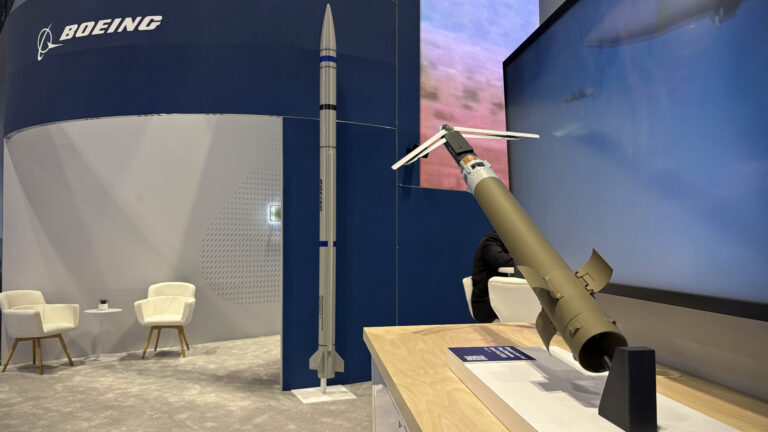
Lockheed Martin referred questions about the selection decision to the Army, while Rafael did not provide a comment. Boeing said its proposed interceptor combines seeker technology, a compact design, a solid-fuel rocket motor supplied by Anduril Rocket Motor Systems and a Modular Open Systems Architecture.
Boeing highlights scalability and affordability
Bob Ciesla, vice president of Boeing Precision Engagement Systems, said the company’s scalable production approach is designed to provide a reliable and affordable layer of protection against a broad range of aerial threats.
According to Ciesla, the proposed system is intended to give warfighters a practical and dependable capability that can be delivered when it is needed most.
The Army seeks a more capable interceptor for low-flying targets
The latest selection comes more than two years after the Army began searching for a second interceptor for the developmental IFPC Increment 2 launcher.
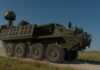
In late 2024, the Army awarded the contract for the program’s first interceptor to Dynetics, a Leidos subsidiary, and RTX. Their solution pairs Dynetics’ developmental Enduring Shield launcher with a ground-launched version of RTX’s AIM-9X Sidewinder missile.
Field experience exposed the need for an additional weapon
During the use of Enduring Shield, Army officials determined that soldiers would require a second, more capable interceptor to engage supersonic cruise missiles flying at low altitudes.
The requirement was outlined in 2024 by then-Brig. Gen. Frank Lozano, who was responsible for the Army’s acquisition activities related to fires programs. Lozano has since been promoted to lieutenant general.