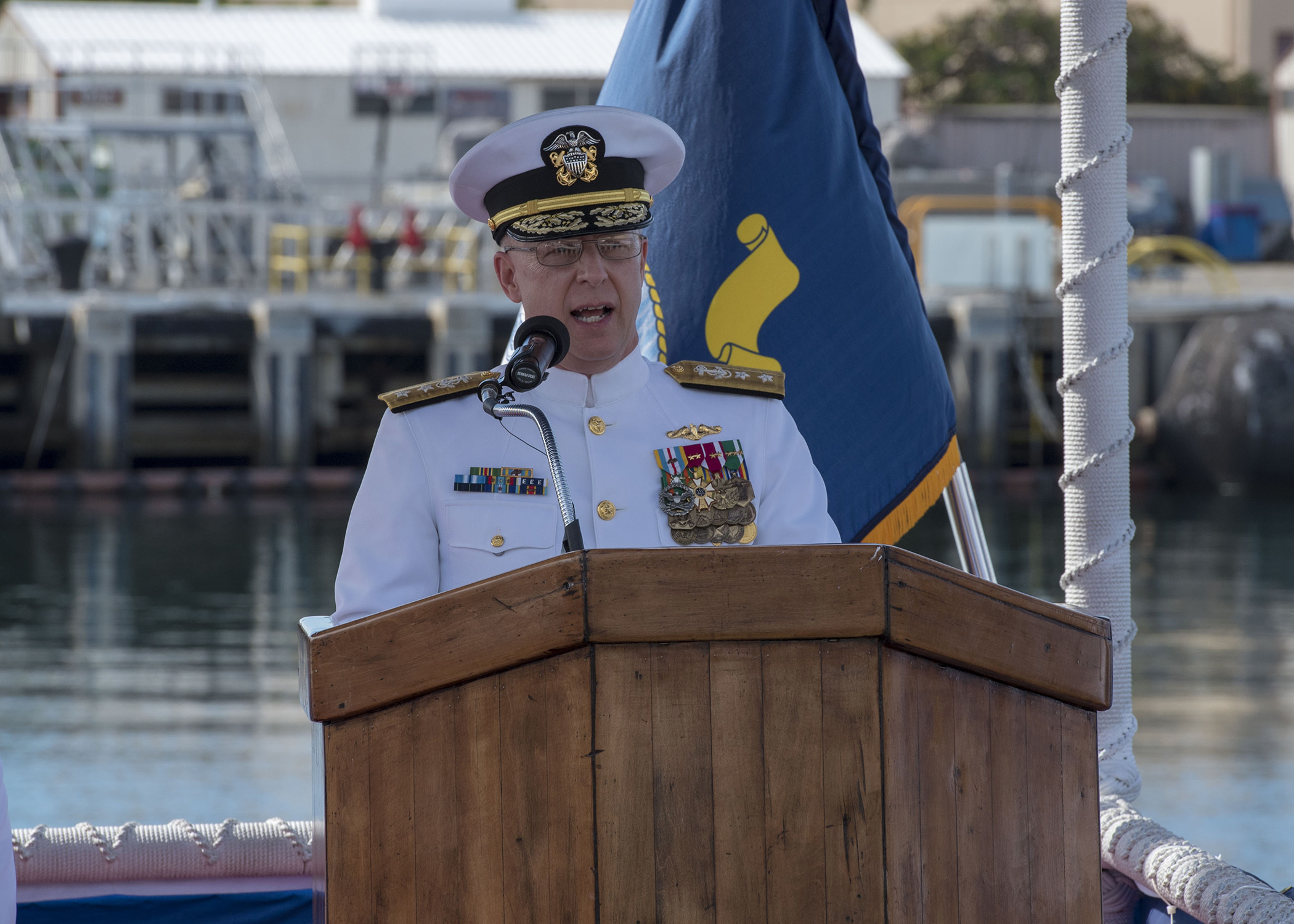
Chief of Naval Operations Adm. Daryl Caudle today issued an urgent call to accelerate the F/A-XX stealth fighter program. The imperative for this swift development stems from the rapid proliferation of advanced anti-aircraft systems, which increasingly enable adversaries like Iran to shoot down the Navy’s current workhorse F-18s.
The F-18’s Diminishing Dominance: Adversaries Gain Ground
“When things heated up in Iran, guess who steamed over there, right? It was the United States Navy and the [USS] Abraham Lincoln strike group,” Caudle remarked. “Imagine what that looks like in ten years from now, with a different Iran, with different capability [that] can go against the F-18 capabilities of today.” This growing vulnerability highlights a critical need for advanced air superiority.
Only an aircraft possessing the comprehensive capabilities envisioned for the F/A-XX—stealth, extended range, advanced electronic warfare, and the ability to command swarms of unmanned „loyal wingmen”—can reliably penetrate future air defenses, Caudle told the Apex Defense conference.
Congressional Mandate: Billions Allocated for Accelerated Stealth Development
Caudle’s compelling remarks follow just one week after House and Senate appropriators reached an agreement on an $838.7 billion defense spending bill—an $8.8 billion increase over the administration’s request. Of this additional funding, $897 million is specifically earmarked for the F/A-XX program. This budget increase came with a congressional mandate requiring the Pentagon to use the funds to award a development contract aimed at “accelerated Initial Operational Capability.” If passed by the full Congress, this funding bill would override the administration’s initial plan to delay the Navy fighter program, which sought to concentrate limited funding and industrial development capacity on the Air Force’s F-47.
“I know these things are expensive, and I know the defense industrial base is compressed, but we have got to figure out how to walk and chew gum here with aircraft,” Caudle emphasized.
Beyond Peer Competition: The Shifting Landscape of Air Defense
Caudle’s broadening of the strategic aperture to include regional powers like Iran marks a significant departure from the typical focus of F/A-XX proponents in Congress and think-tank analysts, who often emphasize the need for the F/A-XX primarily in a high-intensity conflict with China.
He warned that increasingly, non-peer adversaries, such as Iran, previously considered less dangerous, “will gain capability that the F-18 will not match against.” He continued, “Our ability to fly with impunity with our existing airframes is fleeting. And so if I don’t start building that immediately, you’re not going to get it for some time.”
The Navy envisions the F/A-XX bringing a complex suite of new capabilities to the carrier deck. These include more advanced stealth than the service’s current F-35s, which are replacing the oldest F-18 Hornets. It is also expected to boast 25 percent more range than the F-35C variant, more sophisticated jammers than the current EA-18G Growler, and the built-in ability to control multiple unmanned loyal wingmen, formally known as Collaborative Combat Aircraft (CCAs), Caudle noted.
“The next-generation airframe, F/A-XX is so vital,” Caudle summarized. “It’s vital because of, one, the CCAs it will command and control. Its penetration — the Growlers won’t last forever, so it’ll be our electronic attack airplane as well. Its range will be coupled with the MQ-25 [unmanned tanker] for clandestine refueling and organic refueling from the carrier.”
Also contributing to the discussion was Hudson Institute naval strategist Bryan Clark, who highlighted the Iran-backed Houthi rebels as another significant risk. Despite being a non-state threat, the Yemeni Houthis have managed to acquire long-range anti-ship missiles and drones that have targeted Western warships off their shores. Such threats could force even US carrier strike groups further out to sea, Clark noted, thereby placing a premium on longer-range fighters like the F/A-XX.
The fundamental problem, Caudle explained to Clark during their on-stage discussion, is “the ever-lowering cost of entry” into the high-end air defense game. Advanced adversaries like China and Russia are sharing or selling their technology to lesser anti-American actors, while other advancements are driven by rapid improvements in commercially available electronics.
In the interim, however, the Navy “requires no chinks in the armor, in our current readiness of current platforms, while we bridge to the next thing,” Caudle stated. “So our F-18 fleet will need to be maintained.”