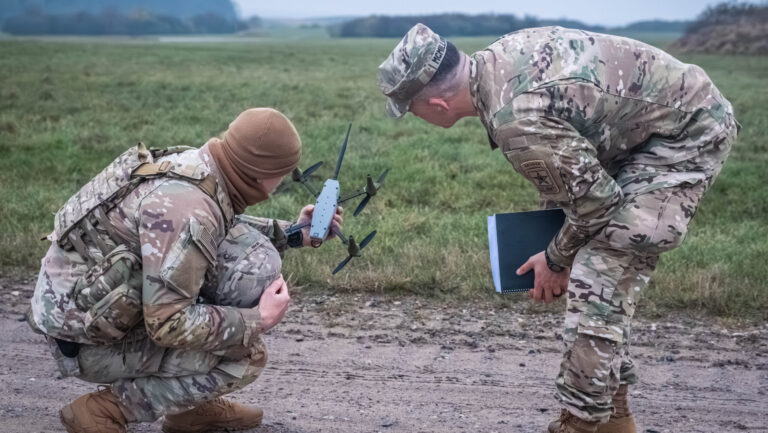
Since its launch last summer, the Army’s Global Tactical Edge Acquisition Directorate (G-TEAD) has shattered traditional timelines, delivering advanced technology to the front lines with a speed the service has never witnessed. Under the leadership of Col. Christopher Hill, G-TEAD is tackling a deep-seated cultural challenge, transforming acquisition from a bureaucratic hurdle into a lethal „combat multiplier” for the warfighter.
Shattering the Acquisition Speed Limit: The 180-Day Mandate
G-TEAD was established to support the Army’s goal of continuous transformation by fast-tracking technologies with a Technology Readiness Level (TRL) of seven or higher. The directorate’s gold standard is to get these capabilities into the hands of soldiers within 180 days or less from the moment white papers are published.
This shift marks a radical departure from historical norms. By focusing on prototypes that have already demonstrated success in operational environments, G-TEAD is effectively weaponizing the acquisition system to be flexible, responsive, and tailored to the urgent needs of the tactical edge.
Battlefield-Proven: The Merops Success Story
The directorate’s agility was put to the test following a Russian incursion into Poland in September. Having observed the effectiveness of the American-made Merops counter-drone system in Ukraine, G-TEAD dispatched personnel to evaluate the technology on the ground.
In an extraordinary display of efficiency, the directorate moved from problem identification to an active contract in just 148 days. Today, the Merops system is deployed with U.S. soldiers defending NATO’s Eastern Flank. This rapid turnaround—unheard of in traditional defense procurement—highlights G-TEAD’s ability to pivot based on real-time battlefield intelligence.
The ACE Framework: Scouting the Tech Elite
The directorate manages its technological search through Accelerated Capability Events (ACEs). After reviewing hundreds of industry responses, roughly 15 companies are selected to compete in these live exercises. While only one finalist typically wins the primary Other Transaction Agreement (OTA), the top five performers remain „awardable,” allowing any government agency to put them on contract instantly without further competition.
While ACEs have so far focused on the European and African theaters, the program is set to expand into the Pacific theater by the end of 2024, reflecting the global scope of the Army’s modernization needs.
Empowerment through Authority and Access
The rapid success of G-TEAD is built on two critical pillars: authority and access. For the first time, Army Service Component Commands (ASCCs) are being granted acquisition authority and direct access to Research, Development, Test, and Evaluation (RDT&E) funds at the tactical level.
By utilizing advanced synchronization tools like the Forge database, G-TEAD ensures that it isn’t just solving localized problems but is filling broader Army capability gaps. This integrated approach ensures that as specific commands receive support, the entire Army moves closer to a common operating picture of modern, high-tech readiness.