In just six months, the global spotlight will pivot to North America for the 2026 FIFA World Cup, an event poised to redefine continental-scale spectacles. From June 11 to July 19, sixteen host cities across three nations will welcome millions of fans to packed stadiums. This colossal undertaking is likened to staging multiple Super Bowls simultaneously across an entire continent, a scale unprecedented in American history. However, this grand celebration of sport also presents an equally unprecedented and insidious threat: the pervasive danger posed by small unmanned aerial systems, or drones.
The Sky’s New Menace: Cheap Drones, Catastrophic Potential
The upcoming World Cup venues are alarmingly vulnerable to drone attacks, a threat that requires surprisingly little technical sophistication. Whether from state actors probing Western defenses, transnational terrorist networks, or radicalized individuals, the danger is real and immediate. A multi-city attack could be orchestrated with components as simple as a 3D-printed drop mechanism and duct tape. Commercial drones, readily available online with rapid delivery, are perfectly capable of carrying improvised explosives. With 48 group stage matches scheduled in the first two weeks alone, adversaries need only succeed once to sow widespread chaos and fear on a global scale.
Beyond the Super Bowl Model: The Urgent Need for Integrated Air Defense
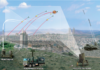
Current counter-UAS (CUAS) capabilities are tailored for isolated, high-value events. The „Super Bowl model” is effective when the entire national security apparatus can dedicate its focus to a single stadium for a single day. The 2026 World Cup demands a far more extensive solution, stretching across sixteen cities and thirty-nine days. This critical gap is not due to a lack of resources; the U.S. and its partners possess an arsenal of radars, drone jammers, man-portable anti-aircraft missiles, shotguns, net guns, lasers, and even trained raptors. Numerous dedicated offices, including Joint Interagency Task Force 401 (JIATF 401), the National Guard, private contractors, the Secret Service, FBI, and Federal Aviation Administration (FAA), are already engaged. However, what is conspicuously absent is an integrated, robust CUAS air defense network spanning the entire contiguous United States and allied territories – a system providing simultaneous situational awareness to all defenders and enabling a coordinated response.
Empowering JTF 401: A „Pop-Up” Command for a Critical Mission
Defending the World Cup necessitates an architecture that provides the Space and Missile Defense Command (SMDC) and the FAA with real-time awareness across all sixteen host cities, while simultaneously delegating engagement authority to commanders on the ground. The most straightforward solution isn’t to establish a new permanent command but to empower JTF 401 with a „NORAD-lite” authority. This would enable it to disseminate early warnings, share critical information, and, in the dire event of a synchronized attack, coordinate responses not only among U.S. forces but also with Mexican and Canadian military counterparts. This would transform 401 from its current acquisition and coordination role into a dynamic operational headquarters, essentially a „pop-up” command center tailored for the event.
A Foundation for „Golden Dome”: Benefits Beyond the Tournament
The good news is that the requisite technology is not revolutionary. The Integrated Battle Command System (IBCS) already demonstrates the core concept. Existing defense cooperation agreements with Canada and Mexico provide a framework for collaboration. The Missile Defense Agency (MDA) possesses the systems integration expertise. The military contributes equipment and operators, SMDC offers command structure, and the FAA governs the legal framework. This integrated CUAS network for the World Cup could serve as the bedrock for broader homeland air defense integration, aligning perfectly with President Donald Trump’s „Golden Dome” vision – a layered, integrated defense shield protecting the United States not only from ballistic missiles but also from drones during national events or over critical infrastructure. This initiative would also foster stronger trilateral defense cooperation with Canada and Mexico.
The Clock is Ticking: An Urgent Call to Action
The window of opportunity is rapidly closing. Systems must be tested, operators trained, and coordination established with allies months before kickoff. The choice is stark: treat the World Cup as a series of isolated events protected by local units, or seize this moment to build the foundational architecture that „Golden Dome” demands. JTF 401, SMDC, and MDA should adapt architecture for homeland CUAS integration and initiate sensor fusion testing by February. The State Department must formalize engagement authorities with Ottawa and Mexico City by April. We have six months to demonstrate our capability to defend our own airspace. Let’s avoid an „own-goal” here. The tournament commences on June 11, 2026.