In light of the increasing prevalence of drone warfare in conflicts such as Russia’s invasion of Ukraine, U.S. Army officials are emphasizing the significant threat posed by mid-sized uncrewed platforms, specifically drones classified as Group 3. Major General David Stewart, director of the Joint Counter-Unmanned Aircraft Systems Office, highlighted this concern during a panel discussion at the Association of the U.S. Army (AUSA) conference in Washington.
Stewart described Group 3 drones as a formidable challenge, combining substantial payload capacity, long-range capabilities, and requiring skilled interceptors to neutralize them. According to the Pentagon, drones are classified into five groups, with Group 1 being the smallest and Group 5 the largest. Group 3 drones fall into a complex category that spans the gap between „protection tasks” for smaller drones and dedicated „air defense missions” for larger platforms.
Smaller Group 1 and 2 drones typically require less sophisticated defense systems and can be addressed with in-unit capabilities. However, as drone sizes and capabilities increase, larger Group 4 and 5 drones necessitate a coordinated air defense approach involving dedicated assets like Patriot missile batteries or fighter aircraft, which may not be immediately available to all units.
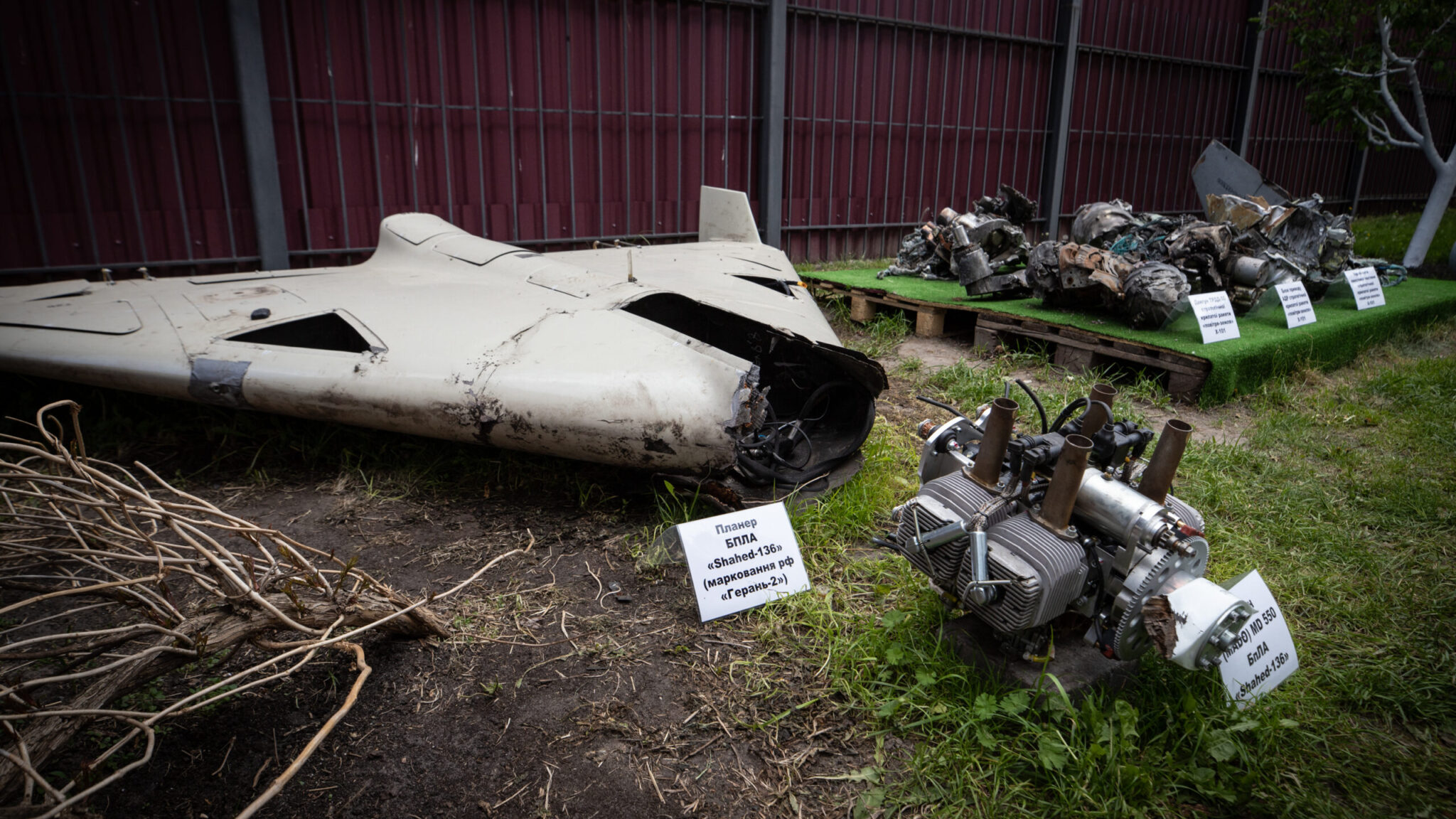
The unique position of Group 3 drones—illustrated by systems such as Iran’s Shahed-136, utilized by Russia—complicates the Army’s defensive strategies. These drones can carry significant payloads, demanding more advanced interceptors for neutralization despite the fiscal challenges they present. For instance, Stewart indicated that defensive interceptors, such as RTX’s Coyote and Anduril’s Roadrunner, are costly, with the Coyote priced around $120,000, raising questions about the sustainability of relying solely on kinetic solutions to combat these threats.
Army officials stressed the necessity of a layered defense strategy that utilizes both kinetic and non-kinetic systems. Lasers, viewed as a potential cost-effective solution, could provide an affordable operational alternative to traditional interceptors.
Integration of diverse capabilities remains a significant challenge, as highlighted by Major General Rich Harrison, commanding general of the 32nd Army Air and Missile Defense Command. Moreover, tracking and targeting smaller drones with lower radar cross sections is particularly pressing, given that conventional radar systems are optimized for larger targets, allowing smaller drones to evade detection.
Engaging these lower-class drones is also complicated by policy and legal restrictions, especially in urban environments. As adversaries enhance their drones’ resistance to electronic warfare, the Army must leverage cyber vulnerabilities as a countermeasure, according to Harrison.
With the threat posed by unmanned warfare expected to escalate, there is a clear need for a comprehensive transformation across military services. Harrison emphasized the importance of revising air and missile defense training to encompass uncrewed aerial systems (UAS) alongside other traditional threats like missiles and rockets.
Looking to the future, Stewart underscored that unmanned threats are evolving beyond just aerial platforms, necessitating a holistic approach from the Department of Defense (DoD). “The Department is moving towards a counter-UXS (uncrewed systems), encompassing air, sea, and land, not just air,” he explained. As the landscape of unmanned warfare shifts, the military must adapt to counter threats originating from various domains effectively.