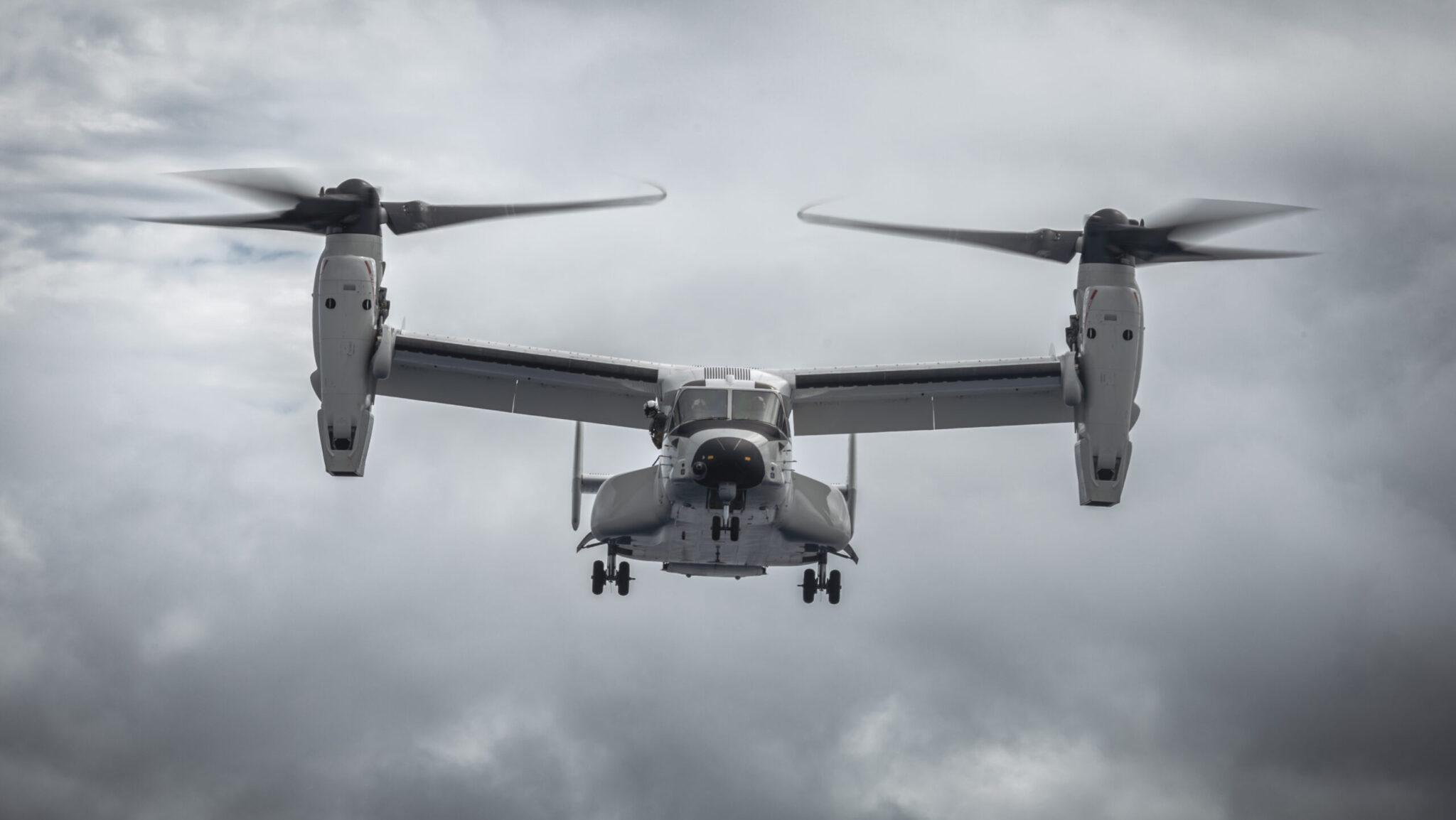
Last month, I had the opportunity to visit Norfolk Naval Station to meet with Rear Adm. Doug “V8” Verissimo and discuss how the first squadron of CMV-22Bs stationed at Norfolk is contributing to the evolution of the Atlantic Fleet, which now includes the USS Gerald R. Ford aircraft carrier.
New Capabilities for Atlantic Operations
Both the CMV-22B and the USS Gerald R. Ford bring innovative capabilities to naval operations in the Atlantic region, posing new challenges for Verissimo’s Naval Air Force Atlantic. As the aviation Type Commander for U.S. naval aviation units operating primarily in the Atlantic, AIRLANT is responsible for material readiness, administration, training, and inspection of squadrons under its command, ensuring operationally ready air squadrons and aircraft carriers for the fleet.
At the time of our discussion, six CMV-22Bs had arrived, with plans to station 12-15 Ospreys as part of AIRLANT, pending final funding. A key takeaway was the CMV-22B’s potential to enhance logistics, particularly in contested environments— a challenge that is expected to intensify as the Navy shifts towards distributed operations. The ability to transport supplies between carriers is crucial to this concept.
Evolving Logistics and Medical Capabilities
Verissimo highlighted how the CMV-22B will support new logistics strategies, pointing out that the future will likely involve smaller, more agile weapon systems to complement larger and more difficult-to-transport options, like Tomahawk Land Attack Missiles (TLAMs). This shift in munitions will enhance the CMV-22B’s role in weapons resupply during combat scenarios.
Moreover, the CMV-22B will be vital for medical emergencies. Verissimo stated, “If I have a medical emergency, I’m not trapping and catapulting the human body that’s already injured. I can softly land and softly take off to take care of my people in a medical emergency.”
Benefits of the CMV-22B and Ford Integration
The integration of the CMV-22B with the USS Gerald R. Ford brings specific advantages. The Ford’s flight deck design, with the island moved towards the end, provides a clear space for Ospreys to land, offload weapons, or supplies without obstructing the Electromagnetic Aircraft Launch System (EMALS) catapults. Additionally, the area includes refueling capabilities for the Osprey, further streamlining operational efficiency.
Throughout our discussion, Verissimo stressed the significance of adapting the carrier for contemporary strategic needs and the flexibility it offers in various combat scenarios. As new platforms and payloads are developed, the assets assigned to the Ford carrier will evolve.
Enhanced Power Generation and Integrated Warfare Functions
Verissimo also highlighted the Ford’s advanced power generation capabilities, which facilitate the use of next-generation payloads and weapon systems. He asserted, “The carrier and the carrier strike group are one of the only integrated forces that bring the core seven joint warfighting functions to the fight wherever operating. With the Ford class, its ability to generate electric power enhances those capabilities as well.”
Challenges in Standing Up the CMV-22B Squadron
Prior to my meeting with Verissimo, I spoke with Commander Mason Fox and his team. As the Commander of Fleet Logistics Multi-Mission Squadron (VRM) 40, the “Mighty Bison,” Fox discussed the hurdles encountered in establishing the first operational CMV-22B squadron on the East Coast.
While preparing to transfer from North Island (San Diego) to Norfolk on December 6, 2023, the Department of Defense grounded the entire Osprey fleet. This unexpected development led the squadron and its support team to adapt quickly. Fox explained that they utilized flight simulators to continue pilot training while they awaited clearance to fly, and maintainers collaborated with Bell, the prime manufacturer, on maintenance training. As a result, when the grounding was lifted in March 2024, the squadron was ready to resume its activation efforts with the first Ospreys arriving in April 2024.
Fox emphasized the squadron’s commitment to integrating closely with carriers and air wings on the East Coast, ensuring a comprehensive understanding of their capabilities. They’ve been collaborating with the air wing commanders during training exercises, working with the USS Harry S. Truman in June 2024 and the USS Gerald R. Ford in September 2024, with future plans for further training aboard the USS George H.W. Bush.
Optimizing CMV-22B’s Role in Joint Operations
Fox further elaborated on the CMV-22B’s unique specifications, noting it can carry more fuel than its Marine Corps and Air Force counterparts. He underscored the importance of interoperability in joint operations, recognizing that over 450 Ospreys in the program will collectively contribute to distributed maritime operations.
In conclusion, the integration of CMV-22B Ospreys and the USS Gerald R. Ford will significantly enhance the operational capabilities of the U.S. Navy in the Atlantic region. As the Navy shifts towards distributed operations and faces the challenges of contested logistics, the CMV-22B’s ability to facilitate efficient supply transport and medical emergency response will be invaluable.
With the Ford’s advanced technological features, including enhanced power generation and strategic deck design, the synergy between these assets will play a crucial role in modern naval warfare. The collaborative efforts of the Fleet Logistics Multi-Mission Squadron and carrier air wings underscore a commitment to maximizing readiness and operational effectiveness in future missions.
As the first operational squadron of CMV-22Bs stands up at Norfolk, the ongoing adaptations and training initiatives among personnel highlight the Navy’s dedication to fostering innovation and resilience within its ranks, ensuring a well-prepared force for the evolving security landscape of the maritime domain. The future looks promising for both the new aircraft and aircraft carrier, as they collectively embody the Navy’s readiness to confront emerging challenges and uphold its strategic objectives.