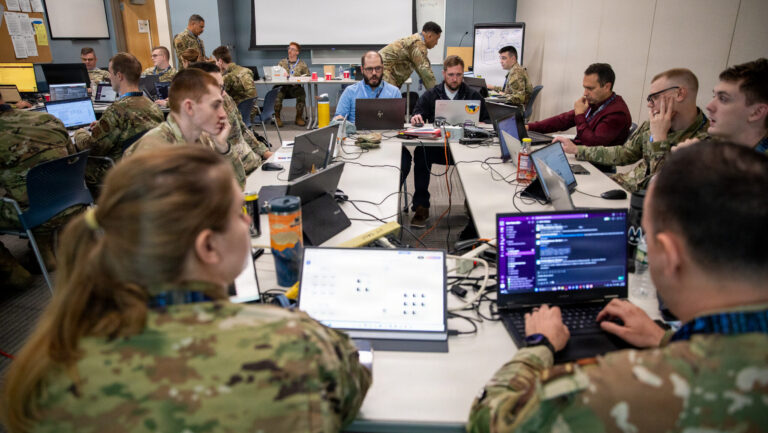
In an era of hybrid digital threats, the Pentagon is accelerating efforts to secure vital infrastructure. Through its newest organization, the Defense Cyber Defense Command (DCDC), the US military is building a command-and-control framework designed to ensure national resilience in the face of major cyber aggressions.
Clarifying command lines in the domestic theater of operations
One of the greatest challenges identified by military officials is not technology itself, but the architecture of authority. DCDC is currently working on establishing a Joint Task Force framework dedicated to the defense of critical infrastructure. The goal is to create a „common rail” that integrates the authorities of CISA, the FBI, the Coast Guard, and the Department of Defense, ensuring that when an attack occurs, there are no ambiguities regarding who is in control and who executes defense maneuvers.
Creating „digital green zones” to protect vital data
Drawing inspiration from tactics used in physical conflicts in Iraq and Afghanistan, DCDC experts propose the implementation of „digital green zones.” These secured virtual spaces are intended to isolate essential systems and allow military leaders to precisely identify legitimate data flows versus malicious ones. The strategy aims to maintain the functionality of core services—from power grids to water systems—before, during, and after a potential computing attack.
The Volt Typhoon threat and China’s paradigm shift
The urgency of these measures is dictated by an alarming shift in the behavior of state cyber actors. Groups like Volt Typhoon, backed by Beijing, have been detected infiltrating US infrastructure networks not for espionage, but for pre-positioning. Officials warn that their goal is to map systems to cause massive disruptions, intended to discourage or block a US response in the event of aggression against Taiwan. This represents a clear transition from intellectual property theft to directly endangering civilian life.
A cyber campaign plan modeled after the FEMA structure
To streamline crisis reaction, DCDC intends to apply a cooperation model similar to that used by Northern Command (NORTHCOM) during natural disasters. The idea is to build an enduring cyber campaign plan using clearly defined sectors, similar to those of FEMA. In this way, through „muscle memory” training and constant assessments, federal and military authorities can intervene in a coordinated manner, eliminating the bureaucratic chaos that could arise in the opening hours of a national digital crisis.