As wars in Ukraine and the Middle East consume America’s weapons at extraordinary rates, the Pentagon’s fiscal 2027 budget includes a vital boost in funding for critical munitions. This initiative to „unleash the arsenal of freedom” is essential, but simply expanding procurement is not enough. To achieve maximum efficiency, the U.S. military must prioritize the integration of new energetic materials into missiles, drones, and bombs, ensuring that every dollar invested produces a devastating impact on the battlefield.
Beyond unit price: Evaluating munitions as part of an integrated system
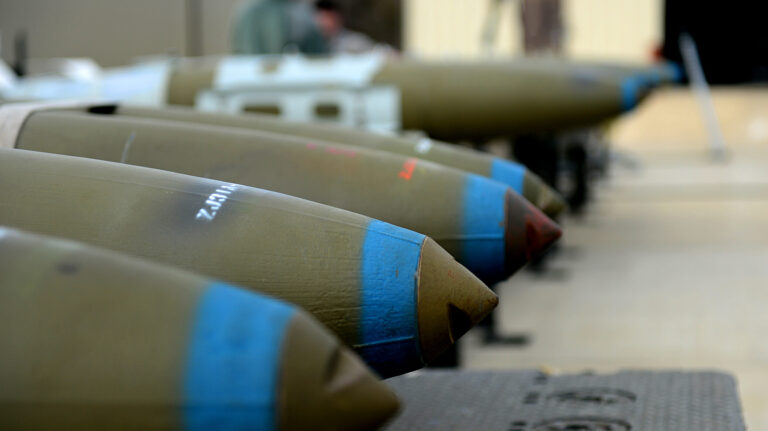
Energetic materials represent the explosive force and solid propellants that power the most important weapons in the U.S. arsenal. While advanced compounds like CL-20 promise significantly superior range and destructive power, much of the current ammunition still relies on explosives designed during the World War II era. The primary obstacle to adopting modern technology remains the high cost of testing and production, but a purely financial analysis of individual components is incomplete and risky.
The true value of these materials must be evaluated through the lens of the „force package.” A more powerful munition means fewer strikes are required to destroy a target, reducing overall weapon consumption and pressure on logistical lines. Furthermore, efficient propellants allow for strikes to be launched from greater distances, protecting expensive platforms—aircraft and ships—and, most importantly, the lives of service members. In a high-intensity conflict, the initial cost of energetic materials is insignificant compared to the benefit of not losing strategic platforms or depleting stocks of precision missiles, which already cost millions of dollars each.
Lessons from Ukraine and the strategic stakes in global competition
The United States is not starting from scratch in this technological race. Ukraine has already demonstrated the effectiveness of weapons using CL-20, providing concrete data on the superiority of these compounds in real combat conditions. At the same time, strategic competitors like China and Russia are already utilizing advanced energetic materials, forcing the Pentagon to accelerate modernization to maintain a competitive edge in the Indo-Pacific region.
To demonstrate real benefits, current pilot programs must be expanded and focused on missions where range and explosive power are critical, such as hypersonic systems or miniaturized munitions for drones. Integrating these technologies is not just a technical option, but a strategic necessity. In the complex architecture of modern warfare, the quality of the explosive can be the decisive element that transforms a risky mission into a categorical success, ensuring that American forces stay one step ahead of any threat.