Washington prepares its forces for conflict in contaminated environments
The United States Army has announced a new biodefense strategy designed to ensure that its forces can maintain full operational capability in a “biologically contested environment.”
The approach is intended to ensure that American troops can be deployed, supported and sustained in combat even when they face outbreaks, accidental contamination or deliberate biological attacks.
Three categories of biological threats
A biologically contested environment can be created by several types of hazards. These include naturally occurring threats such as the COVID-19 pandemic or malaria, as well as accidental incidents caused by pathogen leaks from laboratories and other facilities.
The threat picture also includes deliberate attacks in which adversaries use biological agents that have been manufactured or modified to target military personnel, civilians or critical infrastructure.
The strategy’s central objective is to prevent a pandemic or another public health crisis from stopping the Army from projecting forces into operational areas, conducting combat missions and enduring throughout a conflict.
Five lines of effort through 2035
The strategy, signed by former Army Secretary Dan Driscoll, establishes five lines of effort that the service plans to implement by 2035.
1. Building knowledge and expertise
The first line focuses on recruiting, developing and retaining qualified personnel. The Army plans to expand its pool of scientific, medical and operational biodefense experts across all levels of the force.
The effort also calls for broader inclusion of biodefense subjects in military training and professional education programs.
2. Improving situational awareness
The second line involves integrating biological sensors and analytical tools into existing platforms.
These technologies are expected to give commanders a decision-making advantage while helping identify indications that an adversary may be preparing to use biological weapons.
3. Managing information and communication
The Army plans to standardize biological information-sharing systems across the joint force and with other government agencies and allies.
Countering misinformation and disinformation will also be a major component. The service intends to monitor the information environment through artificial intelligence and machine-learning tools.
4. Building biodefense readiness
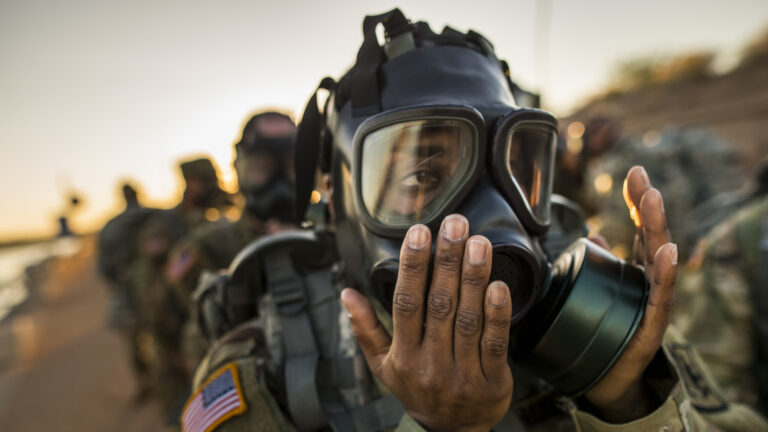
The fourth line focuses on protective equipment and decontamination capabilities designed to limit the effects of biological threats.
The strategy also calls for a broader operational understanding of such hazards. Biological threats should no longer be treated solely as medical problems, but as operational constraints capable of affecting every warfighting function.
5. Modernizing biodefense
The final line calls for faster acquisition processes through the use of artificial intelligence, synthetic biology and additive manufacturing, including 3D printing.
The Army also plans to update its doctrine and identify remaining gaps in its existing biodefense principles and procedures.
Implementation will take place in stages
Under the planned schedule, information management and biodefense modernization will receive priority through 2028. These efforts are considered essential to building the architecture required to support the remaining lines of effort.
From 2028 to 2031, the focus will shift to developing expertise and improving situational awareness. Between 2031 and 2035, the Army will prioritize operational readiness and protective capabilities.
Pandemic lessons, evolving threats and precision medicine
US officials said the new strategy was not triggered by a single event. Instead, it reflects lessons learned from the COVID-19 pandemic, changes in the overall threat picture and advances in precision medicine.
Some of the technologies developed in precision medicine could potentially be used against the United States under certain circumstances. Exercises conducted in the Pacific and within the US homeland also helped shape the new priorities, although officials did not provide specific details.
Biological samples can now be tested in less than 24 hours
Technological advances have significantly reduced the time required to analyze suspicious samples. Mobile genetic-sequencing devices now allow troops operating in the field to examine wildlife remains or unknown substances that may be hazardous in approximately 24 hours.
Several years ago, such samples often had to be sent back to the continental United States, with results taking weeks to obtain. The faster process helps reduce exposure risks and allows protective measures to be implemented more quickly.
Biodefense becomes a responsibility for the entire Army
The new strategy builds on the direction established in the 2021 biodefense document but extends responsibility beyond specialized biology and chemistry units.
While the earlier strategy focused primarily on establishing initial capabilities within those specialized structures, the new document provides guidance for implementing biodefense across the entire Army.
If unusual numbers of dead animals are discovered or an unidentified substance is found, responsibility will no longer rest exclusively with medical personnel. Intelligence specialists, force-protection teams, operations personnel and others will have defined roles in assessing and managing such incidents.
Artificial intelligence to accelerate threat detection
A major difference from the 2021 strategy is the expanded role of artificial intelligence.
The Army is already using AI to establish disease baselines. These reference points indicate how common a disease is, how easily it spreads and how it develops based on multiple data sets.
Information published by other countries and data gathered from open sources can be analyzed to create these baselines. When unusual increases or changes in established patterns occur, AI-based systems can identify potential risks more quickly.