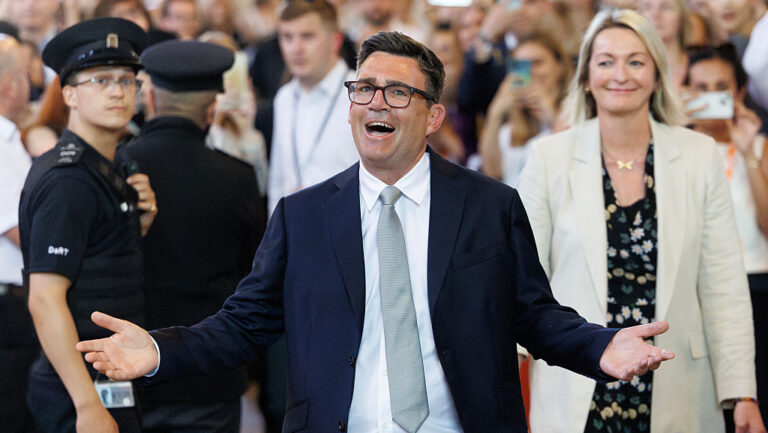
Following the unexpected announcement of Prime Minister Keir Starmer’s resignation, all eyes have turned to Andy Burnham, the newest Member of Parliament whose landslide by-election victory has reshaped the Labour Party’s leadership landscape.
The Makerfield landslide and the path to Downing Street
Andy Burnham’s return to Westminster was marked by an electoral performance that shattered expectations. While pre-election polling suggested a competitive race, Burnham secured a victory of over 20 percentage points in the Makerfield constituency. This strong mandate positions him as the most likely candidate to take over the party leadership and, subsequently, the premiership.
However, Burnham’s potential administration will face the same daunting economic headwinds and fiscal limitations that recently triggered the resignation of Defence Secretary John Healey. The new leader will need to navigate a complex strategic environment while managing a highly constrained national budget.
The fiscal tightrope: Balancing defense spending with economic constraints
A central point of friction for the incoming leadership remains the defense budget. In 2025, London pledged to reach a defense spending target of 2.5 percent of GDP by 2027, rising to 3.5 percent by 2035. The failure to establish a concrete funding pathway for these goals was a primary cause of instability within the Starmer government.
Burnham is expected to diverge from the strict fiscal rules previously maintained by the Treasury. Indications suggest he may be willing to adopt a borrowing strategy for defense investment—similar to the approach taken by Germany—to fulfill the commitments of the 2025 Strategic Defense Review, including the procurement of advanced missiles and the expansion of the Royal Navy’s submarine fleet.
Defense as industrial strategy: Burnham’s vision for long-term growth
Burnham is advocating for a shift toward a 10-year procurement horizon, a move welcomed by defense contractors seeking long-term stability. Beyond simple military readiness, Burnham views defense spending as a cornerstone of a broader industrial strategy designed to rebuild local economies and enhance domestic manufacturing skills.
By reframing military investment as a tool for reindustrialization, Burnham aims to link national security with economic growth. His strategy involves transitioning citizens from welfare into high-skilled industrial roles, thereby generating the fiscal headroom necessary for sustained defense investment without drastically cutting other public services.
The Brexit anniversary and a potential return to the European fold
Exactly ten years after the UK voted to leave the European Union, the economic and strategic consequences of that decision remain a central theme in British politics. Recent data indicates that the UK economy has lagged behind projections made prior to the referendum, and public sentiment increasingly favors a closer relationship with Europe.
While Burnham remained cautious on the topic during his recent campaign, he is widely perceived as a proponent of closer ties with the EU. Rejoining or deepening integration could provide a significant boost to the UK’s GDP, subsequently bolstering the defense budget and opening new avenues for industrial collaboration. If Burnham chooses to address this sensitive issue, he may ultimately be remembered as the leader who moved Britain past the divisions of the Brexit era toward a new strategic alignment with Europe.