The House Appropriations Committee has released its fiscal year 2027 defense spending bill, a massive $1 trillion measure that signals a strategic shift in U.S. military priorities. The bill greenlights nearly a dozen multiyear munitions deals and restores funding for critical programs like the E-7 Wedgetail, reflecting an urgent need to replenish stockpiles and outpace emerging global threats.
Focus on mass production: Billions allocated for missiles and low-cost munitions
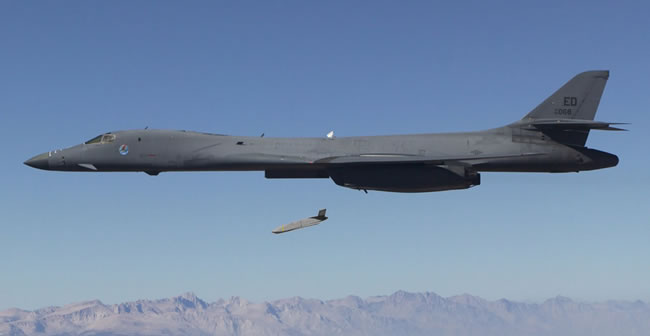
A major focus of the FY27 spending measure is munitions production, with $10.6 billion earmarked for critical legacy systems such as PAC-3, THAAD, and Tomahawk missiles. In a notable first, lawmakers have also allocated $836 million specifically to procure low-cost munitions, an acknowledgment of the changing nature of modern warfare where volume and affordability are key.
By approving multiyear procurement authority, the committee is allowing the Pentagon to finalize framework deals with defense contractors, ensuring a steady production line for years to come. The bill also provides $6.9 billion to fully fund the F-35 Joint Strike Fighter program, maintaining the core of the U.S. tactical air fleet.
The innovation edge: Massive investment in autonomous warfare and drones
Innovation and industrial base resilience are at the heart of the new proposal. More than $2.9 billion is dedicated to initiatives designed to harness up-and-coming technology and shore up domestic manufacturing. This includes significant funding for the Defense Autonomous Warfare Group (DAWG) and Joint Interagency Task Force 401, two efforts focused exclusively on drone and counter-drone capabilities.
Chairman Ken Calvert stated that recent conflicts have highlighted the pressing need for the weapons and technology required for both modern and future warfare. However, the unprecedented spending level has already met resistance from some Democratic appropriators, who argue that such historic defense investments should not come at the expense of domestic programs like education.
Restructuring the services: Key gains for Air Force, Navy, and Army
The Air Force portion of the bill sees a major reversal with the restoration of nearly $1.6 billion for the E-7 Wedgetail program. Significant funds are also directed toward the B-21 Raider, the Collaborative Combat Aircraft, and the development of the sixth-generation F-47 fighter. Meanwhile, the Navy is slated to receive $56.7 billion for 21 ships, including Columbia and Virginia-class submarines, alongside critical investments in shipbuilder capacity.
For the Army, the bill boosts funding for Black Hawk and Chinook helicopters and continues the modernization of Abrams tanks and armored multi-purpose vehicles. In space, the focus remains on resilient launch services and commercial satellite integration. These across-the-board investments aim to ensure that every branch of the U.S. military remains adaptable and ready for the challenges of a contested global environment.