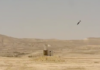
In a strategic move set to redefine the precision weaponry landscape in the United States, tech firm Palladyne AI has secured an exclusive license from Israel Aerospace Industries (IAI) to manufacture Harpy, Harop, and Mini-Harpy attack drones on American soil. The announcement marks the beginning of an effort to „Americanize” these combat-proven systems, tailoring them to meet the rigorous requirements of the US military.
The primary target: The US Army’s long-range precision munitions competition
The immediate goal of this collaboration is the Long Range Precision Munitions (LRPM) competition scheduled for this fall. The US Army is seeking a precise, long-range capability—exceeding 100 km—capable of neutralizing integrated enemy air defense systems. In this context, Harpy and Harop start with a major competitive edge, boasting a proven track record in hunting enemy radar systems, a critical mission for which IAI has perfected world-class technologies.
The financial stakes are significant, with a prototype agreement estimated at a value between $100 million and $200 million. However, Palladyne AI’s leadership is betting on a long-term strategy, anticipating the launch of at least five funded programs over the next 12 months, where the versatility and autonomy of these platforms will be key selling points.
Evolution through artificial intelligence: Integrating SwarmOS software
What sets Harpy and Harop apart from the mini-drones currently dominating the Ukrainian battlefield is their ability to patrol conflict zones for up to nine hours. These loitering munitions can independently identify and strike fleeting targets, carrying explosive warheads of over 30 pounds. To further elevate the technological bar, Palladyne will implement its proprietary artificial intelligence software, SwarmOS.
This advanced system will allow the drones to share real-time data not only among themselves but also with other aircraft or ground vehicles, creating an interconnected combat network. This transformation from an individual weapon into a coordinated, intelligent swarm is at the heart of Palladyne’s pitch to the Pentagon.
Niche capabilities in a crowded market: Betting on anti-radiation technology
Although the US Army has not explicitly requested anti-radiation capabilities in its current requirements, Palladyne intends to pitch the Harpy drone as a superior solution to traditional methods. Traditionally, the US uses missiles launched from manned aircraft to destroy enemy radars; however, Harpy offers the advantage of persistence, waiting for the enemy to activate their sensors before striking instantly.
The message to Washington decision-makers is clear: these licensed products are not cheap, „disposable” drones, but pieces of exquisite machinery capable of executing complex missions where low-cost systems fall short.