In July, nine months after the tragic October 7 attack on Israel, the Israel Defense Forces (IDF) released one of the first public investigations into the failures of that day, specifically examining the battle of Kibbutz Be’eri, where 101 civilians lost their lives. However, the Israeli military could not afford to delay its response to the October attacks, as it has since engaged in an aggressive and lethal campaign in Gaza. Throughout this year of conflict, the IDF has swiftly adapted by incorporating new technologies, reorganizing its fighting forces, and rethinking soldier training.
With ground operations now extending into southern Lebanon, where Israel aims to counter the threat from Iran-backed Hezbollah, we assess how the IDF has responded to the challenges of modern warfare over the past year.
Integrating New Technologies
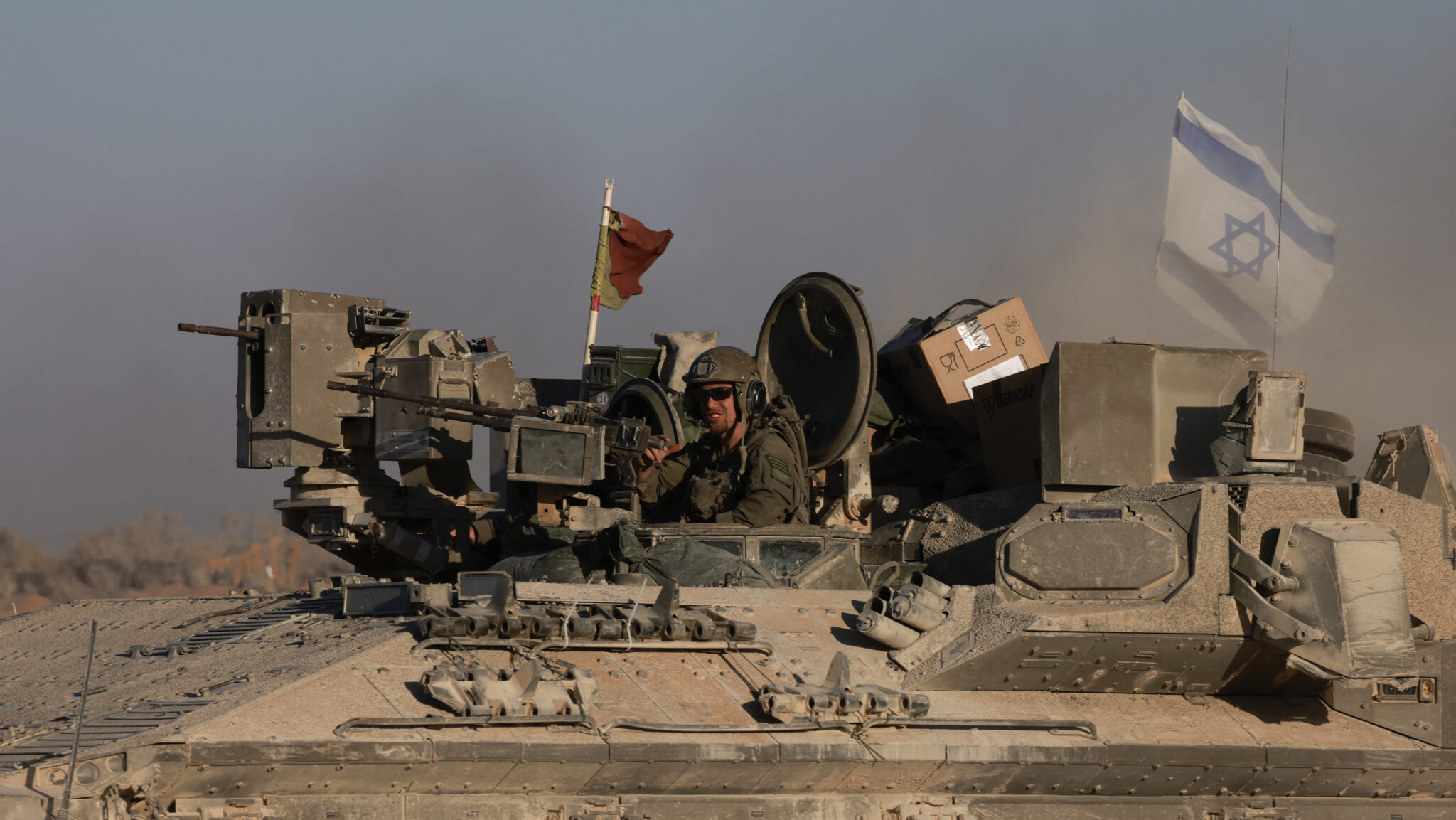
Prior to the start of the war, the IDF had begun training crews for its infantry Nahal Brigade with the new wheeled Eitan armored personnel carrier, unknowingly preparing for its combat debut. These vehicles have since been deployed in Gaza raids and by the IDF’s 162nd Division during battles in Rafah.
To safeguard these advanced systems, the Trophy active protection system has been employed effectively, evidenced by the lack of reports about incapacitated tanks using this technology, although some Namer APCs have been lost. Additionally, the IDF has resorted to low-tech innovations, such as attaching metal nets to the tops of tanks to guard against top-down drone strikes, similar to tactics seen in Ukraine.
The IDF has also repurposed older vehicles into robotic platforms for combat. For example, unmanned versions of the M113 APCs have been spotted in Rafah, while D-9 bulldozers are now being remotely controlled for tasks such as ground excavation and clearing hazardous terrains.
Furthermore, the IDF is set to introduce the Roem, a new wheeled artillery system that will enhance automated firing capabilities, enabling faster shelling with fewer pieces of artillery and eventually replacing older M109 howitzers.
On the communication front, the IDF has made significant advances in networking, allowing seamless communication between ground, air, and naval forces. Handheld systems are enabling soldiers to better coordinate operations, particularly between armored units and drones. The IDF has employed a variety of drones in the conflict, including the older Hermes 450 and smaller Skylark drones that assist artillery units. Commercial smaller quadcopters have also been used for reconnaissance.
To counter drone threats, the IDF is deploying new technologies on vehicles and utilizing hard-kill solutions, such as fire-control sights on rifles and interceptors. While the initial days of the conflict saw Hamas deploying small drones, the IDF has mainly dealt with longer-range kamikaze UAVs, employing the air force and Iron Dome for interceptions.
At sea, the IDF’s new Sa’ar 6 corvettes gained their first combat experience, operating off Gaza’s coast and in the Red Sea. The naval variant of Iron Dome, known as C-Dome, has also been used effectively for intercepts during the conflict.
Organizational Changes
The IDF has made several structural changes in response to the ongoing war. One notable adjustment was reinforcing its northern forces before officially launching ground operations in Lebanon. In April, the IDF established a new Mountain Brigade to safeguard the Mount Dov and Mount Hermon areas, which share borders with Lebanon and Syria. This new brigade alleviates the pressure on the 769th Territorial Brigade and allows the 91st Division to focus on the Hezbollah threat.
Additionally, the IDF is expanding its combat helicopter squadrons due to lessons learned from the October 7 attacks, leading to a renewed commitment to enhance the Air Force’s operational capabilities. The air force is looking to acquire new combat helicopters to replace aging Apache aircraft and bolster its fleet with new refueling and heavy transport capabilities, along with additional F-15s and a third squadron of F-35s.
The IDF has embraced the rise of drone warfare by forming a new squadron dedicated to the Hermes 900 drones and strengthening its armored units through the establishment of new regular tank companies, which reduces dependency on reservists in major combat operations.
The experience gained in combating tunnel warfare in Gaza has also shaped IDF tactics. Through the actions of various divisions, including the 98th Division, the IDF has improved its ability to locate and destroy enemy tunnels, and this knowledge has been integrated into its operational framework moving forward.
Impact on Reservists and Training
The war has placed unprecedented demands on the IDF, leading to a significant mobilization of reservists for extended periods. Historically, Israel’s military engagements have been shorter and less intense, but the ongoing conflict that began in October 2023 has seen around 300,000 reservists called to duty, many serving for up to eight months.
This extended service has improved the training and preparedness of reservists, as many underwent intensive