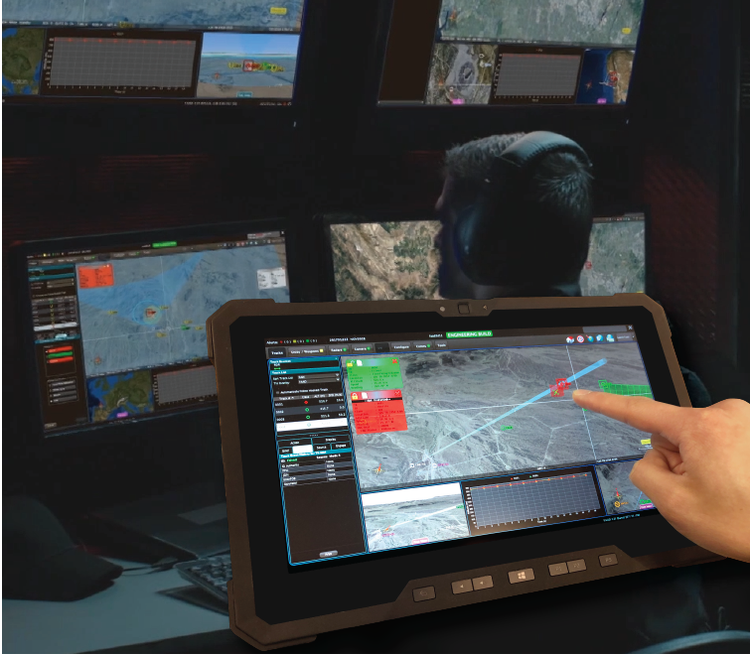
Since 2020, the Pentagon has been working on a comprehensive technical architecture to integrate counter-drone systems, with the cornerstone being the Army’s Forward Area Air Defense Command & Control (FAAD-C2) system, developed by Northrop Grumman. This system is currently in widespread use among U.S. forces and increasingly among allied nations, such as those in the Baltic region. Today, Northrop Grumman announced the rollout of a new AI-driven upgrade to FAAD-C2, known as the Advanced Battle Manager (ABM), designed to help users manage “complex aerial swarm scenarios.”
According to a Northrop spokesperson, “The ABM can generate engagement plans in under a quarter of a second.” Formal testing of the system has been completed, and the ABM is set to be deployed by the U.S. Army shortly.
The Advanced Battle Manager utilizes data from FAAD-C2’s already extensive sensor network to analyze threats rapidly. It then recommends the most suitable weapon for each target, a process referred to as “weapon-target pairing,” while also minimizing the risk of “friendly fire” incidents involving U.S. and allied assets. The ABM features an “open architecture” design, allowing for compatibility with a diverse range of military and industry technical standards. This flexibility enables various vendors’ weapons and sensors to integrate seamlessly, as opposed to being confined to a proprietary interface. The algorithms powering the ABM are reportedly trained on „years of live fire data” and have been successfully tested at the Yuma Proving Grounds in Arizona during recent evaluations.
It remains uncertain whether these tests coincided with June’s multi-week Joint Counter-small Unmanned Aircraft System (JCO) Demo 5, which also took place at Yuma and assessed multiple defensive systems against up to 50 simultaneous threats, including small drones and unmanned mini-jets weighing over half a ton. This demonstration highlighted the range of aerial threats the military is currently addressing and seeking solutions for. The Pentagon has identified air defense — particularly against drones — as a critical area for deploying artificial intelligence, given the speed and variety of emerging threats that can easily overwhelm a human operator’s ability to respond effectively.
“As threats evolve, the need for operations to become simple and clear during high-stress multi-target engagements has increased,” stated Kenneth Todorov, Northrop Grumman’s Vice President and a retired Air Force missile defender. “This critical AI enhancement will create a streamlined and intuitive engagement plan, giving service members more time to save lives with a single click.”