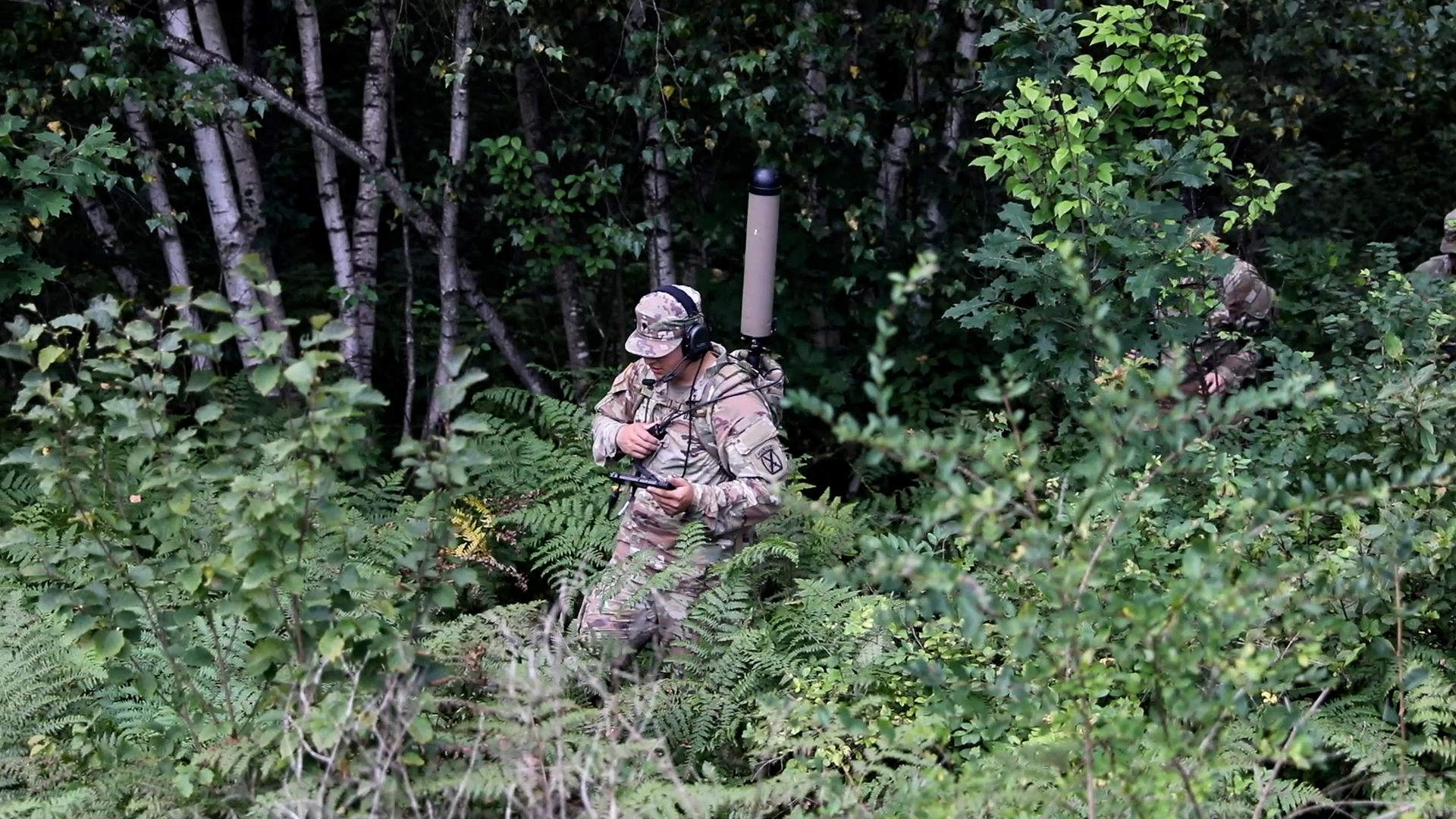
The US Army is making strides in enhancing its electronic warfare capabilities with the introduction of the TLS-BCT (Terrestrial Layer System — Brigade Combat Team) Manpack, a long-anticipated backpack-portable electronic warfare kit. The first two combat brigades are already experimenting with this new system, which empowers frontline troops to detect enemy radio transmissions, identify their sources for precision strikes, and, in some configurations, jam signals. This capability is increasingly vital in a battlefield environment where radio-controlled drones are prevalent.
Lt. Col. John Cross, the Army’s product manager for the system, noted that soldiers were surprised by how effectively they could use it at the Joint Readiness Training Center (JRTC) to identify enemy drones. He highlighted the innovative tactics devised by the units, such as deploying the system on tethered balloons (aerostats) to enhance their observation capabilities.
The Army aims to incorporate soldier feedback into the development of the TLS-Manpack, promoting what they term “transformation in contact.” This approach allows real combat units to provide input on the system’s performance in the field, which in turn informs tactics, updates, and future requirements. Rapid updates are especially critical for electronic warfare systems, as demonstrated by the lessons learned from combat operations in Ukraine.
Brig. Gen. Ed Barker, program executive officer for Intelligence, Electronic Warfare, and Sensors, emphasized the need for agility and flexibility in responding to evolving threats. Traditionally, software updates for military equipment were distributed via compact discs, but the Army has shifted to a more efficient model, enabling soldiers to download updates through a secure online portal and install them using removable media.
As production ramps up, the Army plans to field one brigade per month in fiscal year 2025 and two per month in fiscal year 2026. The initial production contract for the TLS-Manpack was awarded to CACI Mastodon in 2023, and the system is designed for individual operation, offering a flexible weight range and configuration options.
The TLS-Manpack can operate independently or in tandem with other systems, enabling multiple units to triangulate enemy signals and share real-time intelligence through Army tactical networks. This capability enhances situational awareness for commanders and integrates seamlessly with existing systems like the Tactical Assault Kit (TAK).
The TLS-Manpack is part of a broader renaissance in US Army electronic warfare capabilities, which includes larger vehicle-mounted systems like the TLS-BCT and TLS-EAB, as well as the upcoming airborne Multi-Function Electronic Warfare (MFEW) system for Grey Eagle drones set to enter service in 2026. As Brig. Gen. Barker stated, a layered approach to electronic warfare is essential, emphasizing that there is no single solution to address the complexities of modern warfare.