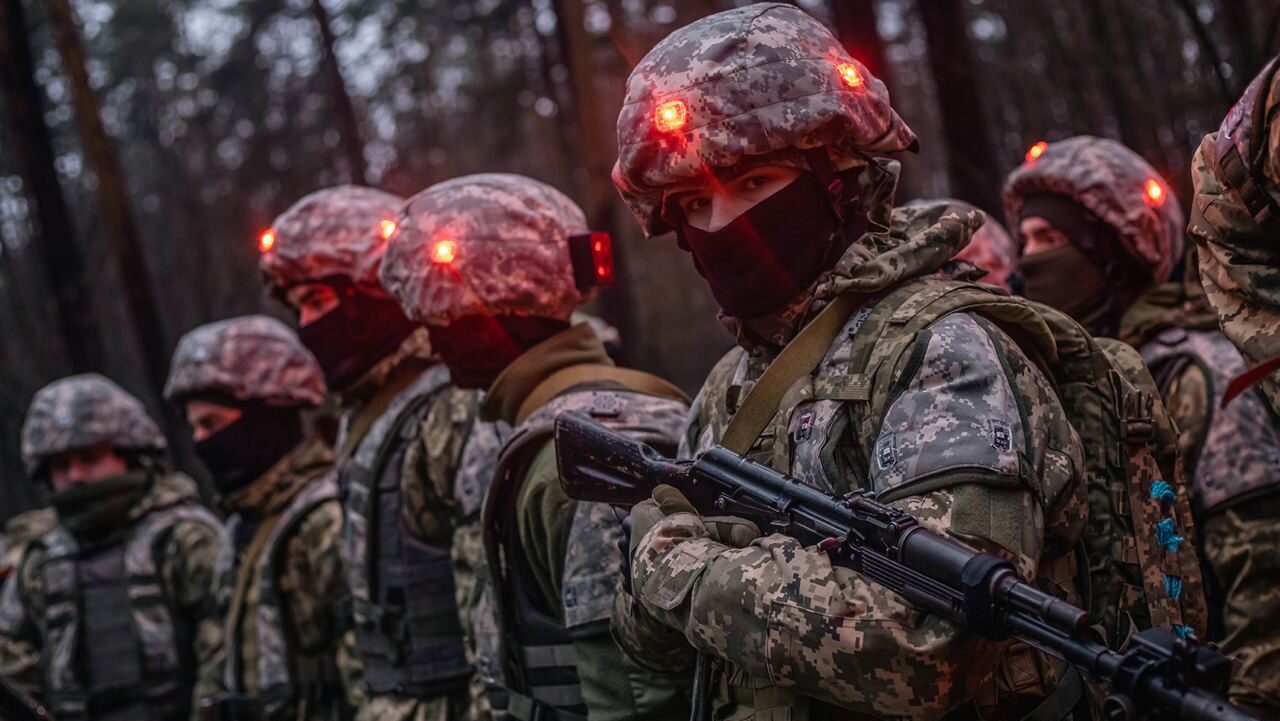
Twenty years ago, Ukrainian company SKIFTECH specialized in recreational battlefield technology, primarily focusing on paintball guns. However, following the Russian-backed invasion of eastern Ukraine in 2014, the firm pivoted to become a high-tech military simulation and training specialist.
SKIFTECH’s primary clientele is in Ukraine, but the company has recently begun expanding into the United States, as reported by Mikhail Obod, head of the US branch. Currently, the company operates with a small team of a dozen employees in the US, but Obod anticipates growth, potentially aided by an upcoming US Army contract.
The firm aims to rectify perceived deficiencies in current military training simulations, particularly the failure to reflect the high casualty rates typical in the opening minutes of combat and the lack of comprehensive after-action feedback for soldiers. According to Obod, General Oleksandr Syrskyi, the commander-in-chief of the Ukrainian armed forces, has indicated that units completing a month-long training course using SKIFTECH’s latest hardware and methodologies experience 30% fewer casualties.
The training system leverages extensive battlefield experience and data accumulated since 2014. Obod explained that their automated simulation technology enables soldiers to engage in scenarios involving drones, aircraft, and ambush situations. Acknowledging the entrenched nature of the conflict in Ukraine, the training software integrates elements of „trench warfare.”
SKIFTECH’s simulations account for a wide array of weapons, ranging from tanks to hand grenades, ensuring a comprehensive training experience. Obod emphasized that their technology is “considerably more accurate” than existing laser-based systems, thanks to a new design set for 2024.
Unlike traditional two-dimensional training methods that simply signal a „hit,” SKIFTECH’s system utilizes layered and graduated sensors. A hit detected by the laser is not automatically classified as a kill; instead, the system assesses variables such as weapon type, range, velocity, and the target’s ballistic protection to determine the extent of damage.
Furthermore, Obod noted the company’s ability to rapidly incorporate new elements into their simulations. For example, they added Stinger MANPADs to their training environment in just five months, showcasing their competitive advantage in leveraging real battlefield data for quick prototyping and product deployment.
However, SKIFTECH currently faces the challenge of a concentrated market presence, with 90% of its customers based in Ukraine. Obod expressed a desire to expand their market reach to other nations and mentioned existing operations in a few European countries, as well as in Malaysia and Ecuador.
Ultimately, SKIFTECH offers laser-based simulations that eliminate the need for live rounds during training, which can be prohibitively expensive for armored vehicles and artillery. The company focuses on preparing forces against a simulated live-action adversary rather than static targets, allowing for more dynamic and cost-effective training solutions.