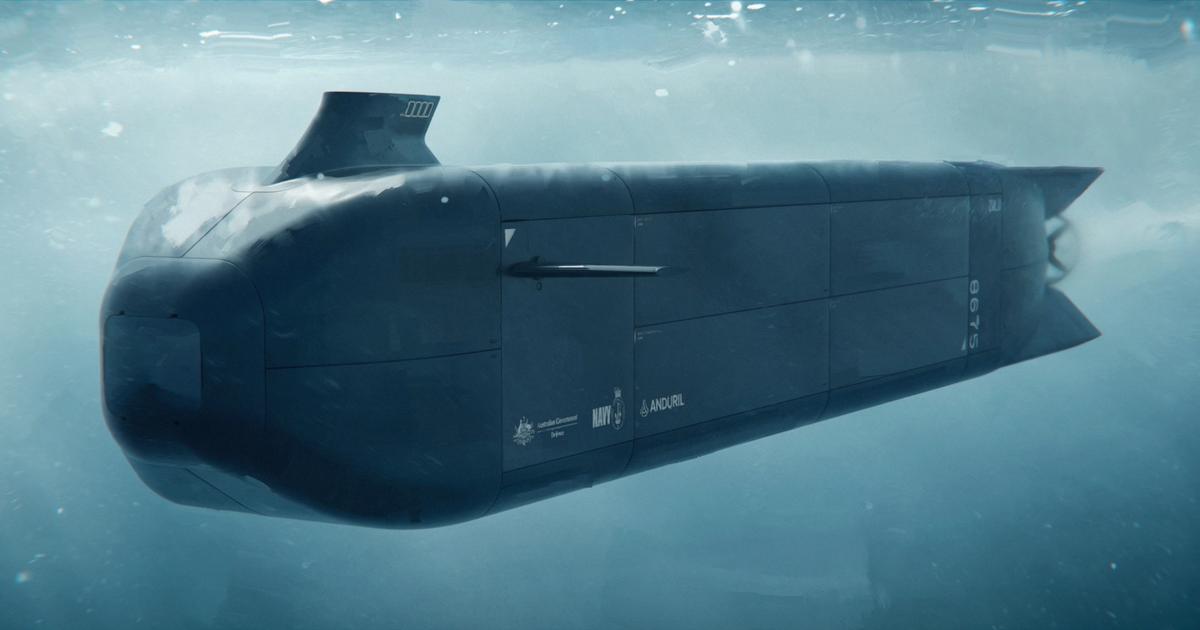
The Defense Innovation Unit (DIU) and the United States Navy have selected Anduril to participate in the crucial Combat Autonomous Maritime Platform Project (CAMP), marking a significant step in developing autonomous underwater capabilities. The star of this program is Anduril’s prototype submarine, known as Dive-XL, a platform designed to redefine naval warfare.
Rapid Sea Trial: Four Months for Key Demonstration
The contract, whose value remains undisclosed, mandates a mission of both scope and speed: a long-range, „operationally representative” demonstration that must take place within just four months of the award. This requirement underscores the urgency with which the Pentagon aims to integrate these advanced technologies into its arsenal.
From Australian Ghost Shark to American Explorer
The Dive-XL prototype is not an entirely new concept but builds on Anduril’s accumulated experience. It is similar to the Extra Large Autonomous Underwater Vehicles (XL-AUVs) Ghost Shark that the company is currently delivering to the Royal Australian Navy. This connection highlights an international synergy in the development of autonomous underwater capabilities. Shane Arnott, senior vice president of Anduril’s maritime division, emphasized that Dive-XL is a „very long-range, very long-endurance capability,” able to operate independently or in collaboration with crewed or uncrewed systems, including other autonomous or undersea communication systems.
„Hedge Force” Strategy: Autonomy and Interoperability in the Pentagon’s Vision
Dive-XL’s participation in the CAMP program is perfectly aligned with recent strategic directions of the United States. Andrew Nuss, head of growth and strategy for Anduril’s maritime division, highlighted the correspondence with the White House’s Maritime Action Plan, which supports investment in robotic system capabilities, and with Chief of Naval Operations Adm. Daryl Caudle’s new „Fighting Instructions” guidance. These directives outline a „hedge force” strategy for the Navy, focused on utilizing unmanned systems and a range of tailored options pairing various systems. Likewise, the guidance instructs the Navy to determine how to fully embrace robotic autonomous systems in its command structure. Nuss stressed that initiatives like CAMP accelerate the „Hedge Force” Strategy, focusing on interoperability, not just within its own platforms and systems, but also with those of allies and partners.
The Mystery of Costs and the Race for Autonomous Underwater Leadership
While the value of the contract awarded to Anduril was not disclosed, and the company did not specify whether it is working with any industry partners within CAMP, the DIU program aims for rapid prototyping and fielding of XL-AUVs. The fact that DIU did not respond to a request for comment regarding other potential industry partners underscores the competitive and likely classified nature of this technological race. The development of such autonomous capabilities is crucial for national security and for maintaining the United States’ strategic advantage in the underwater environment.