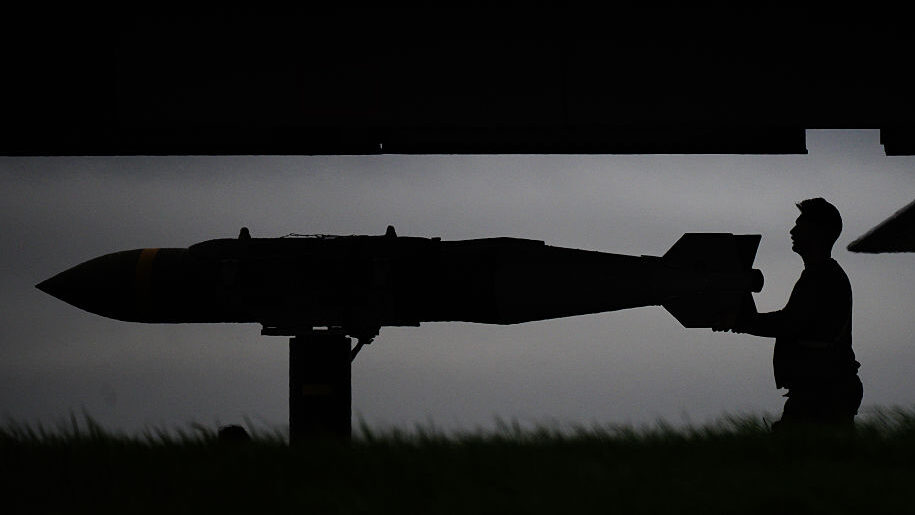
The Pentagon is preparing a supplemental funding request that will not merely replace weapons expended in the Iran conflict but will aim to acquire new types of equipment, marking a major strategic shift. This initiative underscores a modern vision for national security, focused on innovation and adapting to new geopolitical realities.
A Modern Vision: Investing in Capabilities, Not Just Consumables
Jules „Jay” Hurst, the Pentagon’s acting chief financial officer, emphasized that the department is „looking at options, and we’re looking to make sure we make the right investments in capabilities.” This means „not just replacing things, but buying new things, new entrants, looking at that.” The official expressed confidence that „everyone will be pleased with the direction it goes,” indicating a clear reorientation towards modernizing and diversifying the military arsenal.
Soaring Costs and the Budgetary Mystery
While the exact value of the supplemental package remains unclear, previous estimates placed the figure at over $50 billion. A recent report revealed that the first week of the conflict alone cost over $11.3 billion. Hurst admitted that this sum is „probably a ballpark number.” The timing of sending the funding request to Congress is also a secret, with Hurst mentioning that options are being worked on to be presented to leadership at the appropriate time.
Robust Stockpiles, Yet a Need for Strategic Adaptation
Despite weapon consumption, administration officials assert that the United States possesses adequate munition stockpiles to continue operations in Iran. This resilience is partly due to changing the types of weapons used as control of Iranian airspace has increased. Defense Secretary Pete Hegseth previously stated that, while sophisticated standoff munitions were initially used, they are no longer needed to the same extent, and Patriot missile stockpiles remain „extremely strong.”
Michael Duffey, the Pentagon’s acquisition czar, reaffirmed that the U.S. „absolutely” has enough munitions but is also seeking options to procure more. „Operation Epic Fury” has highlighted the necessity for a balanced mix of exquisite and more economical options. „Clearly, there’s a need for both,” Duffey explained, adding that it is essential to have a „hybrid force” capable of accomplishing the mission in a cost-effective way, considering the diverse capabilities of adversaries.
Bipartisan Support for Arsenal Renewal
Even amidst Democratic opposition to the conflict, Representative Rob Wittman, a Republican member of the House Armed Services Committee, anticipates bipartisan support for the funding request. Wittman emphasizes that the need to strengthen munition stockpiles and develop expendable platforms existed even before the Iran conflict, and the current situation has only underscored the urgency of these measures.
Massive Contracts for Missile Production
In anticipation of the new request, the Pentagon is already negotiating contracts with vendors to replenish munition stockpiles. These include agreements similar to those recently concluded with Lockheed Martin for PAC-3 and THAAD missiles, and with RTX for Tomahawk and AMRAAM missiles. The goal is a significant increase in production capacity: Lockheed Martin aims for 2,000 PAC-3 missiles per year by the end of 2030, and RTX plans to produce over 1,000 Tomahawks, at least 1,900 AMRAAMs, and over 500 Standard Missile-6 missiles annually. These arrangements provide a clear demand signal, encouraging companies to strengthen their supply chains. However, the department remains cautious about „emerging competitors” in areas such as low-cost cruise missiles and hypersonic weapons.
Budgetary Flexibility: Key to Efficient Execution
Jules Hurst stressed the importance of collaborating with lawmakers to ensure adequate oversight while granting the Pentagon increased flexibility in reallocating funds. Such flexibility would allow the department to move money between accounts without requiring complex reprogramming actions, thereby maximizing production efficiency and capitalizing on industrial base opportunities as they arise.