Potential Economic Ramifications
President Donald Trump’s recent decision to impose a 10 percent tariff on British exports has raised alarms within the UK defense sector, with fears it could “instigate a scarcity mindset and price hikes.” Kevan Craven, CEO of ADS Group, which represents nearly 1,500 companies in aerospace, defense, security, and space, expressed concerns that the tariffs could lead to „additional costs of tens of millions of pounds” for businesses, particularly due to impacts on aluminum and steel markets.
The so-called “Liberation Day” announcement, made on Wednesday, involves tariffs on roughly 90 countries as part of Trump’s strategy to address the trade deficit with international partners. While the UK faces a relatively low tariff compared to the European Union’s 20 percent penalty and stringent rates imposed on Asia-Pacific nations, the broader implications are expected to ripple through the market.
Profitability and Supply Chain Stability
Craven remarked that while the economic disruption falls into the “small, not catastrophic” category, the UK economy will still be affected by rising costs and a potential shift in business behavior towards stockpiling materials. “UK supply chains are vital for many areas of US capability in advanced manufacturing, and vice versa,” he noted, emphasizing the importance of maintaining existing agreements that foster confidence among industry stakeholders.
The UK Ministry of Defence (MoD) did not address inquiries regarding the tariffs’ potential consequences on defense exports, instead referring to a statement by Jonathan Reynolds, UK Secretary of State for Business and Trade. Reynolds announced a “request for input” regarding possible retaliatory actions against the US tariffs, inviting industry feedback until May 1 on products that might be included in a UK tariff response.
In 2023, UK defense and security exports to North America totaled nearly £2 billion ($2.58 billion), but figures specifically for the US and relevant weapon systems remain unclear due to commercial sensitivities.
F-35 Involvement and Industry Concerns
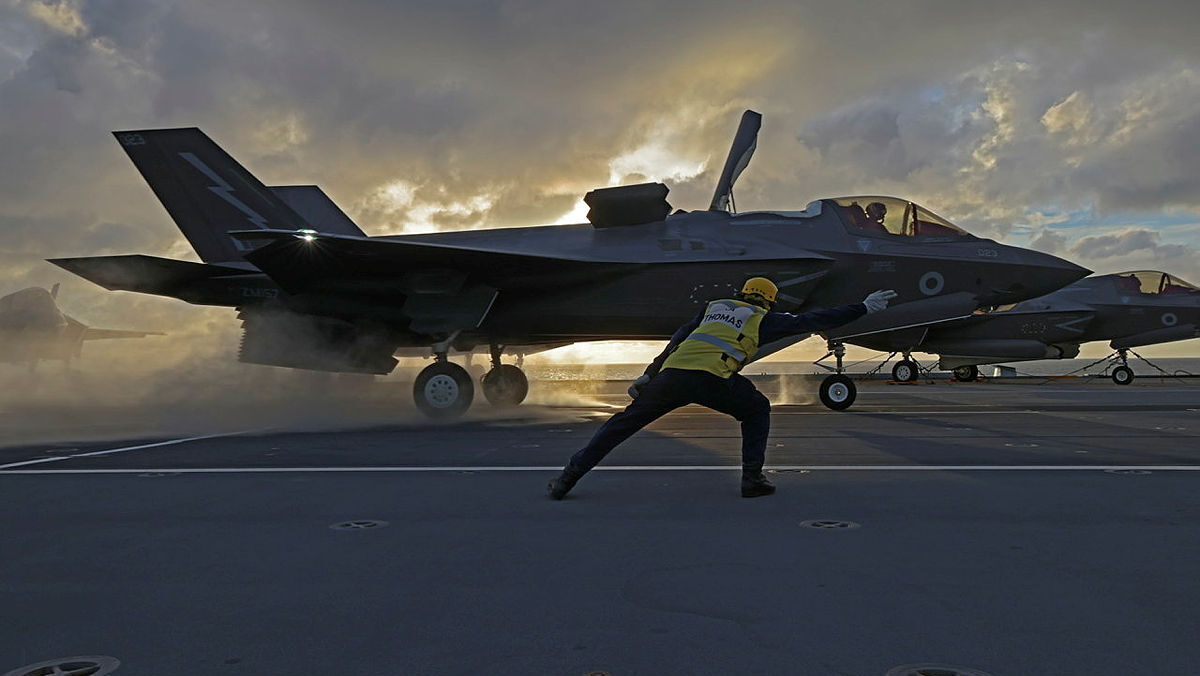
British suppliers play a pivotal role in the manufacturing of essential components for the Lockheed Martin F-35 fifth-generation fighter jets, including critical elements such as rear fuselages, batteries, ejector seats, and actuators. UK officials have consistently asserted that approximately 15 percent of each F-35’s value is derived from local industry, although some analysts question this figure.
There are concerns among UK lawmakers that the forthcoming order of F-35 aircraft, expected to be agreed upon by government ministers, may serve as a bargaining chip in US-UK trade negotiations. Reynolds, however, stated in parliament that he had “no knowledge” of any plan to leverage F-35 orders in trade discussions.
The UK has committed to a program of record for 138 F-35s, with the Royal Air Force and Royal Navy currently operating 37 out of the 48 jets received thus far. However, a second tranche order remains unconfirmed amid speculation regarding preferences for future contracts.
Reports suggest decision-makers may prioritize placing a new order for F-35s with the US over expanding orders for Eurofighter Typhoons, potentially sidelining local manufacturer BAE Systems and raising alarms among its trade union, Unite. Steve McGuinness, an executive council member at Unite, expressed serious concerns that without domestic orders for Typhoon, the viability of the Global Combat Air Programme (GCAP) could be jeopardized due to the loss of necessary skills in aircraft production and operation.
As the UK defense sector navigates these challenges, the implications of Trump’s tariffs and the upcoming decisions on defense contracts underscore a critical juncture for the industry and its future collaboration with international partners.