Combat operations are rapidly depleting interceptor and missile inventories
U.S. combat operations in Iran have cost the Department of Defense approximately $38 billion through August 1. If the current pace of fighting continues, the Pentagon could spend an additional $2 billion to $3 billion every month.
The largest share of the bill comes from replacing munitions used during the operations. Replenishing those stocks is estimated to cost $21.7 billion, including:
- $13.1 billion for interceptors;
- $7.3 billion for long-range land-attack cruise missiles;
- $1.2 billion for other munitions.
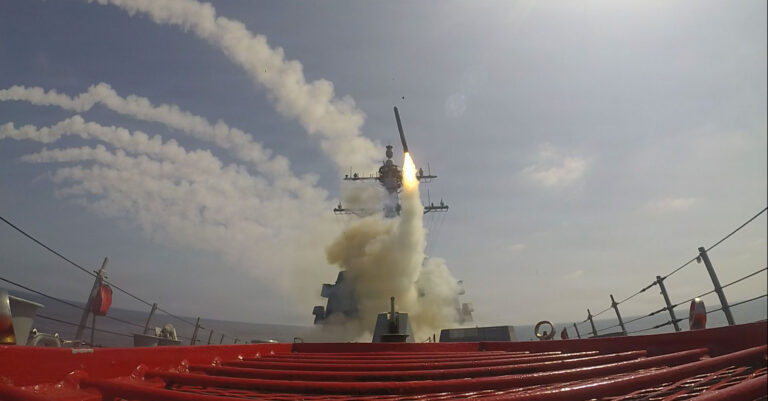
The weapons employed include Tomahawk missiles, Joint Air-to-Surface Standoff Missiles, and interceptors used by THAAD, Patriot, Standard Missile 3 and Standard Missile 6 systems.
The United States has used up to two-thirds of certain interceptor stocks
Since June 2025, the United States may have used between one-half and two-thirds of its inventory of some interceptor types, taking into account operations in Iran and the other active conflict theater.
Rebuilding those reserves could take at least five years, even as the Pentagon seeks to accelerate munitions production.
The large-scale expenditure of missiles and interceptors will leave the United States with reduced stocks for several years. That situation could become especially dangerous in a conflict with an adversary capable of launching large numbers of ballistic and cruise missiles, such as China.
Flight hours and fuel add billions more to the bill
Beyond munitions, the operations have generated major expenses for increased flight activity and fuel consumption.
Estimated costs include:
- $10.4 billion for additional flying hours;
- $2.7 billion for increased fuel expenses;
- $1.9 billion for equipment lost in combat;
- $1.5 billion for other operational costs.
Each additional month could cost approximately $2 billion if operations continue at the level of intensity seen in May and June. At the higher tempo recorded in July, monthly costs could rise to about $3 billion.
A further escalation of the conflict or the use of more sophisticated and expensive munitions would push the total even higher.
Equipment losses exceed $3 billion
By early August, the United States had reportedly lost 42 aircraft and one AN/TPY-2 radar. Replacing those systems with new equipment would cost roughly $3.3 billion.
The figure remains speculative, however. The Pentagon is not required to replace every lost platform on a one-for-one basis, and future procurement decisions could favor different systems or technologies.
The estimate also excludes damage to military bases. It does not include costs associated with service members killed or wounded, nor future spending on medical care, pensions and disability compensation for veterans.
Official estimates remain subject to considerable uncertainty
The cost calculations rely on government databases and publicly available information. Because the Department of Defense did not provide complete data, the final figure should be viewed as an estimate with substantial uncertainty.
A separate assessment placed the cost of operations at $33.4 billion through the end of June. Adding the estimated expenses for July and August produces a total close to the $38 billion figure.
Neither assessment captures the full financial impact of the conflict, particularly damage to bases and long-term obligations to military personnel and veterans.
The supplemental funding request covers more than the war itself
The administration previously submitted an $87.6 billion supplemental funding request. Of that amount, $67.1 billion was allocated to defense and expenses associated with the war in Iran.
Comparing that request with the $38.1 billion operational estimate is difficult because the administration’s package also includes other defense priorities and funding for other government departments.
The two figures are nevertheless broadly similar in their estimates for replacing expended munitions and covering fuel costs. The larger overall request reflects the fact that it addresses a wider range of requirements than the direct cost of combat operations.
The conflict exposes weaknesses in the defense industrial base
The immediate financial burden is compounded by a strategic problem: U.S. industry cannot rapidly rebuild some critical missile and interceptor stocks.
Even with accelerated production, replenishing inventories could take years. During that period, the United States would have a smaller missile-defense cushion and less flexibility to respond to a coordinated attack.
The situation highlights the difficulty of simultaneously sustaining intensive combat operations, supporting allies and preparing for a major conflict with an adversary possessing extensive long-range strike capabilities.
The war in Iran is therefore generating more than a bill worth tens of billions of dollars. It is also consuming industrial capacity, production time and strategic inventories that could prove decisive in a future confrontation.