In a long-anticipated move to bolster its wartime economy, President Volodymyr Zelenskyy announced on Tuesday that Ukraine will partially lift its ban on exporting domestically produced weaponry. By allowing local defense firms to tap into international markets, Kyiv aims to transform its battle-hardened technology into a sustainable funding stream for the ongoing conflict.
The Surplus Strategy: Frontline First, Market Second
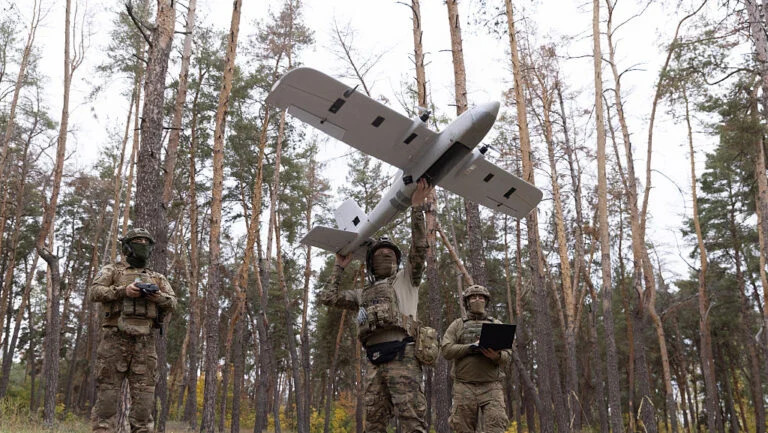
The new policy introduces a sophisticated balancing act: prioritizing the immediate needs of the Ukrainian Armed Forces while permitting the sale of excess production abroad. Under the framework of „drone deals,” local manufacturers can now enter special agreements to supply partner nations with missiles, ammunition, software, and UAVs—but only after state orders for the domestic front have been fully met.
„Ukrainian companies will receive a real opportunity to enter partner countries’ markets,” Zelenskyy stated, highlighting a major shift from the total embargo established at the start of the 2022 invasion. This move is designed to ensure that the defense industry remains a pillar of national strength rather than a drain on limited state coffers.
Capitalizing on Combat-Proven Technology
For years, Ukrainian defense firms have lobbied for an easing of export restrictions, arguing that the inability to attract foreign capital has stifled their growth. The logic is clear: international sales generate the revenue necessary to scale up production and develop next-generation systems that will ultimately enhance Ukraine’s own battlefield capabilities.
Kyiv has already identified several high-demand categories ready for the global stage, including naval drones, unmanned ground vehicles (UGVs), and advanced drone navigation software. Potential collaboration with the UK-led Joint Expeditionary Force (JEF)—which includes Baltic and Nordic partners—is seen as a primary avenue for these high-tech military exchanges.
The Intelligence Shield: Guarding Against Russian Proliferation
The primary risk of opening Ukraine’s military catalog to the world is the potential for sensitive technology to be intercepted or reverse-engineered by Moscow. To mitigate this, the Ukrainian government has implemented a strict vetting process.
The Ministry of Foreign Affairs, working in tandem with national intelligence agencies, is now tasked with maintaining a rigorous list of prohibited nations. Export licenses will be granted only to countries found to be non-cooperative with Russia. This dual-layered security approach ensures that while Ukraine seeks economic expansion, its most lethal innovations remain shielded from enemy hands.