Secretive agreement raises concerns across the orbital-surveillance industry
The US Department of Defense has reportedly reached an agreement granting SpaceX exclusive access to some of the government’s most sensitive data on objects in orbit. In exchange, the company is providing the US Space Force with information collected by its Stargaze star-tracking cameras.
The arrangement is believed to have been signed between SpaceX and the Space Force’s Joint Commercial Operations Cell. Under the deal, the company would receive access to the most detailed version of the High Accuracy Catalog maintained by US Space Command.
The agreement has reportedly triggered concern among commercial space-surveillance providers. The main fear is that highly precise military data could contribute, even indirectly, to improving the products and services SpaceX offers to other space operators.
Classified information officially restricted to internal use
A US Space Force official said the data provided to SpaceX may be used only for internal purposes and cannot be exploited for commercial gain.
According to the official, the agreement contains provisions preventing the company from using the information for any “commercial gain or benefit.” However, industry and government sources said it remains unclear whether the data could still influence the accuracy of analyses and services that Stargaze provides to commercial operators.
Neither the US Space Force nor SpaceX issued an official response to questions regarding the existence of the agreement, its terms or the value of the exchanged data.
SpaceX acknowledges the importance of radar information
Jon Herman, SpaceX’s senior director for Starlink constellation engineering, was asked directly about the alleged arrangement during a conference on optical technologies and space surveillance held in Hawaii.
He did not confirm the agreement, but explained why radar data is important to the company. Starlink satellites, Herman said, are not particularly effective at detecting very small objects. Radar information is therefore an extremely valuable tool for supplementing data collected by Stargaze cameras.
Tens of thousands of cameras installed on Starlink satellites
Stargaze uses approximately 30,000 star-tracking cameras mounted on satellites belonging to SpaceX’s Starlink network. The instruments were originally designed to determine the precise orientation of spacecraft, but they can also be used to detect and characterise satellites, orbital debris and other objects.
According to Herman, the system can identify objects measuring roughly half a metre to one metre across. Stargaze can therefore observe a substantial portion of the objects located below an altitude of 600 kilometres.
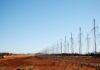
Ground-based radars and telescopes can generally identify much smaller objects, down to around 10 centimetres, in low Earth orbit. Stargaze has a different operational advantage: its cameras can capture tens to hundreds of images of the same object over a given period. That volume of observations can help improve the calculation of an object’s orbital path over time.
The system protects the Starlink and Starshield constellations
Data gathered by the cameras is entered into a database that catalogues detected objects and generates a constantly updated picture of the space environment.
For SpaceX, this capability is essential for protecting its approximately 11,000 Starlink and Starshield satellites from collisions.
The full Stargaze catalogue is not publicly released, nor is it shared in its entirety with operators that agree to provide their own satellite data. Instead, participating operators receive derived products and services, including warnings about potentially dangerous approaches between space objects.
Approximately 100 operators are currently believed to be integrated into the system.
What the agreement could mean for the Space Force
For the Joint Commercial Operations Cell, access to Stargaze data could improve the accuracy of commercial space-surveillance information aggregated through the Unified Data Library.
SpaceX, meanwhile, would gain access to the highest-precision data produced by US military tracking systems. That information could include not only the position and velocity of objects, but also the margins of error associated with orbital calculations.
It is this exchange that has fuelled controversy across the industry.
Three levels of precision for objects in orbit
US Space Command uses several types of databases to track satellites and orbital debris.
The most accessible version is published through Space-Track.org and includes so-called two-line elements, or TLEs. These show an object’s position and velocity at a specific moment, but provide the least precise information among the main reporting formats.
The second level is represented by the Special Perturbations–High Accuracy Catalog. It uses more sophisticated mathematical models to calculate orbital trajectories and is available only to certain companies and foreign governments that accept data-sharing conditions.
The most precise category is associated with Vector Covariance Messages. In addition to using a high-fidelity mathematical model, these messages include three-dimensional error margins known as covariances. They allow a far more accurate assessment of potential collision risks and may reveal information about the performance of US military sensors.
In the past, such information was classified and retained primarily for military use. According to industry sources, no other company has received routine access to this level of data for non-governmental purposes.
Competitors fear an advantage they cannot match
Several analysts argue that using high-precision data solely to protect SpaceX satellites could benefit space safety. The company’s satellites account for more than half of the traffic in low Earth orbit, meaning that reducing collision risks could have implications for the entire sector.
Concerns arise, however, over the possible influence of the data on Stargaze services provided free of charge to other operators.
Commercial competitors argue that SpaceX could eventually offer more accurate information than companies that must finance their infrastructure entirely through commercial revenues. Under such a scenario, the company’s free service could attract customers away from established orbital-data providers.
A representative of Slingshot Aerospace warned that it is extremely difficult to compete with a free service when operating costs and investments in sensors must be recovered through revenue.
The risk of a feedback loop and eventual monopoly
Industry sources fear that as more operators share their data with Stargaze, the company’s catalogue will become increasingly accurate. A more capable database would then attract additional users, further strengthening SpaceX’s advantage.
Critics describe this as a potential feedback loop: a free service backed by a company with enormous financial resources and supplied with highly accurate military data could become the dominant tool for tracking objects in low Earth orbit.
In the worst-case scenario, competitors could be driven out of the market, after which the service might eventually begin charging users once it had secured a monopolistic position.
So far, there is no public evidence that military data provided to SpaceX has already influenced Stargaze products.
Stargaze could also challenge the government’s TraCSS system
Some government and commercial sources have warned that Stargaze could eventually be viewed as a private substitute for TraCSS, the government-backed system designed to coordinate space traffic.
Such a development could further reduce commercial opportunities for private tracking companies. Stargaze currently focuses on low Earth orbit, while TraCSS also covers other orbital regions.
One industry analyst described the situation as an unfair market advantage for SpaceX.
DARPA contracts worth more than $100 million
Concerns have been intensified by the involvement of the Defense Advanced Research Projects Agency. According to a market analysis, DARPA awarded SpaceX contracts worth a combined $107.7 million for work that contributed to the development of Stargaze.
The funding was provided under the Space-WATCH programme — Space-domain Wide Area Tracking and Characterization — launched in 2023.
Based on currently available information, SpaceX is the only known supplier associated with the programme. That situation is fuelling debate over the company’s preferential access to public resources and the implications for competition in the space-surveillance sector.